By Ethan Covey
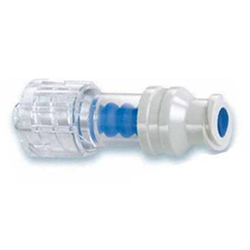
A study investigating the disinfection of central venous access device needleless connectors has shown that noncompliance is common and likely tied to multiple factors, including lack of access to disinfection product, high workloads and constraints caused by emergency situations.
Taken together, the disinfection deficits may increase the risk for central line–associated bloodstream infections (CLABSIs) (Infect Control Hosp Epidemiol 2024 Feb 23. doi:10.1017/ice.2024.22).
“This study is in line with others that investigate the differences between work as imagined and as performed,” Frank A. Drews, PhD, a professor of cognition and neural science at the University of Utah, in Salt Lake City, told Infectious Disease Special Edition.
“We often see a disconnect between how people with good intentions envision work in their evidence-based practices and the realities faced by these people on the front lines,” Dr. Drews said. “They are working in a complex environment that imposes many, often conflicting, needs on them.”
CLASBI prevention guidelines recommend the use of an antiseptic scrub to disinfect needleless connectors prior to device access.
The study focused on both clinical observations of compliance with instructions and protocols for using disinfectants, as well as focus group discussions regarding facilitators of best practices and related barriers.
Among a total of 48 observed access events, proper needleless connector disinfection was conducted 77% of the time. In 23% of the events, no disinfection of the needleless connector occurred before device access. While the average scrub, dry and disinfection times varied by disinfectant product, hospital and specific access event action, they were generally lower than recommended.
“The failure is that disinfection is not just scrubbing the hub; it’s also allowing for drying,” Dr. Drews explained.
In the focus groups, participants noted that workload demands, access to supplies, and issues with the packaging and sizing of disinfectant products were among those noted as barriers to proper disinfection practices.
“Whenever you increase time pressure due to understaffing or other structural challenges, people trade off different activities,” Dr. Drews said. “If you think of a nurse providing care to a patient, they have primary care tasks and infection prevention and control tasks. The question is, for someone under time pressure, which of the tasks do you sacrifice?”
Dr. Drews also noted that a lack of feedback creating a scenario where individuals are not aware of direct consequences can contribute to the overlooking of disinfection practices.
“Conceptually, feedback is incredibly important to regulate our behavior,” he said. “Here, you never actually know if you may have contributed to an infection due to lack of correct disinfection. You are acting blind.”
To address these issues, Dr. Drews noted two primary approaches.
The first involves increased training, supervision and behavior checks. However, “in healthcare everyone is overtrained already, and you are pushing that even farther,” he said. “People are not very enthusiastic about that approach.”
The second option, which he prefers, involves thinking about the specifics of the environment and how they can be optimized to facilitate adherence.
“How as an organization, or a manager at a unit, can I structure the environment so that adherence to best practices is straightforward?” he said.
Overall, the work, while focused on a single, specific set of tasks, illustrates the challenges commonly facing healthcare professionals.
“The main challenge we have is how to balance good intentions with reality,” Dr. Drews said.
Dr. Drews reported no relevant financial disclosures.