





Originally published by our sister publication Pharmacy Practice News
“Save the horseshoe crab!” may not stir the same public fervor as campaigns to preserve other more popular animal species whose survival is imperiled. But for those dedicated to the quality and safety of injectable medicines, vaccines and medical devices—and for the millions of people who rely on their work—the prospect of horseshoe crab populations diminishing is an existential concern.
Limulus polyphemus is the scientific name for the ancient, Atlantic shore–dwelling arthropods whose blue-tinted blood has long been the source of the limulus amebocyte lysate (LAL) assay used to screen pharmaceutical products for the presence of bacterial endotoxins and to detect invasive fungal infections in patients.
Although the Atlantic horseshoe crab population remains stable after years of decline, three others of the world’s four horseshoe crab species “are endangered or functionally extinct,” said Will Harlan, MS, the Southeast director/senior scientist for the Center for Biological Diversity. (Endangered Asian horseshoe crabs are not the source of LAL, but of tachypleus amebocyte lysate, or TAL.)
Timothy Cernak, an associate professor of medicinal chemistry at the University of Michigan, in Ann Arbor, asked: “What happens if there is a large oil spill or global warming event that causes a severe drop-off in the population of these crabs, and all of a sudden our vaccine supply, our biologic supply chain and all of our antibody drug conjugates” become vulnerable to extreme shortages?
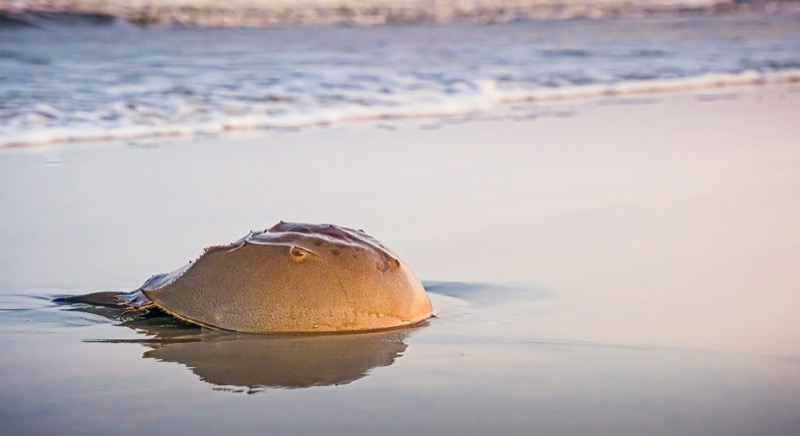
The antidote to that nightmare scenario lies in a synthetic alternative to the horseshoe crab–derived bacterial endotoxin test (BET), currently the dominant method globally for ensuring the safety of medicinal products.
The two types of recombinant BET reagents—first-generation Factor C (rFC) and second-generation recombinant cascade reagent (rCR)—have been available for years. But progress toward their wide adoption has been slowed by the lack of a definitive, research-based standard in the USP-NF, a combination of two compendia—the U.S. Pharmacopeial Convention (USP) and the National Formulary (NF). Slow uptake by major pharmaceutical companies, which are heavily dependent on the traditional LAL test, has also played a part. Switching to recombinant reagents will require companies to revalidate all their injectable products as endotoxin-free, a costly undertaking.
A Boost From USP Chapter <86>
Still, the pace of implementation is likely to quicken following the publication in November of USP Chapter <86>, which provides a detailed road map for the transition to non–animal-derived reagents. The chapter is set to become official in May 2025. (The European Pharmacopoeia rFC chapter was implemented in January 2021.)
“It’s a tremendous move forward,” said Mark Schweitzer, PhD, the chair of the USP Microbiology Expert Committee, which developed the new chapter based on two years of comprehensive data gathering and evaluation. “We can now replace an animal model with a biotechnologically derived detection system that will be sustainable and more globally available than the original animal-based testing,” Dr. Schweitzer told Pharmacy Practice News.
He added: “The data that we were able to evaluate demonstrated equivalence in the decision-making from a quality-of-pharmaceuticals perspective. And it convinced the Microbiology Expert Committee that the data supported moving forward with [the synthetic assay] as a general test method for endotoxins. And from a green and environmentally friendly perspective, we can now allow nature to take its course without drawing on that natural resource.”
‘Sustainability Scorecard’ Issued
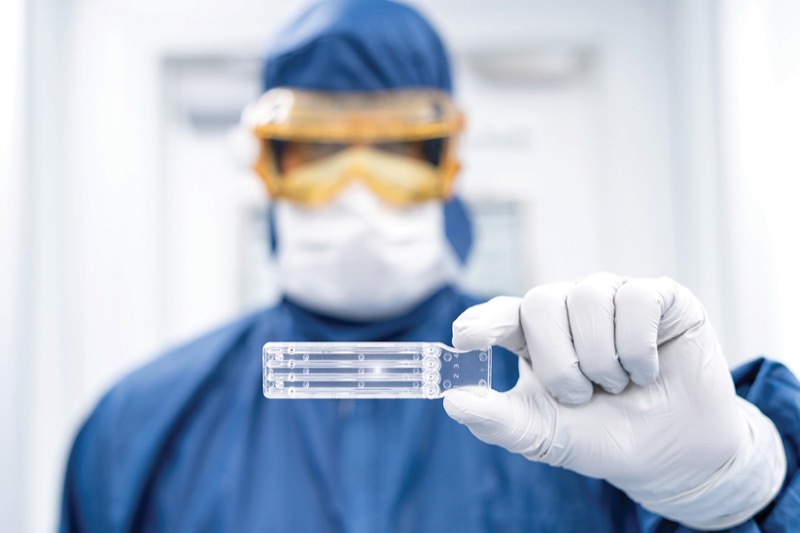
In December, a coalition of pharmaceutical companies and conservation groups issued a “sustainability scorecard for endotoxin testing” to 50 leading global pharma companies. The scorecard was designed to “accelerate the adoption of synthetic alternatives to horseshoe crab blood,” according to the group.
4 Top Makers of Recombinant Endotoxin Detection Assays

- BioMérieux. ENDOZYME II GO, recombinant Factor C (rFC) endotoxin detection assay
- ACC. PyroSmart NextGen recombinant cascade reagent (rCR) assay
- Lonza Bioscience. PyroGene rFC enzyme solution
- Charles River Laboratories. Endosafe Trillium rCR cartridges
Dr. Cernak, a consultant to the coalition, described the scorecard as “a living document” intended to track the long-term progress of implementation. “It’s going to be difficult,” he noted, for companies to switch to the new synthetic alternatives for injectable drugs “that are a major part of their portfolios.” However, he added, “there’s no reason it can’t be done for upcoming products. They could put that in place now.”
Eli Lilly is a leader among a small group of major companies doing just that. Jay Bolden, a senior director at Lilly, noted that the company received its first FDA approval of a product developed with rFC testing in 2018. “Our second product was approved in 2020,” he added, “and we now have 10 product approvals using rFC globally.”
A feature article posted by Lilly in November described Mr. Bolden’s work in helping to advance the sustainability of horseshoe crab populations by accelerating the movement to non-animal test methods.
“Using rFC is more sustainable because it does not depend on a natural resource,” Mr. Bolden noted. “Sustainability is central not only to our purpose but also to our growth agenda. Limiting our dependence on natural resources—in this case, horseshoe crabs—is not only the right thing to do but also makes Lilly a stronger, more resilient company.”
A handful of smaller biotech companies are also engaged in horseshoe crab sustainability initiatives. Associates of Cape Cod Inc., recently rebranded as ACC, is one such company. Fifty years ago, ACC pioneered the modern LAL testing methodology and was the first FDA-licensed company to manufacture LAL reagents. ACC, headquartered in Falmouth, Mass., was also the first to globally produce and commercialize the alternative rCR, with the brand name PyroSmart NextGen.
The Next Generation
In its sustainability efforts, ACC has also raised and introduced millions of juvenile horseshoe crabs into U.S. coastal waters; and through its partners in Asia, it has introduced a patented, one-of-a-kind aquaculture system to ensure the genetic diversity of the horseshoe crabs worldwide.
“Like many technological advancements, the use of horseshoe crabs for biomedical safety has been a pioneering feat of innovation and ingenuity,” noted Vann Jones, ACC’s director of global marketing. “For over 50 years, these ancient creatures have played a crucial role in ensuring global patient safety. Fortunately for us, this vital resource has remained stable and plentiful, allowing the biomedical community to rely on it for critical safety assessments. However, as is often the case with technological progress, the introduction of recombinant BET technology suggests that the time has come once again to embrace a transformative leap into the future, promising to enhance the efficiency and sustainability of biomedical testing while reducing our dependence on these remarkable animals.”
The sources reported no relevant financial disclosures beyond their stated employment.