

By Ethan Covey
During 2023, 10 cases of autochthonous, or locally acquired, malaria were diagnosed in the United States. This follows 20 years without local mosquito-borne malaria transmission in the country.
Experts emphasize that while the risk for autochthonous malaria in the United States remains very low, the fact that it has reemerged highlights the importance of vector-borne disease preparedness and response (MMWR Morb Mortal Wkly Rep 2024;73[42]:946-949).
“The locally acquired mosquito transmitted malaria cases from 2023 illustrate that conditions for local transmission are feasible in the U.S.,” said Theresa Dulski, MD, a CDC epidemiology field officer.
The 10th case, which was diagnosed in Arkansas, occurred in a previously healthy person who was evaluated at a hospital on Sept. 28, 2023, after a 10-day history of headache, fever, chills, night sweats, fatigue and a one-day history of nausea and vomiting. Two days later, the individual’s thin peripheral blood smear was noted to have ring forms concerning for malaria. A malaria rapid diagnostic test confirmed presence of the disease.
The individual reported no history of international travel, blood transfusion, organ transplant or other bloodborne pathogen exposure. After treatment, the patient fully recovered.
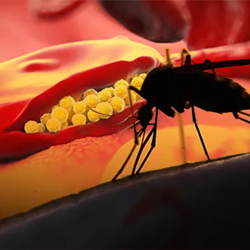
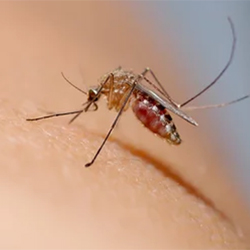
While the source for the case remains unknown, experts hypothesize that local Anopheles mosquitoes may have become infected after biting someone with undiagnosed travel-related malaria.
“Certain parts of the Americas, Africa and Asia have ongoing malaria transmission, putting people who travel to or from those areas at increased risk for getting malaria,” Dr. Dulski said. “Therefore, preventing malaria in travelers and timely diagnosis and treatment are crucial to prevent local spread in the U.S.”
She added that the risk to the public for locally acquired mosquito-transmitted malaria is very low, and there is no reason to believe cases are increasing. “There have been no locally acquired mosquito transmitted malaria cases since October 2023; therefore, there has been no increase in cases since 2023,” she said.
Further study of Anopheles mosquitos will hopefully answer lingering questions regarding malaria spread and risk. “CDC is working to improve Anopheles surveillance to understand their abundance and range,” Dr. Dulski said. “CDC is also working to build Plasmodium genome sequencing capacity nationally.”