

By Ethan Covey
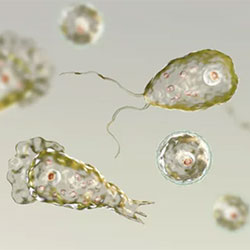
A young child who died of primary amebic meningoencephalitis (PAM), an infection caused by Naegleria fowleri, was exposed by playing on a splash pad that was using inadequately disinfected water.

Authors of a CDC report noted that the case highlights the importance of proper design, construction, operation and management of splash pads (MMWR Morb Mortal Wkly Rep 2025;74[10]:167-172).
“Most Naegleria fowleri infections in the U.S. have been associated with swimming or diving in a natural body of fresh water, such as a lake,” said Theresa M. Dulski, MD, a CDC epidemiologist assigned to the Arkansas Department of Health. “The fatal splash pad–associated case of N. fowleri infection described in this report is the third such case in four years, indicating that splash pads with inadequately disinfected water are an emerging concern for infection from this ‘brain-eating ameba.’”
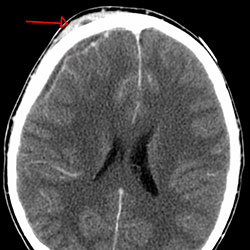
The 16-month-old child was admitted to a pediatric ICU in Arkansas in September 2023 after a three-day history of fever, vomiting, decreased oral intake, decreased activity and new onset of altered mental status. Naegleria spp., a free-living ameba that is found in warm fresh water and soil, was identified two days after hospitalization. Despite treatment, the child’s condition worsened, and the patient died.
Family members reported that the child had played on a splash pad at a public facility in Pulaski County, Ark., two to three days prior to illness onset. Splash pads have become popular warm-weather play areas for children, particularly as they have little or no standing water, so there is a decreased risk for drowning.
An environmental health specialist from the Arkansas Department of Health examined the splash pad and accompanying pool and noted several code violations. The splash pad was disabled and is no longer in use.
“It is unclear how the splash pad became contaminated with N. fowleri, but this ameba is common in the environment,” Dr. Dulski said. “Proper design, construction, operation and management of splash pads can help keep splash pads free from pathogens and prevent infections.
“Jurisdictions and those working in the aquatics sector can refer to CDC’s Model Aquatic Health Code for guidance on keeping splash pads safe and properly disinfected,” she added.
While most N. fowleri infections in the United States have been transmitted through swimming in fresh water, N. fowleri has been detected in tap water, so it is important to avoid getting water up your nose when playing with hoses, sprinklers or splash pads.
From 1962 through 2023, 164 known cases of N. fowleri infections have been reported in the United States, and only four (2.4%) of the infected individuals survived.
“Because N. fowleri infections are nearly always fatal, more research is needed to understand how these infections can be prevented and treated, Dr. Dulski said. “CDC is tracking and investigating N. fowleri infections to learn more about who is at risk, how the infections are best treated and how infections can be prevented. CDC is also working on developing new laboratory methods for detecting N. fowleri.”
Dr. Dulski reported no relevant financial disclosures.