

Harboring gastrointestinal parasites may increase a person’s risk of developing Clostridioides difficile (C. diff) infection, per new exploratory research.
The study—presented at ASM Microbe 2025, in Los Angeles, during the CIV01 Friday Clinical Studies of Adult Infectious Diseases poster session—combined results of stool ova and parasite (O + P) tests with those for C. diff, which were either toxin or molecular (polymerase chain reaction) tests. It also incorporated data from blood culture tests for bacteremia. The data come from the Medical Information Mart for Intensive Care IV, from Beth Israel Deaconess Medical Center, in Boston, which researchers can access for population health studies.
“Parasite recovery is a marker of microbiome disturbance, and microbiome disturbance is a risk factor for C. diff,” said study author Keith S. Kaye, MD, MPH, a professor and the chief of the Division of Allergy, Immunology and Infectious Diseases at Rutgers University Robert Wood Johnson Medical School, in New Brunswick, N.J. Dr. Kaye collaborated with Ann Fan Yang, MD, on the research, during Dr. Yang’s medicine residency at Rutgers. (She is currently an infectious diseases fellow at Columbia University, in New York City.)
Higher Percentages With Parasites
Of the 142 patients with a positive O + P test, three also tested positive for C. diff (2.11%). Among the 6,178 patients with a negative O + P test, there were 53 C. diff cases (0.86%). The difference in prevalence was apparent but not statistically significant.
“This is hypothesis-generating research,” noted Dr. Kaye, who said the potential link between C. diff and hosting parasites needs to be tested in other data sets.
Drs. Kaye and Yang also hypothesized a possible link between hosting parasites and an increased risk for bacteremia. This was not the case; there were similar rates of positive bacteremic blood cultures in people who had parasites (11.2%) and those who did not (11.8%).
Better Detection
The larger context for this research is a much-improved ability to rapidly detect specific organisms, including some parasites, in stool.
“We now have very comprehensive stool panels that are easy to order and are not very expensive,” Dr. Kaye said.
There were 11 positive blood cultures in patients who also had a positive O + P test. Enterococcus faecalis was the most common bloodstream pathogen in this group (3/11; 27%), with a much higher prevalence compared with the 548 patients with a positive blood culture and no parasites (28/548; 5,1%; P=0.03).
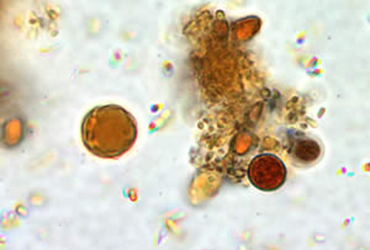
In regard to pathogens, Blastocystis was present in all three people with C. diff combined with a positive O + P test (3/3; 100%).
Dr. Kaye reported no relevant financial disclosures.