By Ethan Covey
The burden of respiratory syncytial virus (RSV) remains high among U.S. children, and more efforts are needed to address gaps in data regarding RSV prevention strategies, according to a presentation given during the Vaccines and Related Biological Products Advisory Committee meeting, which was held on Dec. 12.
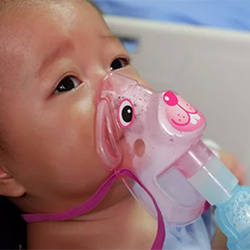
The key to understanding the current epidemiology of RSV is recognizing the outsized impact of the disease, particularly among young Americans.
“CDC estimates that each year among children in this age group, RSV leads to approximately 2 million medical encounters, 58,000 to 80,000 hospitalizations and 100 to 300 deaths,” said Fatimah S. Dawood, MD, the team lead, Epidemiology and Vaccine Assessment Team, of the CDC’s Coronavirus and Other Respiratory Viruses Division, National Center for Immunization and Respiratory Diseases.
“All infants are at risk for hospitalization, including those who are born at term and those without underlying medical conditions,” Dr. Dawood continued.
RSV-associated hospitalization rates are consistently highest among infants, particularly neonates, compared with all other age groups. However, a lower, yet substantial burden of RSV-associated hospitalization exists among children 12 to 23 months of age. Risk then decreases among older children and younger adults before increasing in older adult age groups, she said.
The risk for children experiencing severe illness after RSV infection is significantly higher than that of other respiratory diseases, such as COVID-19.
“In the youngest infants 0 to 2 months of age, during last season, RSV hospitalization rates were approximately seven- to 10-fold higher than COVID-19 and influenza hospitalization rates,” Dr. Dawood said. “And RSV hospitalization rates remained elevated above those of COVID-19 and influenza across all age groups through 59 months of age.”
Although RSV results in a high burden of hospitalization in children, it is also a common cause of nonmedically attended, community-level illness and infection in infants and children, as has been documented by three U.S. longitudinal birth cohorts: the Houston Family Study (Am J Dis Child 1986;140[6]:543-6), the INSPIRE Cohort (Lancet 2024;403:43[10428]:729) and the PREVAIL Cohort (JMIR Res Protoc 2021;10[2]:e22222).
Findings of the cohorts suggest that RSV is common, with at least 50% of children having had at least one RSV infection by 12 months of age, and 75% or more having been infected by 24 months of age.
In addition, the Houston Family Study also demonstrated that RSV reinfection is common in children older than 5 years of age, and the researchers observed that RSV reinfection risk is inversely associated with RSV neutralizing titer.
“[This] suggests neutralizing antibodies played a key role in protection from infection,” Dr. Dawood said.
All infants in their first RSV season are recommended for protection through either maternal RSV vaccine, given to pregnant people at 32 to 36 weeks’ gestation, or through infant receipt of nirsevimab-alip (Beyfortus, Sanofi), a monoclonal antibody with an extended half-life.
Children in selected groups who are considered to be at increased risk for severe disease in their second RSV season are recommended to receive nirsevimab at 8 to 19 months of age.
However, Dr. Dawood noted that the current recommendations for RSV prevention in young children highlight two gaps related to current prevention strategies. The first, she said, is a data gap related to additional RSV vaccine doses in subsequent pregnancies after the first lifetime dose.
“Currently, the ACIP [Advisory Committee on Immunization Practices] recommends that people who receive a maternal RSV vaccine during a previous pregnancy are not recommended to receive additional doses during future pregnancies, and infants born to people who were vaccinated only during prior pregnancy should instead only receive nirsevimab,” Dr. Dawood said. “These recommendations were made based on the absence of data on the safety, immunogenicity and effectiveness of additional RSV vaccine doses in subsequent pregnancies, and in the U.S. context where we have two recommended options for protecting infants from severe RSV disease.”
The second data gap concerns the groups recommended for second season RSV immunization. These include children with chronic lung disease, those with severe immunocompromise, children with cystic fibrosis and those who are American Indian/Alaska Natives.
Despite these categories, most children who are hospitalized with RSV would not have been eligible for second-season receipt of nirsevimab, according to Dr. Dawood.
“Overall, more than 90% of children 12 to 23 months of age hospitalized with RSV, as well as those requiring ICU admission, would not have been eligible to receive nirsevimab in their second season based on current recommendations,” Dr. Dawood said.
Cost-effectiveness also plays a role in both the uptake of RSV therapies and recommendations regarding their usage. “Cost-effectiveness analyses contributed to the ACIP’s recommendations regarding RSV vaccination,” Dr. Dawood said. A recent publication demonstrated that the incremental cost-effectiveness ratio of nirsevimab for children in their second RSV season varies highly depending on product cost and risk for RSV hospitalization (Pediatr 2024;154[6]:e2024066461).
“A clear need is low-cost and effective RSV immunizations to expand protection to a broader population of U.S. children in their second RSV season,” Dr. Dawood said.
Dr. Dawood reported no relevant financial disclosures.