





The respiratory syncytial virus (RSV) monoclonal antibody (mAB) nirsevimab (Beyfortus, Sanofi) was safe and effective in both newborns and 3-month-old infants whose mothers were vaccinated with Abrysvo (Pfizer) during pregnancy, according to a new study presented at IDWeek 2025, in Atlanta.
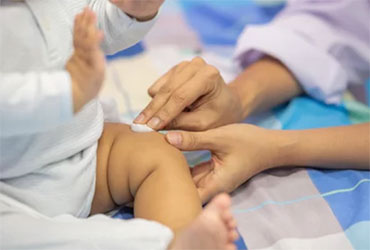
Current guidelines recommend that either the pregnant person is vaccinated, or the baby receive the mAB. This is one of the first studies to study administration of both.
Why Both?
There are some cases where a provider may want both mother and baby to receive prophylaxis, presenting author Christina A. Rostad, MD, the director of the Emory Children’s Center Vaccine Research Clinic, in Atlanta, told Infectious Disease Special Edition. “There are some conditions that are related to the mother that might indicate that the baby should receive nirsevimab, and that includes if the mother is immunocompromised or could not mount an immune response to transfer the antibodies to the baby,” Dr. Rostad said. Other conditions could be related to the infant, specifically in babies who need neonatal ICU care, she explained.
In addition, there are some cases where the vaccination status during pregnancy is unknown, and a clinician wants to assure the baby is protected by administering nirsevimab, she explained. This research shows that can be safely done, she said.
Safe and Effective
The trial (oral presentation 225) is a prospective, randomized, open-label, phase 4 study conducted at eight U.S. sites. The researchers randomized 181 mother-infant pairs 1:1:1:1 during pregnancy into four groups:
- maternal vaccination alone,
- maternal vaccination and infant nirsevimab at birth,
- maternal vaccination and infant nirsevimab at 3 months of age, and
- infant nirsevimab alone at birth.
The researchers followed the pairs for 12 months, accessing safety, tolerability, and measuring RSV-A and RSV-B neutralizing antibodies; the data presented are interim data with four-month infant follow-up.
Related Content
The researchers found no related severe adverse events in either mothers or babies. RSV vaccination boosted maternal RSV-A neutralizing antibody titers 17.35-fold at the time of delivery, and titers were durable through three months after delivery. The geometric mean transfer (GMT) ratio of RSV-A neutralizing antibodies was greater than 1.3 and similar across groups. For infants who did not receive vaccination in utero, RSV-A antibodies peaked at delivery and gradually declined over 3 months. Nirsevimab administration to infants at birth increased RSV-A antibodies 3.53-fold in when vaccination was given during pregnancy and 25.12-fold in those who had not after the six-week follow-up. Infants who received nirsevimab at birth had similar peak antibody titers regardless of vaccination status during pregnancy. The researchers also saw similar trends for RSV-B antibodies.
Another FDA-approved infant mAB product is available—clesrovimab (Enflonsia, Merck). However, it was not approved at the time the study commenced, Dr. Rostad said, so was not studied. Of note, the investigators conducted this study in healthy women and children. “This was a healthy population, so additional research will be beneficial [to guide] the administration of these products,” Dr. Rostad told IDSE.
‘Reassuring’ Results
But with these new data, providers can be confident that double administration is safe and effective, Dr. Rostad said. “All the results of our study are reassuring,” she said, “whether [patients] receive these products alone or in combination, both products are safe and provide high antibody levels for their babies.”
Dr. Rostad reported that she receives grants or research support from Janssen, Meissa Vaccines, Merck, Micron, Moderna, Pfizer, and Sanofi. Sanofi provided the investigational product, nirsevimab, for the conduct of this study.