


By IDSE News Staff
Amid a global surge in measles cases, new research suggests that undernutrition may be exacerbating outbreaks in areas suffering from food insecurity (Vaccine 2024 Dec 10. doi:10.1016/j.vaccine.2024.126564).
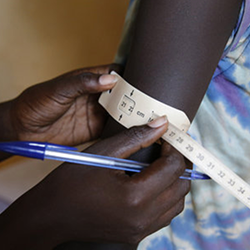
A study involving more than 600 fully vaccinated children in South Africa found those who were undernourished had substantially lower levels of antibodies against measles. Researchers from McGill University, UC Berkeley School of Public Health and the University of Pretoria tracked the children’s growth over time as an indicator of undernutrition and measured their antibody levels through blood tests.
Children who were stunted around 36 months of age had an average of 24% lower measles antibody levels by 5 years compared with their typical-sized peers. The findings suggest that undernutrition may affect the duration of vaccine protection, the researchers said.
The findings indicate addressing child hunger worldwide could be a key piece of the puzzle in fighting measles, said senior author Jonathan Chevrier, PhD, an associate professor in the Department of Epidemiology, Biostatistics and Occupational Health and the Canada Research Chair in Global Environmental Health and Epidemiology at McGill, in Montreal. The growth of approximately 148 million children (about 22%) younger than 5 worldwide was stunted in 2022, Dr. Chevrier added, with the highest rates in Asia and sub-Saharan Africa.
Measles is a threat in regions where it was once under control, including Canada, which in 2024 reported its highest number of cases in nearly a decade.
“Global measles cases declined from 2000 to 2016, but the trend reversed in 2018, driven in part by under-vaccination and the impact of the pandemic. Measles is now making a strong comeback in many parts of the world despite being preventable with vaccination and adequate immunity,” said co-author Brian Ward, MD, DTM&H, MDCM, a professor in McGill’s Department of Medicine.
“We need to vaccinate children against infectious diseases that are preventable and ensure they are protected,” said first author Brenda Eskenazi, PhD, MA, a professor emerita of public health at the University of California, Berkeley.
The team plans to monitor the children in the study as they grow older to understand whether the effects of early-life undernutrition persist.
This study was funded by the U.S. National Institute of Environmental Health Sciences and Canadian Institutes of Health Research.