





By Meaghan Lee Callaghan
The seven newly appointed members of the Advisory Committee on Immunization Practices voted 5-to-2 to recommend clesrovimab-cfor (Enflonsia, Merck), the second long-acting monoclonal antibody administered to infants to prevent respiratory syncytial virus infection.
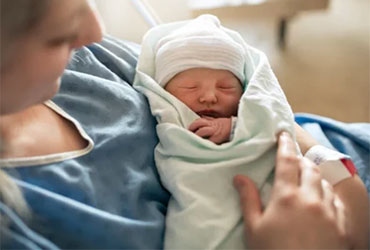
Clesrovimab is recommended for infants 8 months of age and younger who are born during or entering their first RSV season. The FDA approved the monoclonal antibody (Mab) earlier this month.
At the first day of the ACIP June meeting, CDC epidemiologists presented data from the ACIP RSV working group showing the potential benefit of clesrovimab, along with data showing improvements in patient outcomes using the currently FDA-approved and ACIP-recommended RSV prevention methods.
Although concerns about adverse events and coadministration techniques were voiced by the panel, they were addressed by experts and resolved, leading to its recommendation. RSV is still circulating, according to the CDC.
A 5-to-2 Vote
The vote, which was cast on June 26, was 5-to-2, with board members Joseph R. Hibbelen, MD, ABNP, CAPT USPHS (Ret); Robert Malone, MD, MS; Cody Meissner, MD; James Pagano, MD, FACEP; and Chair Martin Kulldorff, PhD, voting yes, and Retsef Levi, PhD, and Vicky Pebsworth, PhD, RN, voting no. All seven members voted to add clesrovimab to the Vaccines for Children Program, although there was some confusion from several members, including Dr. Malone, about why the vote for VFC was necessary.
“I wasn't sure from the discussion whether they understood the way Vaccines for Children Program worked—that it pays for 50% of these products,” Paul Offit, MD, told Infectious Disease Special Edition. Dr. Offit is the director of the Vaccine Education Center and an attending physician in the Division of Infectious Diseases at the Children’s Hospital of Philadelphia. Dr. Offit has served on the ACIP and currently sits on the FDA’s Vaccines and Related Biological Products Advisory Committee.
Dr. Offit explained that lack of knowledge is an ongoing problem with the new members of ACIP, apart from Cody Meissner, MD, a professor of pediatrics at the Dartmouth Geisel School of Medicine, in Hanover, N.H., who has sat on ACIP before. “You're presenting these data to people who don't really have an expertise or experience in the field,” he said. “They're just trying to sit there figuring out what's going on.”
The Burden of RSV
The value of clesrovimab has been shown, Dr. Offit said. “RSV is the most common reason for a baby to come into the hospital,” he said.
The disease burden associated with RSV is high for children 5 years of age and younger in the United States, according to Adam MacNeil, PhD, MPH, the acting director of the CDC’s Coronavirus and Other Respiratory Viruses Division at the National Center for Immunization and Respiratory Diseases. Each year, there are approximately 2 million medical encounters, between 58,000 and 80,000 hospitalizations, and as many as 300 deaths from RSV-related disease (N Engl J Med 2009;360[6]:588-598; JAMA 2003;289[2]:179-186; JAMA Netw Open 2022;5[2]:e220527). RSV is the leading cause of hospitalization in infants, Dr. MacNeil said (J Infect Dis 2022;226[suppl 2]:S154-S163).
“Approximately 80% of infants hospitalized for RSV have no underlying medical conditions,” Dr. MacNeil said. “Therefore, all young children are considered at risk for severe RSV disease. When asked is RSV-associated disease among infants younger than 8 months of age of public health concern, the work group unanimously voted yes.”
Related Content
The Potential Benefit of Clesrovimab
Trials reviewed by FDA before approving clesrovimab, found that the Mab demonstrated a reduction in incidence of RSV-associated medically attended lower respiratory infections compared with placebo through 5 months after receiving the immune therapy by 60.5%, and that RSV-associated hospitalizations through 5 months were decreased by 84.3%.
There is an advantage brought by clesrovimab, according to the ACIP RSV working group. The group conducted a review of data on clesrovimab using GRADE methodology and PICO questions, with results presented at the meeting. The working group said the phase 2b/3 trial showed that clesrovimab had high efficacy in preventing severe RSV disease through 150 days (Open Forum Infect Dis 2025;12[suppl 1]:ofae631.003. doi:10.1093/ofid/ofae631.003). In addition, serious adverse events appeared balanced between the intervention and placebo arms, Dr. MacNeil said, although rare adverse events probably weren’t captured in a study of that size.
Of note, the research found that clesrovimab has a shorter half-life than nirsevimab (44 vs. 71 days), although the efficacy of clesrovimab was sustained through 150 days.
Some members of the ACIP panel questioned the need for a second Mab against RSV in infants. A second option for infants would be ideal, in part, to combat resistance, experts explained. “There's a possibility that if resistance were to occur to one of the monoclonals, the other one would remain protective,” Dr. MacNeil explained. This is because clesrovimab binds to a separate binding site on the RSV virus than the already approved and ACIP-recommended monoclonal antibody nirsevimab (Beyfortus, AstraZeneca/Sanofi).
Experts also believe that due to the high circulation of RSV in the general population, antibodies administered to infants may not have a strong impact on viral drift, Dr. MacNeil said.
“We don't think that providing protection to a small population [would] create a large, population-based selective pressure. We do genomic monitoring for RSV, but there is not expected to be ecologic selective pressure because everybody else is still transmitting the virus,” he said.
There also is the possibility that the addition of a second option may affect the market, driving down the prices for these prevention products for hospitals, payors and individuals.
Healthy Infants Versus Those With Comorbidities
There was some concern about whether all infants should receive RSV prevention, or if only children who are preterm or have comorbidities should receive prevention, specifically from ACIP member Retsef Levi, PhD, a professor of operations management at the MIT Sloan School of Management, in Boston. Dr. Levi said that he felt the rate of serious adverse events (SAEs) was not “balanced” between the treatment and placebo groups. However, the randomization was 2 to 1 in favor of the treatment group. The number of deaths also were concerning, he said.
However, the data show that the clinical trials had a balanced number of SAEs. Anushua Sinha, MD, MPH, a clesrovimab investigator and the clinical director of vaccines at Merck (the maker of clesrovimab), explained that the clinical trials found the monoclonal antibody to be safe. “Throughout our clinical trial conduct, there was extensive analysis of these events, and importantly, none of these [SAE] events were deemed by investigators to be associated with RSV or with the interventions given to the infants,” Dr. Sinha said. “No trends were identified in terms of cause, system, organ class, or clustering in terms of time. That means there was no temporal trend either.
“I do want to emphasize that the first trial mentioned, the Healthy Infant Trial—that's protocol 4, also called CLEVER—was randomized 2 to 1, so when counting events, one must be aware of that 2-to-1 randomization,” Dr. Sinha noted.
Panel member Dr. Meissner also responded to Dr. Levy, and said, “these are all issues that were extensively discussed in our working group.” Young infants and neonates are very “fragile,” he explained, “and deaths unfortunately occur.
“I don't believe there was any evidence, as has been stated, that there was an imbalance or any pattern associated with serious adverse events among the recipients. I think that the work group was very comfortable making the recommendation that they did,” Dr. Meissner said.
Dr. Meissner addressed Dr. Levi’s objection to protecting healthy children, explaining why all young infants would be candidates for RSV prevention. The extremely small size of neonates’ lungs is the main reason they are so high-risk, he explained, where only a small amount of inflammation can cause occlusion and severe respiratory distress. This risk factor is alleviated over time as the child grows, he said.
“The monoclonal antibody for healthy children is given to prevent the infection from occurring at the highest risk period-that is, the first 90 days.”
Coadministration With Vaccines
Data also showed that there is a precedent for coadministered RSV-targeted monoclonal antibodies with routine vaccinations. The first-generation monoclonal antibody palivizumab (Synagis, Swedish Orphan) has been available for more than 25 years, and it has been coadministered with both hepatitis B vaccines, given in the first days of life, and other routine vaccinations given in the first several months of life. “Because it's given [as monthly injections] over a five-month period, there's absolutely no interference with any of the standard, routinely recommended childhood vaccines,” Dr. Meissner said. “So I'm very comfortable reassuring people that that is not an issue.”
Reductions in RSV With Current Prevention
Current approved prevention products—the monoclonal antibody nirsevimab and the maternal vaccine (Abrysvo, Pfizer)—are proving beneficial for infants. In research presented by Dr. MacNeil, there was a marked reduction in RSV-associated hospitalizations in infants 2 months old and younger. This is the group at highest risk for hospitalization, Dr. MacNeil said, and the numbers from two databases, RSV-Net, part of the Respiratory Virus Hospitalization Surveillance Network, and the New Vaccine Surveillance Network, saw 47% and 46% reductions in hospitalization in this age group. “This is a group at highest risk for hospitalization and underscores the importance of protecting those infants through maternal vaccination during pregnancy or nirsevimab in the first week of life as recommended by ACIP,” Dr. MacNeil said.
In infants 7 months old and younger, the databases saw 38% and 31% reductions, respectively, in RSV-associated hospitalization in the 2024-2025 season compared with the years before the introduction of the prevention products.
“This is a spectacular accomplishment,” Dr. Meissner said. “It's something that the CDC does very well in providing this sort of data so that recommendations can be made. People should understand that this is a truly spectacular accomplishment and will have an enormous impact on public health.”
Dr. Offit also noted that these numbers are impressive especially since the uptake of prevention can continue to be higher. “Only a third of people get their babies the monoclonal antibody, and about 45% get maternal vaccination,” he said. “Was there a decrease in hospitalizations knowing that these products are still underused? And the answer was yes, there was a decrease, so much so that there was a slight decrease in the infant mortality rates.”
Prenatal Vaccine Safety and Hypertensive Disorders of Pregnancy
For the most part, data on the maternal RSV vaccine show that it is safe, with no associations with vaccination and acute safety outcomes, preterm birth, small for gestational age or stillbirth, according to researcher Malini DeSilva, MD, a travel and tropical medicine specialist and pediatrician at HealthPartners Institute, in St. Paul, Minn.
However, there is a small but statistically increased risk for hypertensive disorders of pregnancy (HDP) in pregnant people who received the vaccine, according to Dr. DeSilva. At the same time, the severity of HDP is similar in those who are vaccinated and those who were unvaccinated, she said, where rates of cesarean delivery, admission following birth hospitalization and length of stay were similar in the groups. There is a potential that a residual confounder or outcome misclassification is affecting these statistics, she said. “Results of the 2024-25 season analysis are pending and will be important for further understanding of prenatal RSV vaccine safety,” Dr. DeSilva said.
New Data Show Nirsevimab Safe in Infants
Data collected following nirsevimab approval and ACIP recommendations continue to show safety in infants, according to a presentation by researcher Matthew F. Daley, MD, a senior clinician investigator who works in pediatric and vaccine research at the Kaiser Permanente Institute for Health, in Aurora, Colo.
In a population of more than 74,000 neonates and infants who received nirsevimab (children combined over two RSV seasons), there was no evidence of increased risks for seizures, immune thrombocytopenia, drug reactions, fever or sepsis. There were no cases of anaphylaxis; however, they did note a small number of non-anaphylacitc allergic reactions, predominantly urticaria.
They are continuing surveillance, Dr. Daley said, with plans to analyze the 2023-2024 respiratory season, a preliminary assessment of 2024-2025 data, and a final surveillance assessment with data points ending this July.