Parvovirus B19 activity is exceeding prepandemic levels, and U.S. transmission of B19 through the first two quarters of 2025 has increased from 2024 (MMWR Morb Mortal Wkly Rep 2025;74[23]:404-406).
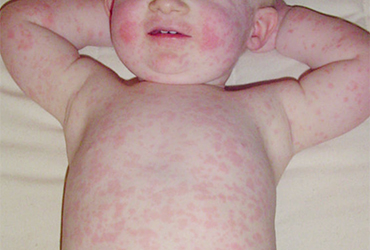
Data showed B19, a respiratory virus that can cause adverse fetal outcomes in pregnant people and severe disease in people who are immunocompromised or have chronic hemolytic blood disorders, was increasing. A previous study showed the percentage of positive tests for B19 and the detection of B19 DNA in blood donors was higher than during the pandemic (2020 to 2023) and higher than previous prepandemic peaks in 2018 and 2019 (MMWR Morb Mortal Wkly Rep 2024;73[47]:1076-1081). This resulted in the CDC releasing a Health Advisory in August 2024 about the increase.
Continued Increases in 2025
In order to study whether B19 activity increased from 2024 to 2025, the CDC analyzed data from the National Syndromic Surveillance Program on serum B19–specific immunoglobulin M (IgM) antibodies—a marker of recent infection. The B19 IgM test data for people receiving nucleic acid amplification testing (NAAT) through May 10, 2025, showed a sustained increase of B19 transmission, particularly among people 10 to 14 years of age and 15 to 44 years of age. The report authors noted that this includes women of reproductive age.
In total, the prevalence of B19–NAAT-positive donor pools (512 donations per pool) reached 20% in June 2024. Previously, the number had remained below 2% between 2020 and 2023. This new number is higher than peaks in 2018 (6.7%, P<0.001) and 2019 (7.3%, P<0.001).
“Ongoing monitoring in 2025 shows that transmission of B19 continues to be elevated and has not returned to prepandemic levels,” Paul Prince, a CDC spokesperson, told Infectious Disease Special Edition.
“Because of this increased transmission of B19, healthcare providers should have a heightened suspicion of and consider providing testing for B19 infection among populations who are at particularly high risk, including pregnant women and people with immunocompromising conditions,” Mr. Prince said. “Among pregnant women, healthcare providers should remain vigilant for fetal complications related to B19 infection.”
Why Is B19 Increasing?
While reasons for the increase are not fully understood, they likely are related to the effects of the COVID-19 pandemic.
“The recent increase in community transmission is likely due to a period of reduced parvovirus B19 circulation during the COVID-19 pandemic,” Mr. Prince told IDSE. “When transmission of a virus is low for an extended time, fewer people are exposed and develop immunity, leading to a larger pool of susceptible individuals. As normal patterns of social interaction resumed and exposure increased, conditions became more favorable for wider transmission of the virus.”
According to the report authors, the CDC will continue to examine syndromic surveillance and electronic healthcare databases to determine whether there are increases in parvovirus B19 severity, complications and adverse outcomes.
Mr. Prince reported no relevant financial disclosures.