





The strongest risk factor for invasive fungal infections among immunocompromised children is prolonged neutropenia, according to Alexandra Yonts, MD, an infectious diseases specialist at Children’s National Hospital, in Washington, D.C.
The number of U.S. children who are immunocompromised may surprise some people. According to a national claims database, 2.5% of children younger than 18 years of age have an immunosuppressive condition (Emerg Infect Dis 2020;26[8]:1720-1730).
An absolute neutrophil count of less than 500/mcL for more than seven days would be considered prolonged neutropenia in immunocompromised or immunosuppressed children. Hematopoietic stem cell transplant (HSCT) patients are considered to be at the highest risk for invasive aspergillosis (IA) and invasive mucormycosis (IM).
IA is the most common mold infection in HSCT patients, occurring in about 7% of children after an HSCT (even higher in those with allogeneic vs. autologous HSCT). Incidence of IA in solid-organ transplant patients is 1.4%, and highest in lung, heart and liver transplants. Children with cancer, particularly those with acute myeloid leukemia or relapsed acute lymphoblastic leukemia, as well as those with chronic granulomatous disease, AIDS or other immunodeficiency syndromes, or those on a prolonged course of high-dose steroids are also at increased risk for IM and IA, according to Dr. Yonts.

Children with invasive fungal infections such as aspergillosis and mucormycosis historically have been treated with either amphotericin B or posaconazole, said Dr. Yonts, both of which have multiple side effects including nephrotoxicity and hepatotoxicity. Another option, voriconazole, is limited by gastrointestinal and other side effects. Variable absorption from the GI tract requires regular therapeutic drug monitoring, she added.
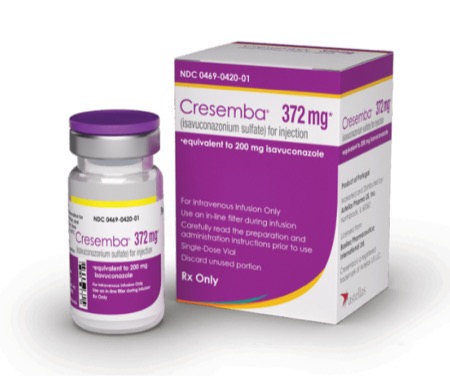
Thanks to an expanded indication, pediatricians now have another azole option, isavuconazonium (Cresemba, Astellas), which is indicated for children from 12 months to 17 years of age. Isavuconazonium is used to treat IA and IM—severe, often fatal, deep fungal infections typically in the lungs, sinuses and nasal passages that can disseminate or directly invade all other parts of the body, including the blood and most concerningly the brain, Dr. Yonts explained. In addition to its indication in very young children, isavuconazonium has more advantages over the other azole choices, including a broader spectrum of activity, predictable pharmacokinetics and potentially fewer adverse effects.
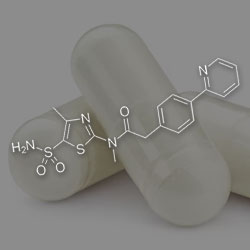
Azole antifungal drugs work by inhibiting the production of ergosterol, a key component of fungal cell membranes, which leads to fungal cell death.
Several comparative studies in children have shown that patients receiving isavuconazole had lower aspartate and alanine transaminase levels than those receiving voriconazole, and less frequently reported GI symptoms (Ther Drug Monit 2022;44[5]:641-650).
Related Content

The FDA’s expanded indication for isavuconazonium was based on results from two pediatric clinical studies, including a phase 2, open-label, non-comparative multicenter study (ClinicalTrials.gov Identifier: NCT03816176) evaluating the safety, efficacy and pharmacokinetics of isavuconazonium given for IA or IM (10 mg/kg) every eight hours on days 1 and 2, and once daily thereafter for 84 days or less for IA or 180 days or less for IM. Median treatment duration was 55 days.
The all-cause case-fatality rate through day 42 was 6.5% and through day 84 was 9.7%, which occurred during the follow-up period; none were considered treatment-related effects. Successful response rates were 54.8% at the end of treatment.
Treatment-emergent adverse events (TEAEs) occurred in 93.5% of patients, and 29.0% of patients experienced drug-related TEAEs. Treatment was withdrawn in two patients due to TEAEs.
Isavuconazonium comes in injection and tablet form. Tablets are approved for children 6 years and older who weigh at least 16 kg.
Aimee Dassner, PharmD, a clinical pharmacy specialist at Children’s National Hospital, shared key provider considerations:
- Dosing guidance is provided in milligrams of the prodrug isavuconazonium sulfate, which is rapidly converted after administration to the active compound, isavuconazole.
- Lack of an oral solution or suspension can be difficult for children because the manufacturer advises the capsules be swallowed whole. Limited data support opening capsules and mixing the contents with saline or tube feeds for gastrostomy tube administration, so “pharmacist consultation is strongly recommended in these scenarios.”
- Isavuconazonium is associated with QT interval shortening rather than prolongation, and is an inhibitor of the hepatic enzyme CYP3A4 (cytochrome P450 3A4), so providers should consider the potential for drug–drug interactions.
Jaime Deville, MD, a professor in the infectious diseases division at the David Geffen School of Medicine at UCLA, in Los Angeles, who studied isavuconazonium use in children, and said fungal infections are notoriously difficult to treat in immunocompromised children because amphotericin has a laundry list of downsides including toxicity, administration difficulty and lots of reactions associated with infusion (Antimicrob Agents Chemother 2024;68[12]:e0048424).
“Cresemba is more effective and [its] side effects [are] more predictable than fluconazole, which has no efficacy on molds,” Dr. Deville said. “We are moving in the direction of using Cresemba earlier.”
Dr. Yonts said she often uses isavuconazonium as step-down therapy, after a patient is discharged from the hospital, when they will be on antifungal therapy for several months.
Drs. Dassner, Deville and Yonts reported no relevant financial disclosures.
This article is from the August 2025 print issue.