





The latest ailment confronting infectious disease specialists is their own burnout. Although burnout is not unique among healthcare professionals today, it is a newer phenomenon among ID specialists, according to those in the field.
Historically, ID specialists have been stimulated by their work. They recognized its importance, and their immunity to burnout was bolstered by the fact that ID specialists are generally a pretty optimistic bunch. However, a higher workload with low compensation, lack of resources, the ongoing effects of COVID-19, and other concerns are taking their toll, ID specialists said.
What Is Burnout?
The International Classification of Diseases, 11th Revision (ICD-11) defines burnout as a syndrome resulting from chronic workplace stress that is not well managed. It is characterized by clinicians feeling exhausted, negative or cynical about their job, and the belief that they were professionally less effective than they had been, according to the WHO.
Overall, the medical profession is suffering. A 2021 well-being survey of 21,050 U.S. physicians and registered nurses practicing in 60 hospitals in 22 states found that 32% of physicians and 47% of nurses experienced high burnout, and 23% of physicians and 40% of nurses would leave their jobs if they could. Less than 10% reported experiencing joy in their work (JAMA Health Forum 2023;4[7]:e231809).
It’s even worse among pharmacists: 51% of 11,306 pharmacists reported experiencing burnout (Int J Clin Pharm 2022;29:1-10).
Although burnout is a problem faced by all healthcare professionals, “it is a change for many of us [in ID],” admitted Paul S. Pottinger, MD, DTMH, FACP, FIDSA, a professor in the Division of Allergy and Infectious Diseases at the University of Washington (UW) School of Medicine, in Seattle.
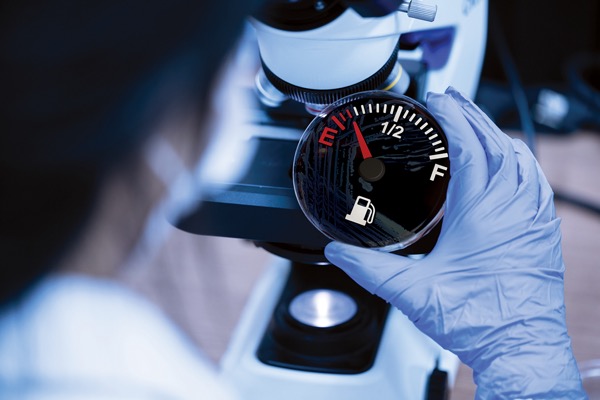
“People choose ID because we are optimists. We are excited about doing clinical care or clinical pharmacy or clinical microbiology, and we want to make a difference in public health, so we are really broad thinkers.
“ID is about advocacy. It’s about change. It’s about keeping people healthy, and you have to be optimistic to go into ID,” explained Dr. Pottinger, who is also the director of the Infectious Diseases & Tropical Medicine Clinic, and the director of the Antimicrobial Stewardship and Infectious Disease Training Programs at UW Medical Center–Montlake. He also sees patients admitted to the hospital with general ID concerns.
What he hears from his colleagues—regionally and across the nation—is that many are just exhausted. They feel they are under threat for many reasons, including the ones listed above, and they worry that they no longer feel that joy in their work.
“I’m not an expert on burnout, but I am in the business where a lot of it happens,” admitted Stuart C. Ray, MD, FACP, FIDSA, the vice chair of medicine for data integrity and analytics in the Department of Medicine at the Johns Hopkins University, a member of the Johns Hopkins Medicine Data Trust Council and the co-chair of the Research Subcouncil. Dr. Ray is also a professor in the Division of Infectious Diseases within the Department of Medicine, with a secondary appointment in oncology. He is a virologist and clinical investigator in the Division of Infectious Diseases, Johns Hopkins Viral Hepatitis Center, and on the faculty of the Janeway Firm of the Osler Medical Service, and the graduate programs in immunology, pharmacology and health sciences informatics, in Baltimore.
The long list of credentials for both ID docs, which is not unusual for ID professionals, gives an inkling of their workload, which is made even larger because often only a handful—if any—ID professionals are working in their state or hospital: 80% of counties in the United States do not have an ID specialist.
“My sense is that burnout is often a product of multiple factors, including a feeling of disconnect from the mission or a feeling that what you are doing is not appreciated,” explained Dr. Ray, who is also a member of the Infectious Disease Special Edition editorial advisory board.
Sometimes the answer is to leave the field, several people said. This was the conclusion that Nikunj Vyas, PharmD, BCPS, reached. Dr. Vyas was a clinical pharmacy specialist in infectious diseases, who had been leading the antimicrobial stewardship program (ASP) at a three-hospital health system in New Jersey with about 650 beds. He was the only ID pharmacist for the three hospitals, and his responsibilities included antimicrobial stewardship, as well as bedside ID consults. “They did not have an ID pharmacist before I got there,” Dr. Vyas said, nor did they have an ASP. Now, 10 years on, the program “is a well-oiled machine,” but he no longer felt satisfaction in the day-to-day work, even though he recognizes its importance. He recently accepted a position at a large diagnostic testing company.
“I did not feel supported from a resource standpoint,” he said. “Another reason was the lack of professional growth opportunities, and the third reason was the work–life balance was just becoming a bit out of control for me. There were after-hours responsibilities, and there is constant demand from all the providers to be in touch with me about patient care, which was necessary.
“As an ID pharmacist, your stewardship responsibilities are a number one priority in a hospital setting. However, there are many other creative approaches than doing prospective audit and feedback as well as pre-authorization reviews on a daily basis. Unfortunately, due to a lack of added resources, it is hard to expand the services without feeling overwhelmed, and you find yourself doing the same thing everyday.” Dr. Vyas explained.
“There is more work than ever before. It is stunning,” Dr. Pottinger added, “and we are just not fully recruiting that next generation to help shoulder the load. Thankfully, applications to fellowship remain roughly stable over time. However, with more training opportunities than ever before, stable applications are not enough: In 2023, only 74% of the U.S. ID Fellowship Match positions were filled. One of the reasons for this disparity is that despite the fascinating work, the need and the demand, ID physicians are among the lowest-paid specialists. (For more information about the number of ID specialists applying for fellowships, check out bit.ly/47QvAXN.)
Dr. Vyas’ decision to leave clinical practice does not surprise Debra A. Goff, PharmD, who also sits on the editorial advisory board of IDSE. She trained many pharmacists when she was the program director of the Infectious Diseases Residency Program at The Ohio State University College of Pharmacy, in Columbus, where she is still a clinical professor of pharmacy practice and science. “I would say about 50% of my PGY-2 residents are now working for industry, many in rapid diagnostic companies, and when they call to tell me they are making the transition and I ask them why, I always know the answer,” she said, the same reasons cited by Dr. Vyas.
Publish or Perish
Dr. Goff is a well-known antibiotic steward who has traveled around the world teaching antimicrobial stewardship to pharmacists in resource-poor countries. In 2019, the WHO tasked her and 15 global experts to develop the WHO tool kit to help low- and middle-income countries implement ASPs (iris.who.int/handle/10665/329404). More recently, the American Society for Microbiology selected her to lobby Congress for funding to improve international capacity to prevent, detect and rapidly respond to outbreaks. She said antibiotic stewardship pharmacists in particular are experiencing a lot of burnout because they cannot turn off their pagers.
And for anyone who wants to do research, there is even less time, she said.
“Hospitals do not pay you to do research. They pay you to do direct patient care, so research becomes something you do on your own personal time,” Dr. Goff said. “That leads to work–life imbalance. In direct patient care, your pager and cellphone are going off all day long. You have to intervene on this blood culture. You have to do this, you have to do that, and there is no dedicated time to do research. So, you drag it home and after seven to 10 years, you reach a point when you are saying, ‘Oh my God, I’m living 24/7 for my job.’”
Dr. Ray agrees that research is an underappreciated area of ID. “There are people who developed expertise and programs that they value, who don’t feel valued in a world of flat or decreasing NIH [National Institutes of Health] budgets,” he said. Often, money is allocated for the hot new thing rather than conventional ID research that can dramatically change patient care.
“The pressures of citation metrics and other things don’t really value quality as much as productivity, and that quantity over quality … can be frustrating and make people feel disconnected,” Dr. Ray said. “They feel there is no way forward, and eventually people become exhausted by bashing their head against a wall.”
(For more about the lack of ID researchers, read bit.ly/3XK4kGu-IDSE.)
Deadly Detachment
Burnout is not only bad for healthcare professionals; it can be deadly for patients. A 2012 study found that the burnout experienced by nurses related directly to the frequency with which patients acquire a healthcare-associated infection. According to the CDC, healthcare-associated infections lead to 100,000 deaths every year.
The study focused exclusively on urinary tract and surgical site infections. From a sample of 161 acute care hospitals in Pennsylvania and an average of 45 nurses working at each sampled hospital, the researchers measured nurse burnout using the Maslach Burnout Inventory-Human Services Survey.
A critical component of burnout in healthcare professionals is emotional exhaustion, and a coping strategy is detaching emotionally and cognitively from their work, according to the Maslach survey. The researchers found that every 10% increase in nurses with burnout in an acute care hospital increases the rate of UTIs by nearly one per 1,000 patients and increases the rate of SSIs by more than two per 1,000 patients (Am J Infect Control 2012;40[6]:486-490. Erratum in: Am J Infect Control 2012;40[7]:680). Although the nurse-to-patient ratio was also important, staffing became less of a factor after accounting for nurse burnout.
“We hypothesize that the cognitive detachment associated with high levels of burnout may result in inadequate hand hygiene practices and lapses in other infection control procedures among registered nurses,” the researchers noted.
COVID-19: The Good, the Bad and the Ugly
Sometimes it feels as if everything worsened after COVID-19. Who could not be affected witnessing the deaths of more than 1 million people, some of them family, friends and colleagues?
“That experience was a huge stress test for our nation, for our society globally, but definitely a big stress test for ID—clinical ID, pharmacy, infection prevention,” Dr. Pottinger said. “I personally am still unpacking that whole experience. I think it is going to take some time for each of us to process what we’ve been through to see so many people die—in many cases unnecessarily. If people had just followed public health guidance, we could have flattened that curve even more. It was just so emotionally painful to watch all these people die.”
But for an ID specialist, COVID-19 was what they had trained for, and if they came up in the ranks after antiretroviral therapy for HIV was developed, COVID-19 was probably the biggest event in their careers. All hands were on deck, and everyone understood and shared the mission, according to all the experts IDSE interviewed.

“In my experience, infectious disease clinicians have been valued for their expertise, so that is a bulwark against burnout, and that was true before COVID,” Dr. Ray said. “It just got amplified for a period of months after COVID swept through. In March 2020, I was on the COVID ward, and there was no doubt that I needed to be there, and I don’t think I’ve been at much risk of burnout when I know where I need to be.”
Dr. Vyas added: “I’ll be honest with you, during the pandemic, it was an adrenaline rush for ID [clinicians] because that is what we were trained to do. This was your calling, and you knew you would be serving as a primary resource that the whole health system would be relying on you. I didn’t have time to reflect on burnout while we were in the thick of things.”
Dr. Ray called COVID-19 a roller coaster, where the nation looked toward public health, ID and other healthcare professionals to solve the problem, but became divisive as people did not like the answers.
“I think one of the things that protected infectious disease specialists during COVID somewhat was a sense of shared mission, although politicized divisiveness undermined that, and the sense of appreciation was lost due to divisiveness,” Dr. Ray said.
The vitriol that occurred on social media and in Washington, D.C., certainly added to the stress of the pandemic. ID doctors who advocated for patients and tried to explain the science behind recommendations were often threatened. However, “that process of advocacy comes at a cost,” Dr. Pottinger said. “Sometimes there is chaos and stress, and it’s a difficult time to advocate for our patients, and we carry that as a burden.
“After a while, it did not seem we were all rowing in the same direction in this storm,” Dr. Pottinger said.
Heal Thyself
Many causes of burnout are beyond most people’s control. But some can be mitigated, and professional societies are doing their part by advocating for changes, such as addressing low compensation. The are actions people can take to find the joy they used to experience in their careers.
Remember Why You Went Into ID
When he became a physician, more than 30 years ago, Dr. Ray did not expect to specialize in ID. “But I was drawn to it by the multiple high-impact infectious diseases, and the short distance from bench to bedside. I wanted to be engaged in research and discovering,” he said. “I felt I could do clinically meaningful discovery, and have it translated into changes in care more quickly than in other fields.”
When he is feeling fatigued, he tries to remember that he is blessed by having such a meaningful career. “I started this when HIV was a largely untreatable condition, nearly uniformly fatal, and I saw the advent of highly active antiretroviral therapy, and then the advent of direct-acting antivirals for hepatitis C. So, I’ve seen two revolutions in care of major killers in my discipline during my career, and it is important to count one’s blessings.”
Appreciate and Connect
Appreciation is important—to feel appreciated and to recognize and appreciate the contributions of the team. But connection is also key. “It’s not to be tribal; it’s to be connected and supportive with each other,” Dr. Pottinger said. “That community of doctor, pharmacists, epidemiologists, nurses—we are in it together. It’s a hard job, but if you feel that you are alone or the world is against you, that makes it harder.”
Knowing that you are not alone helps protect against burnout, Dr. Ray agreed. “We have a wonderful team that is mutually supportive and feels what we do is meaningful. We also understand why we are doing it. I think those things help against the headwinds of burnout, which include things like being underpaid and under-resourced.”
And a community can be broader than just the ID doctors, he reminded. “If you are in an area where ID docs are sparse, there are people in other specialties and other parts of the healthcare team who can really help,” Dr. Ray said. “I’ve found that our pharmacists and nursing colleagues can be peers who can really enrich our lives professionally.”
Take Care of Yourself
Self-care is crucial to replenish your batteries; prioritize the healthy habits you lecture your patients about: getting enough sleep, exercise and nutrition. And don’t forget social connections outside of work. Finding that work–life balance is essential to healing yourself.
One way to stay connected professionally is to attend meetings like IDWeek. This year, Dr. Pottinger is chairing a session that might help you on Saturday, Oct. 19 from 3:15 to 4:30 p.m. called This Is Fine: How to Manage a Case of Mid-Career Burnout.
“We need to be paid more,” Dr. Pottinger said. “We need more help. We need more flexibility with our time. We need a lot of things, structurally. Those are important, and we are working on it. But in the meantime, we also need to stay connected to each other.”
The sources reported no relevant financial disclosures.


This article is from the October 2024 print issue.