





By Marie Rosenthal, MS
Robert F. Kennedy Jr.’s confirmation hearing for secretary of the Department of Health and Human Services has finally been scheduled for Jan. 28. Scheduling was delayed because of his controversial stand on several health issues, primarily vaccinations.
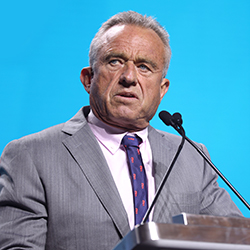
Several doctors and public health leaders oppose his confirmation because of that stand. More than 21,000 physicians signed a letter opposing the appointment. In the letter to the Senate, the physician’s group Committee to Protect Health Care said Mr. Kennedy was not only unqualified to lead HHS but “actively dangerous.”
They wrote: “A strong public health infrastructure can only be achieved when we work collectively to protect one another. Vaccines are among the greatest medical breakthroughs in history, saving millions of lives and transforming communities worldwide. Despite this, RFK Jr. has spent decades undermining public confidence in vaccines, spreading false claims and conspiracy theories, even going so far as comparing vaccination programs to Nazi Germany.”
Another group of 900 physicians urged the Senate to approve Mr. Kennedy’s nomination. Citing his vision, integrity and leadership, they said “his commonsense policy priorities—including removing harmful substances from our food, water, and medicines—are grounded in the urgent need to combat the chronic disease epidemic and to Make American Healthy Again.”
Related Content

Mr. Kennedy said he is not an anti-vaxxer and admits his own seven children are vaccinated. Most recently, according to a report in Politico, he has been telling senators who will be considering his nomination that he won’t take away anyone’s vaccines.
“He told me he is not anti-vaccine. He is pro-vaccine safety, which strikes me as a rational position to take,” said Sen. John Cornyn (R-Texas), a member of the Finance Committee that was considering whether to send Mr. Kennedy’s nomination to the floor.
However, for years, that’s not the position Mr. Kennedy had been taking. In fact, he has been spreading misinformation about vaccination since at least 2005, when he published an article in Rolling Stoneand on Salon.com, which claimed that thimerosal in measles and other vaccines caused autism in children. (Thimerosal was removed from U.S. vaccines by 2001.) The article was later retracted by both publishers due to its inaccuracies.
Although several studies have shown that measles vaccination does not cause autism, including a seminal 2002 study by Madsen et al (N Engl J Med 2002;347[19]:1477-1482), Mr. Kennedy is still espousing this misinformation. “I do believe that autism does come from vaccines,” he told Jesse Watters on Primetime on July 10, 2023, although he added that people’s opinions about his views on vaccines are wrong.
Before the measles vaccine was approved in the 1960s, the United States saw 3 million to 4 million cases of measles every year, mostly among children. Through vaccination, the United States eliminated measles from this country by 2000. But measles vaccination is declining, partly due to misinformation, experts said, and every year the country is seeing outbreaks of disease. There were 16 measles outbreaks with 284 cases in 2024; 40% of the patients were hospitalized, according to the CDC.
The Autistic Self Advocacy Network also urged the Senate not to confirm Mr. Kennedy because his “long record of spreading misinformation about autism in particular and public health in general makes him a disastrous choice for this role,” the group said.
RFK Jr. joined the Children’s Health Defense (CHD) in 2015 when it was known as the World Mercury Project. CHD uses its legal team “to hold public health agencies responsible by taking legal action to stop children from receiving illegal, unethical and dangerous vaccines that lack adequate long-term safety and efficacy testing,” the group asserts on its website.
Mr. Kennedy and CHD distributed misinformation about the dangers of measles vaccination months before an outbreak of measles in Samoa. Although there were several reasons for the decline of measles vaccination in the country, the Samoa Ministry of Health cited his visit as exacerbating mistrust about the vaccine, which led to an outbreak in 2019, where 5,700 people were infected and 83 died (The Guardian November 2024).
Legal Entanglements
RFK Jr.’s membership in CHD isn’t his only problematic affiliation. Although he said, if confirmed, he would divest himself from his financial relationships with law firms involved in vaccine lawsuits, he will still receive final payments for money owed to him from Wisner Baum, which is in litigation with Merck over its Gardasil HPV vaccine, given to protect adolescents and adults from cervical, anal and other cancers. The lawsuit alleges that the HPV vaccine is linked to several adverse reactions, including “infertility, Guillain-Barré syndrome, fibromyalgia, chronic fatigue syndrome, orthostatic intolerance, dysautonomia, seizures, and even death,” according to summary notes on Wisner Baum’s website.
A CDC overview on the safety and efficacy of the HPV vaccine refutes such claims. It specifically states, for example, that the vaccine does not cause infertility, adding that more than 135 million doses of HPV vaccines have been distributed since they were licensed, with data “[continuing] to show the vaccines are safe and effective.” Moreover, a 2024 study of almost 3.5 million people confirmed that HPV vaccination lowers the chances for developing six cancers caused by HPV, including cervical and head and neck cancers (J Clin Oncol 2024;42[suppl 16]:abstr 10507).
Mr. Kennedy stated he would retain a contingency fee interest in Wisner Baum in the ethics agreement signed as part of the confirmation process for the HHS post, which pays $200,000 annually. According to The New York Times, his agreement with Wisner Baum has earned Mr. Kennedy more than $2.5 million.
ID Community Rallies Against Nomination
Infectious Disease Special Edition spoke with several infectious disease specialists about Mr. Kennedy’s nomination because of his positions on vaccines.
“If he really wanted to, he could hurt vaccines—and know this, he will hurt vaccines,” said Paul Offit, MD, the director of the Vaccine Education Center and an attending physician in the Division of Infectious Diseases at Children’s Hospital of Philadelphia. Dr. Offit, with Stanley Plotkin, MD, invented one of the currently used rotavirus vaccines, RotaTeq (Merck). Between 2006 and 2019, rotavirus vaccines have prevented an estimated 140,000 deaths.
Before the above-mentioned Rolling Stone article, Dr. Offit had a long conversation with Mr. Kennedy, after Mr. Kennedy called to ask him about thimerosal, a mercury-based preservative that had been used in multidose vaccine vials to prevent contamination from bacteria and fungi. Dr. Offit answered his questions, and delineated the steps that had been taken to remove thimerosal from vaccines. All U.S. vaccines for children and adults come in formulations without thimerosal, according to the CDC.
“I remember going home that night and telling my wife, ‘I had a really nice conversation with Robert F. Kennedy’s son,’” he told IDSE. Months later, the Rolling Stone article appeared and accused Dr. Offit of lying to him and of being an apologist for thimerosal because his rotavirus vaccine was “laced with thimerosal,” Dr. Offit explained. It was simply not true.
“I had been sandbagged. I trusted him, and he betrayed that trust,” Dr. Offit said. Both publishers eventually pulled the article because of its inaccuracies.
Georges C. Benjamin, MD, the executive director of the American Public Health Association (APHA), shares Dr. Offit’s concerns. “I think he’s the wrong guy,” he said. “I do not trust his perspective on following science.”
Dr. Benjamin said he sees Mr. Kennedy’s lack of a medical degree as another negative, even though he acknowledged that the current HHS head, Xavier Becerra, is not a physician. “I personally prefer a clinician [as head of HHS] because I think it adds an element you can’t get if you are just a health administrator or a health policy person.”
He added that Mr. Kennedy’s history “has been to cherry-pick the information he uses and use them as facts. … Now, a good lawyer knows how to do that, but I think his approach is wrong [for public health].”
Among his positions before joining APHA, Dr. Benjamin was the secretary of the Maryland Department of Health, when Kathleen Hartington Kennedy Townsend was the lieutenant governor of the state. He has met Mr. Kennedy at functions, but said he does not know him well.
Compensation Program Could Be Targeted
Although, as noted, Mr. Kennedy told the senators when he was making the rounds before his confirmation hearing that he would “not take away vaccines,” there are many things he could do to undermine an extremely successful vaccination program in this country, Dr. Benjamin and other experts said. One of the most significant could be to tinker with the National Vaccine Injury Compensation Program—a no-fault alternative to the traditional tort system that began after Congress passed the National Childhood Vaccine Injury Act of 1986 to ensure that companies would continue to make vaccines.
“He could say, ‘I don’t think these certain vaccines should be protected by the Vaccine Injury Compensation Program, and just pull them out of that program and let them suffer the slings and arrows of outrageous litigation that almost drove vaccines out of the marketplace in the early 1980s,” Dr. Offit said.
RFK Jr. on the Record
Although such predictions may not come to pass if Mr. Kennedy is approved as HHS head, ID experts note that they’re based on his well-documented questioning of vaccine safety. In his latest book, “The Real Anthony Fauci: Bill Gates, Big Pharma, and the Global War on Democracy and Public Health,” Mr. Kennedy discusses an international conspiracy among pharmaceutical companies, the federal government and the medical establishment to hide the truth about vaccines from the American public through a lack of transparency.
And yet, all of the vaccine meetings—such as the Advisory Committee on Immunization Practices (ACIP), the FDA Vaccines and Related Biological Products Advisory Committee (VRBPAC), and the National Vaccine Advisory Committee (NVAC)—hold public meetings where vaccine safety and efficacy data are presented and committee members ask questions of both government experts and the pharmaceutical companies before voting. Moreover, all of the voting results are determined by a majority. (Although assertions of bias have been made against some FDA advisory committees, no such charges have been levied against ACIP, NVAC or VRBPAC. And in 2024, the FDA announced efforts to ensure advisory committee integrity.
Mr. Kennedy’s book also questions germ theory—the basis of the ID specialty—while emphasizing what Mr. Kennedy posits is the value of the miasma theory, which emphasizes preventing disease by “fortifying the immune system through nutrition and by reducing exposures to environmental toxins and stresses.” It is true that malnourished children are at risk for more severe disease (Vaccine 2024 Dec 10. doi:10.1016/j.vaccine.2024.126564). However, the 16 outbreaks in the United States show that even well-nourished children can still contract serious measles if they are not vaccinated. Measles is a highly contagious virus, the physicians said.
Walter Orenstein, MD, MPH, a professor emeritus at Emory University and a former professor of medicine, epidemiology, global health and pediatrics at Emory University School of Medicine, as well as the associate director of the Emory Vaccine Center, and the director of the Emory Program on Vaccine Policy and Development, in Atlanta, said he also has concerns about Mr. Kennedy heading HHS.
“His ignorance about science and his espousing theories that are not supported by [published evidence] are very worrisome to me,” said Dr. Orenstein, who was the director of the U.S. Immunization Program while at the CDC from 1988 to 2004. Dr. Orenstein does not remember meeting Mr. Kennedy during his tenure at the CDC.
Dr. Orenstein said he is concerned that members of the federal committees listed above could be filled with anti-vaxxers, “who would then be in a position to make recommendations, which are not compatible with the available science and information.”
Another tactic RFK Jr. could take is to withhold funds to states that have school-entry mandates to erode vaccine programs, or he could remove funding for the Vaccines for Children Program, which was established by Congress in 1994 to provide free vaccine coverage for most U.S. children (MMWR Morb Mortal Wkly Rep 2024;73[33]:722-730), Dr. Orenstein warned.
The goal of the vaccine program is disease prevention, he explained, adding that vaccines are victims of their own success. “Prevention is a hard sell. With a successful prevention program, people stop realizing the benefits as opposed to therapy where you recognize benefits,” he said. “We are at 98% to 99% reductions of many of our vaccine-preventable diseases.”
Dr. Orenstein pointed to Haemophilus influenzae type b (Hib) as one of the most striking vaccination success stories. Before vaccination, about 20,000 U.S. children younger than 5 years of age came down with invasive Hib disease. including meningitis, each year.
As a young pediatrician, Dr. Orenstein prided himself on his ability to do lumbar punctures to confirm the diagnosis because he saw so many cases. Fortunately, “[most] pediatricians today have never taken care of a case of Hib meningitis,” he said.
Another success story is hepatitis B vaccination. Before the HepB vaccine, which was licensed in the United States in 1982, between 200,000 and 300,000 people were infected with hepatitis B virus (HBV) each year. In 1990, there were 3.03 cases of acute HBV per 100,000 children in the United States. Between 2011 and 2020, there were no cases of acute HBV among children.
Concerns over vaccine funding cuts aren’t just limited to those that undermine school-mandate programs. Mr. Kennedy also could stop supporting vaccine research or commit funds that might be used to support new studies of vaccines that have already demonstrated their efficacy and safety in millions of children. “He could do that,” Dr. Offit said. “He could say, ‘I don’t think the polio vaccine has been tested well enough, and so let’s pull it back. Let’s pause it until it is better tested.’”
More than 10 billion doses of the oral polio vaccine have been given, and it is estimated that it has prevented 16 million cases of polio and reduced the incidence of disease by 99%. Whether Mr. Kennedy is aware of those statistics is unclear, but he has been telling senators who will be voting on his nomination that he’s “all for” polio inoculations—a point underscored by President Trump during a recent news conference. “You’re not going to lose the polio vaccine,” Mr. Trump said. “That’s not going to happen.”
Dr. Offit is not convinced. Based on Mr. Kennedy’s past questioning of vaccine safety, “he will do everything he can to lessen trust in vaccines, to scare people about unfounded harms of vaccines or even the efficacy of vaccines.”
If Mr. Kennedy is successful in reducing vaccination rates in this country, once there are enough unprotected people, large outbreaks of any or all of the vaccine-preventable diseases could reoccur. “I think, without question, the first virus to come back in a torrent would be measles. It is the most contagious of the vaccine-preventable diseases,” Dr. Offit said. “The mortality rates for measles is about 0.1%, so that means one death in 1,000 to a few thousand cases, and you could start seeing children dying again [from measles].”
Contact Your Senator
IDSE also spoke with Amanda Jezek, the senior vice president for public policy and government relations at the Infectious Diseases Society of America (IDSA). Ms. Jezek said the society does not take a position on any nominee. “We try to work with everybody, and to be that nonpartisan expert resource, which we believe should be valuable to everyone regardless of their party or their personal views.
“We want to be able to educate and to find common ground where we can,” Ms. Jezek said.
However, “there is very clear evidence that vaccines are, along with antibiotics, responsible for some of the largest gains in human life expectancy in modern history,” she said. “We know that the vaccines that are part of routine childhood vaccination are safe and effective. So, we feel that there is very strong, settled science behind vaccines. That is a view held not only by IDSA, but by the broader medical and scientific community.”
Ms. Jezek added that legislators appreciate hearing from people who are experts in a particular area, so whether you support Mr. Kennedy or not, taking the opportunity to contact your senator would be useful. “If someone brings specific expertise that is relevant to the issue at hand, senators and their staffs rely on those experts because they have to consider so many different issues that they cannot become an expert in every single one. They really do value hearing from their constituents.” (See table below for contact information for the full senate.)
IDSE attempted to speak with Mr. Kennedy, his attorney Aaron Siri and Sen. Bill Cassidy, MD (R-La.), who is now the chair of the Senate Committee on Health, Education Labor and Pensions (HELP), which will hold one of two hearings about his nomination. The Senate Finance Committee will also hold a hearing this week and will vote on whether to send his name to the full Senate for approval. The Finance Committee oversees Medicare and Medicaid.
None would grant an interview, even after requesting—and receiving—questions from IDSE.
In response to similar questions, Mr. Cassidy’s office passed a message to IDSE he wrote on X after meeting Mr. Kennedy. “Had a frank conversation with HHS nominee @RobertKennedyJr. We spoke about vaccines at length. Looking forward to the hearings in HELP and Finance,” he tweeted, but he too did not grant an interview.
The Finance committee will consider Mr. Kennedy's nomination on Jan. 29 at 10 a.m. ET; the HELP committee hearing will be Jan. 30, at 10 a.m. ET. IDSE plans to cover both hearings, so check back for more on this story.
What May Come Next
Dr. Offit summed up the key concern that many ID experts share about RFK Jr. in advance of the Senate confirmation hearing. “He’s a science denialist who may become the head of a science program. He’s a conspiracy theorist. He’s an anti-vaccine activist, and I fear he will do everything he can to hurt the perception of vaccines and the availability of vaccines and research associated with [them],” Dr. Offit said.
As for RFK Jr.’s focus on nutrition, “he is not going to go after red dye in Fruit Loops,” Dr. Offit said. “He’s going to go after vaccines.”