

By Marie Rosenthal, MS
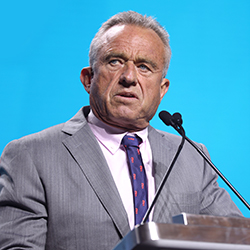
Robert F. Kennedy Jr. spent much of two Senate nomination hearings trying to convince members who will vote for his confirmation as secretary of the Department of Health and Human Services (HHS) that he is not against vaccines, nor is he anti-science, but his history tells another story.
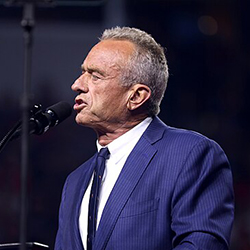
And for the most part Republicans, more than Democrats, appeared to take him at his word. Still, some are weighing what he said at the hearings against what he has been saying for decades in print, on social media and television. Sen. Bill Cassidy, MD (R-La.) opened the Senate Committee on Health, Education, Labor & Pensions (HELP) hearing on Jan. 30, with a story he experienced while practicing gastroenterology before becoming a senator. In the early 2000s, he said one of his patients, an 18-year-old woman, required a liver transplant after hepatitis B ravaged her liver—a procedure that a hepatitis B vaccine could have prevented.
“Since then, I've tried to do everything I can to make sure I never have to speak to another parent about their child dying due to a vaccine-preventable disease,” Mr. Cassidy said. “We vaccinated 36,000 children for hepatitis B. And since the CDC and the ACIP [Advisory Committee on Immunization Practices] have recommended universal vaccination for children, the number of acute hepatitis B cases in our country has declined by almost 90%. So, as a physician who's been involved in immunization programs, I've seen the benefits of vaccinations. I know they save lives. I know they're a crucial part of keeping our nation healthy,” he said.
“So, your past of undermining confidence in vaccines with unfounded or misleading arguments concerns me,” Mr. Cassidy said.
Mr. Kennedy’s opening remarks for the HELP meeting mirrored those for the Senate Committee on Finance, which occurred the day before. His emphasis is chronic conditions, not vaccinations, he said, and throughout both hearings he tried to push the debate to that topic, but for the most part, the committees were not having it.
“Today, Americans’ overall health is in grievous condition. Over 70% of adults and a third of children are overweight or obese,” Mr. Kennedy said in his opening statement. “Diabetes is 10 times more prevalent than in 1960. Cancer among young people is rising by 1[%] or 2% per year. Autoimmune diseases, neurodevelopmental disorders, asthma, Alzheimer's, ADHD [attention-deficit/hyperactivity disorder], depression, addiction, and a host of other physical and mental health conditions are all on the rise.”
Mr. Kennedy also emphasized the need for better food. “I'll conclude with the promise to you, Mr. Chairman, the members of this committee, to the president, and most of all, to the tens of millions of parents across America, especially the moms who have propelled this issue to the center stage, should I be so privileged as to be confirmed, we will make sure our tax dollars support healthy foods, will scrutinize the chemical additives to our food supply, will remove the financial conflicts of interest from the agencies,” he said.
Yet, when he was asked about his own potential conflict of interest by Sen. Elizabeth Warren (D-Mass.)—that of receiving more than $2 million from lawsuits against vaccine manufacturers—he did not seem to see that as a conflict of interest. Sen. Warren asked him specifically if he would refuse to accept fees from these lawsuits, and Mr. Kennedy replied: “You're asking me to not sue drug companies, and I'm not going to agree to that.”
There was not one person on either committee who did not agree with Mr. Kennedy about the need to improve the health of Americans, as well as to improve the quality of the food we eat. While agreeing that many Americans have chronic conditions and that the food supply could be improved, the committees came back over and over again to two repeating issues: vaccinations and a woman’s right to choose, with an emphasis on the delivery of mifepristone, a medication that can be used to treat miscarriages, as well as used for abortions.
Although Mr. Kennedy agreed that women who are experiencing a miscarriage should be treated immediately, he said: “I believe, and I've always believed that every abortion is a tragedy,” and he said he would hire pro-life people in the HHS.
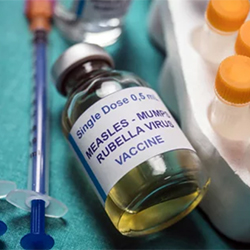
He was asked repeatedly about statements he had made about measles vaccine, agreeing with some, denying others and saying others were taken out of context, and Mr. Kennedy said over and over that he was not anti-science, nor was he against vaccines. He admitted that his own six children were vaccinated, even saying that if he is shown the data, he would recant his message that vaccines cause autism; but when presented with the data, he did nothing of the sort.
Mr. Cassidy asked him, almost pleading with him, “If the data's brought to you, and these studies that have been out there for quite some time and have been peer-reviewed, and they show that these two vaccines [measles and hepatitis B] are not associated with autism, will you ask, ‘No, I need even more.’ Or will you say, ‘No, I see this, and I unequivocally and without qualification will say that this does not cause autism.’”
Mr. Kennedy responded: “Not only will I do that, but I will apologize for any statements that misled people otherwise.”
And yet, when Mr. Cassidy told him that as a doctor, he knows the evidence is there, and he mentioned a large Cochrane review done in 2020 that reinforced what other studies have said is that there is no link between autism and measles, Mr. Kennedy did not believe it.
Cochrane reviews are analyses that look at many different studies to evaluate an issue. The review, which looked at two studies of almost 1.2 million children, found the claims linking vaccination and autism were false. In fact, cases of autism were similar in both vaccinated and unvaccinated children. In addition, the review looked at two more studies of more than 1 million children that found no evidence for any association between the measles-mumps-rubella vaccine and encephalitis, inflammatory bowel disease, Crohn's disease, cognitive delay, type 1 diabetes, asthma, dermatitis/eczema, hay fever, leukemia, multiple sclerosis, gait disturbance, and bacterial or viral infections. The review found that the risks posed by the diseases of measles, mumps and rubella far outweigh any adverse events from vaccination.
However, Mr. Kennedy dismissed this evidence and mentioned another study by Andrew Mawson, MD. In the study—which was retracted twice—Dr. Mawson surveyed parents of 666 home-schooled children, 39% of whom were not vaccinated, and concluded that the vaccinated children had an increased risk for neurodevelopmental problems, including autism.
“I just want to pledge to you that I will never stick on a point if somebody shows me data that say I'm wrong,” Mr. Kennedy said, asserting again that he was driven by evidence, but refusing to agree with Sen. Cassidy's evidence.
Amesh Adalja, MD, a senior scholar at the Johns Hopkins Center for Health Security, in Baltimore, who was part of a media briefing after the HELP hearing, said if one reviews the literature and reads “rigorous studies that have been done,” you will see the “opposite conclusion regarding vaccines and autism. So, this is just Mr. Kennedy trying to find anything that will support this debunked notion; you have to think of this as a fixed idea in his head-almost like a religious idea.”
Georges Benjamin, MD, the executive director of the American Public Health Association, who was also at the briefing, said Mr. Kennedy’s assertions that HHS does not care about researching or treating chronic diseases are incorrect. HHS is composed of 13 operating divisions. One of them, the National Institutes of Health, has 27 institutes and centers dedicated to cancer, cardiovascular and pulmonary diseases, aging, mental health issues, arthritis, and pediatrics, among others. Even the CDC has centers devoted to issues outside of infections, including birth defects, injury prevention and occupational safety.
“Mr. Kennedy, during his hearing today, I think in many ways demonstrated his lack of capacity to really understand some details around science and evidence that I think you would need to know in order to run this department,” Dr. Benjamin said.
Mr. Cassidy closed the HELP hearing admitting that he was “struggling” with this nomination. As a Republican, Mr. Cassidy wants to support the nomination, but as a doctor, Mr. Kennedy’s views on vaccinations are spreading misinformation and harming people.
“I think I can say that I have approached it using the preponderance of evidence to reassure; and you have approached using selected evidence to cast doubt,” he said.
“I recognize if you come out unequivocally, ‘Vaccines are safe; it does not cause autism,’ that would have an incredible impact. That’s your power. So what’s it going to be? Will it be using the credibility to support—lots of articles—or will it be using credibility to undermine?” Mr. Cassidy noted.
“You have the power to help rebuild, to help public health institutions re-earn the trust of the American people,” Mr. Cassidy said, but not if Mr. Kennedy continues to spread misinformation about vaccinations. Mr. Cassidy is not only chair of the HELP committee, but he also sits on the finance committee.
Although both committees held hearings on the nomination, only the finance committee can vote to send the nomination to the full senate for confirmation.