





On Feb. 27, the Department of Health and Human Services (HHS) announced the appointment of two new members to the CDC's Advisory Committee on Immunization Practices (ACIP): Sean G. Downing, MD, an internal medicine and pediatrics physician practicing concierge care in Sarasota, Florida, and Angelina Farella, MD, a pediatrician who owns a family health and wellness practice in Webster, Texas.
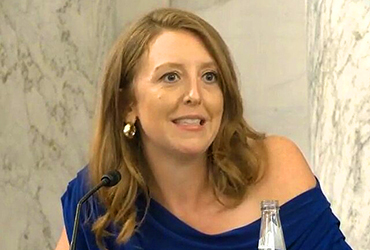
Although both bring more than two decades of clinical experience, neither has a visible research record in vaccines, vaccine-preventable diseases, or immunization policy.
Continuing Change at ACIP
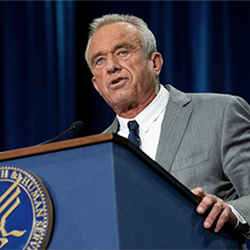
The appointments are the latest chapter in a sweeping restructuring of ACIP that began in June 2025, when HHS Secretary Robert F. Kennedy Jr. dismissed all 17 standing members of the committee and reconstituted it from scratch. Since then, Kennedy has installed more than a dozen new voting members, many of whom have documented histories of vaccine skepticism.
The American Academy of Pediatrics withdrew from participation in ACIP last year, and on Feb. 24, the American College of Obstetricians and Gynecologists (ACOG) became the latest major professional organization to follow.
For Walter Orenstein, MD, the new appointments raise immediate questions. Dr. Orenstein—a professor emeritus of medicine, pediatrics, epidemiology, and global health at Emory University, in Atlanta, and the former director of the US Immunization Program from 1988 to 2004, during which time endemic measles and rubella were eliminated in the United States—said his first step upon learning of the appointments was to search PubMed.
“I tried to see if these people had authored any major papers on vaccines and vaccination or vaccine-preventable diseases,” he said. “And I didn't see anything. They may well be capable clinicians, but there’s nothing in the public record that points to their experience, particularly in evaluating science and evaluating vaccine safety and vaccine effectiveness, things that are very important to ACIP deliberations.”
A news brief from the Center for Infectious Disease Research and Policy at the University of Minnesota noted that Dr. Farella “gained some notoriety during the pandemic as a member of the right-wing medical group America’s Frontline Doctors. She made several television appearances calling for the removal of the COVID-19 vaccine, blamed it for 4,000 uncounted deaths in Texas, and advocated treating COVID-19 with vitamins.”
HHS framed the appointments differently. “Dr. Downing and Dr. Farella bring decades of real-world experience caring for children, adults, and families,” Kennedy said in the Feb. 27 announcement, “and that frontline perspective is essential to making recommendations that are grounded in gold-standard science and worthy of public trust.”
With the two new appointments, the only member with clear infectious disease credentials on the reconstituted committee is H. Cody Meissner, MD, a pediatric infectious disease specialist and a professor of pediatrics at the Geisel School of Medicine at Dartmouth College, in Hanover, New Hampshire, with a well-established record on vaccines. “That’s very different from how the committee has historically been composed, and I am very concerned about that,” Dr. Orenstein said.
ACOG Joins AAP in Dropping Out
Beyond voting membership, Dr. Orenstein pointed to another damaging shift: the exclusion of professional medical organizations from ACIP’s working groups, where much of the committee's substantive scientific review has historically taken place.
“I am concerned about how professional organizations have been excluded from a lot of the deliberations, which is what led organizations like the American Academy of Pediatrics to withdraw,” Dr. Orenstein said. “These organizations are very experienced. The Committee on Infectious Diseases of the American Academy of Pediatrics, often called the Red Book Committee, has played a major role in helping ACIP deliberations in the past.”
In its Feb. 24 withdrawal statement, ACOG President Steven J. Fleschman, MD, MBA, said that ACIP had recently “ignored peer-reviewed reports on vaccine safety; shared presentations containing cherry-picked data without appropriate scientific context; and unilaterally changed the childhood and adolescent vaccine schedule without regard to expert input.” He called these actions “a fundamental departure from the scientific rigor and impartiality that have been the hallmark of this committee for 60 years.”
ACOG framed the withdrawal as a defense of the scientific process that makes vaccine recommendations trustworthy. “ACOG's withdrawal from ACIP is not a withdrawal from our commitment to advancing vaccine science or to protecting patients' health and safety,” Dr. Fleischman said. The organization continues to recommend influenza, COVID-19, Tdap, and RSV vaccines during pregnancy, and said it will continue developing its own evidence-based immunization guidance for obstetrician-gynecologists.
For ACOG to consider returning, it said it would need to see the committee “return to normal processes for notification, agenda setting, soliciting and taking into consideration public comment; the appointment of vetted subject matter experts as voting members; and the committee following the existing scientific, credible evidence in making its vaccine recommendations.”
The dysfunction at ACIP is unfolding as the United States faces its worst outbreak of measles in a quarter of a century. The United States recorded nearly 2,300 measles cases in 2025, the highest annual total since elimination was declared in 2000 and nearly six times the typical yearly burden since then. By late February 2026, more than 1,100 additional cases had already been reported—a pace that threatens to surpass last year's record before summer.
Related Content


A Controversial Pick for Surgeon General
The latest ACIP developments are unfolding alongside a parallel controversy: the nomination of Casey Means, MD, as U.S. surgeon general. Dr. Means, 38, is a wellness influencer, best-selling author, and close ally of Kennedy. Although she graduated from Stanford University School of Medicine, she left her surgical residency before completion. Her Oregon medical license lapsed in January 2024, and she acknowledged at her Feb. 25 Senate confirmation hearing that she cannot write a prescription and has no plans to reactivate her license.
The hearing, before the Senate Health, Education, Labor and Pensions Committee, ran for nearly two and a half hours and was dominated by questions about Dr. Means’ qualifications and views on vaccines. When pressed by committee chair Senator Bill Cassidy, MD (R-LA), on whether she would encourage parents to vaccinate children against measles, given both the ongoing outbreaks and the deaths of two children from the disease in 2025, Dr. Means said, “I believe vaccines save lives. I believe that vaccines are a key part of any infectious disease public health strategy. I'm supportive of vaccination.” But she consistently followed such statements with calls for individual conversations with physicians.
When Senator Tim Kaine (D-VA) asked repeatedly whether Dr. Means believed the flu vaccine reduces the risk of hospitalization and death, she refused to answer directly, instead saying, “I believe that all patients should talk to their doctor.” Both Sen. Cassidy and Senator Bernie Sanders (I-VT) pressed her on whether she would rule out a link between vaccines and autism, a connection that decades of research have found does not exist. Dr. Means declined to do so, saying, “We should not leave any stones unturned” in understanding the causes of autism.
“The major concern is she's not a physician with an active license to practice,” Dr. Orenstein said. “And another concern was not endorsing recommendations that have been there for years, such as for annual influenza vaccination.”
Dr. Orenstein reported that he consults for several vaccine manufacturers, including Merck, Moderna, Sanofi, and Seqirus.