By Gina Shaw
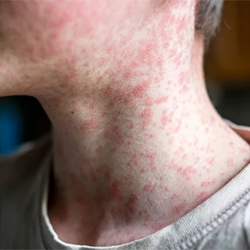
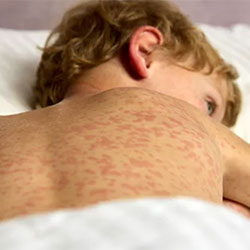
Public health experts are calling for a clear and consistent message on the critical importance of the measles-mumps-rubella (MMR) vaccination. The country has experienced the first measles death in a decade during a large outbreak in Texas, and other cases are also cropping up across the country, causing concern.
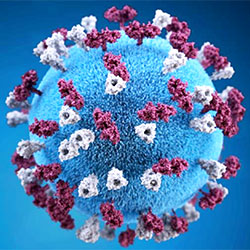
“We need all public health officials and advocacy organizations to stick to the science,” said Jeffery Goad, PharmD, MPH, the president of the National Foundation for Infectious Diseases (NFID) and a professor of pharmacy practice at Chapman University School of Pharmacy, in Irvine, Calif. “Measles is one of the most infectious viruses among humans, and vaccination is the only effective preventive strategy against the disease. The MMR vaccine is highly effective; two doses are over 97% effective against the disease. The solution is obvious: We need to get more people vaccinated.”
American Medical Association President Bruce A. Scott, MD, also issued a statement urging people to get vaccinated against measles if not already immune. “With measles outbreaks occurring in multiple states and spring break travel approaching, the AMA urges everyone who isn’t already vaccinated to get themselves and their families vaccinated against measles now.”
Dr. Scott added that widespread vaccinations against measles are needed because the disease “is extremely contagious and can cause life-threatening illness.” Moreover, "there is no cure or specific antiviral treatment for measles. Vaccination remains the best defense” against the infection. “Vaccination not only prevents infection, measles-related complications and even death, but also helps prevent further spread to loved ones, neighbors, co-workers and others in close contact.”
Despite these proven benefits, Health and Human Services Secretary Robert F. Kennedy Jr. has been spreading mixed messages about prevention and treatment of the extremely contagious virus. In a Cabinet meeting in late February, he described the major outbreak as “not unusual,” saying that “we have measles outbreaks every year.” But on March 3, he issued a more cautious statement encouraging vaccination: “I am deeply concerned about the recent measles outbreak. This situation has escalated rapidly, with the Texas Department of State Health Services (DSHS) reporting 146 confirmed cases since late January 2025, primarily in the South Plains region. (As of March 4, that number had risen to 159, with a total of 164 cases reported across nine jurisdictions.) Tragically, this outbreak claimed the life of a school-aged child, the first measles-related fatality in the United States in more than a decade.
“Vaccines not only protect individual children from measles, but also contribute to community immunity, protecting those who are unable to be vaccinated due to medical reasons,” Mr. Kennedy said in a statement on the HHS website.
In response to the outbreak, Mr. Kennedy directed the CDC and the Administration for Strategic Preparedness and Response (ASPR) “to work closely with the Texas health authorities to provide comprehensive support.” The CDC has been in close communication with Texas health authorities during the outbreak.
“HHS’s efforts include offering technical assistance, laboratory support, vaccines and therapeutic medications as needed,” Mr. Kennedy said.
In a March 2 opinion piece for Fox News Digital, Mr. Kennedy extolled the importance of the MMR vaccine in protecting people from the disease using the same statement as in his statement on the HHS website.
In addition, he wrote healthcare vaccines are available “for those who want them,” but he stopped short of actually recommending that all children who can be vaccinated should be. “All parents should consult with their healthcare providers to understand their options to get the MMR vaccine. The decision to vaccinate is a personal one,” he wrote.
However, community-level protection against measles is not possible unless more than 95% of the population is vaccinated, Dr. Goad noted, adding that this is particularly important to protect people who cannot be vaccinated because they are have an immunocompromising condition.
“There are three populations that we are always most concerned with—pregnant women, the immunocompromised, and babies less than 1 year old,” with the latter group particularly at risk because infants do not receive their first dose of MMR vaccine until 12 months of age.
For all those vulnerable people, “we have to rely on vaccinating everyone around them to ensure that this disease isn’t transmitted to them,” Dr. Goad stressed.
Vitamin A Statements Cause Concern
In his Fox News piece, Mr. Kennedy also recommended the use of vitamin A against measles. “While there is no approved antiviral for those who may be infected, CDC has recently updated their recommendation supporting administration of vitamin A under the supervision of a physician for those with mild, moderate, and severe infection,” Mr. Kennedy wrote. “Studies have found that vitamin A can dramatically reduce measles mortality.”
A Cochrane review found “no evidence of a difference for VAS [vitamin A supplementation] on mortality due to measles (RR [risk ratio] 0.88, 95% CI 0.69 to 1.11; 6 studies, 1,088,261 children; low-certainty evidence), respiratory disease (RR 0.98, 95% CI 0.86 to 1.12; 9 studies, 1,098,538 children; low-certainty evidence), and meningitis.” Vitamin supplementation did reduce the incidence of diarrhea from measles, however (Cochrane Database Syst Rev 2022;3[3]:CD008524).
Dr. Goad cautioned against misinterpreting the science on vitamin A and measles. “Vitamin A is a therapy that is used for hospitalized patients with measles in those who are deficient in that vitamin,” he said. “There [are] data to show that in these individuals, it helps to prevent some of the severe complications of measles, such as blindness. But it is an adjunctive therapy in hospitalized patients, and does not prevent measles. The only way to prevent measles is through vaccination.”
Moreover, excessive amounts of vitamin A can pose serious health risks. On March 4, the American Academy of Pediatrics (AAP) posted a warning to its Instagram account, stating: “Vitamin A, at any dose, does not prevent measles and no parent should give their child vitamin A in hopes of preventing [the infection]. Vitamin A is a micronutrient, meaning very small amounts are all we need to stay healthy and we get those through a healthy diet and in recommended doses of over-the-counter multivitamin supplements. Large doses of vitamin A given over prolonged periods are very dangerous and can lead to vomiting, blurry vision, headaches, and, when more severe, liver damage and coma.”
The AAP statement noted that under a doctor’s supervision, children infected with measles should be given vitamin A once a day for two days to reduce illness severity. “But that is a small amount in a medical setting. The only way to prevent measles is to have your child vaccinated with the MMR vaccine,” the group stressed.
As long as overall vaccination rates remain above 95%, a large-scale outbreak of measles in the United States is unlikely, Dr. Goad noted, but localized outbreaks are likely to continue. “In communities where vaccination rates are very low, or in places like charter schools that attract populations who do not vaccinate, we can expect to see more cases,” he said. “The death of the child in Texas, who was unvaccinated, was a preventable tragedy. It is very concerning when we have a vaccine-preventable disease that anyone [should die] from [it].”
Although the CDC-recommended measles vaccination schedule starts at 12 months of age, the CDC also recommends that if traveling internationally or during an outbreak, vaccination can begin earlier, with one dose for infants 6 to 11 months of age and then two more age-appropriate doses later.
“The reason we begin vaccination at 12 months is that the vaccine may be less effective in a very young infant who still has maternal antibodies,” Dr. Goad said. “Although we will have to revaccinate later, earlier vaccination certainly can help to protect younger children in outbreak situations.”
Dr. Goad disclosed that he consults for Merck, Valneva and Moderna. Dr. Scott reported no relevant financial disclosures.