

Originally published by our sister publication Pharmacy Practice News
By Fran Kritz
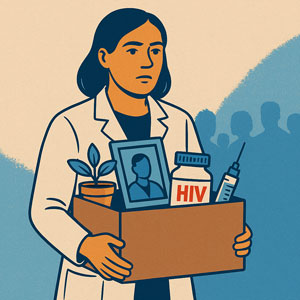
A panel of University of Maryland (UMD) medicine and pharmacy experts told reporters late last week that research funding cuts to the National Institutes of Health (NIH) and other government agencies, announced by the Trump administration since February, will result in fewer new drugs and vaccines developed and fewer pharmacy students prepared for future roles in research and industry.

During the briefing, Mark T. Gladwin, MD, the dean of the UMD School of Medicine, addressed the critical nature of the cuts, noting that between 2010 and 2019, every FDA-approved drug was developed through NIH funding. In fact, a cholera vaccine approved in 2016 was developed by researchers at the university and funded by NIH, Wilbur Chen, MD, the director of geographic medicine at the medical school, told reporters.
Several speakers pointed out that the funding cuts that have impacted medical and pharmaceutical education and research have been both direct (for specific research projects) and indirect (for infrastructure support, such as facility maintenance and critical lab equipment). Grant officers who manage the federal funding also have been fired at health agencies, according to the speakers.
“My greatest concern is that we might have to eventually reduce our numbers of research trainees, because many of the great pharmaceutical science, pharmacy practice and health outcomes research experiences we provide to students are funded with federal dollars,” said panelist Audra Stinchcomb, PhD, a professor of pharmaceutical sciences at the UMD School of Pharmacy.
During the briefing, Dr. Stinchcomb described small businesses she has launched with NIH and FDA funding for the university, including one that developed pain and nausea prevention for patients undergoing cancer chemotherapy and another that developed methods to help prevent fentanyl patch abuse. Combined, the two firms employed 15 postdoctoral students and 33 graduate students.
Another company has nine clinical trials in progress for heart disease prevention and treatment but won’t be able to move forward without continued NIH funding, Dr. Stinchcomb said. “A lot of us [in pharmaceutical sciences benefit from] funding for [research] for drugs that would otherwise not be developed,” said Dr. Stinchcomb, adding that many UMD pharmacy students are interested in jobs in the pharmaceutical industry. “This is a serious issue,” she told reporters. “Without the funding, we won’t have our next generation of scientists.” Dr. Stinchcomb also told reporters that the funding loss impacts all the school’s pharmacy students because the indirect funding that NIH provides as part of research grants is needed for that school’s infrastructure, such as staff and safety systems.
“Federal funding cuts make it more difficult for us to train the next generation of clinicians and scientists, and directly impact the development pipeline of lifesaving medications,” she warned. “If these cuts become more expensive, we run the risk of having a country with a beleaguered healthcare system, and a stagnated pharmaceutical sector that will not be able to sustain its significant contribution to the economy and improved human health.”
Commenting on the briefing’s critical issues, Ilisa Bernstein, PharmD, JD, a former senior vice president at the American Pharmacists Association and the former director of pharmacy affairs at FDA, and now an industry consultant, told Pharmacy Practice News that “NIH research and grants are the backbone of pharmacy practice, innovation, research and patient care.” Echoing Dr. Stinchcomb’s concerns, she said, “cuts to this funding threatens the foundation of pharmacy schools, where important research is conducted and the next generation of pharmacists develop their investigation and inquiry skills. Without adequate support, advances in patient care and basic pharmaceutical sciences are compromised.”
Late last week, a federal judge barred the Trump administration from limiting funding from the NIH that supports research at universities and academic medical centers. An appeal by the Trump administration is expected. Suits to overturn the funding cuts were also recently filed by 16 state attorneys general and the American Civil Liberties Union.