By Tom Rosenthal
This year’s U.S. measles outbreaks highlight the significant gaps in funding for vaccinations that can immunize all Americans against routine and emergent infectious disease threats, according to the Big Cities Health Coalition (BCHC).
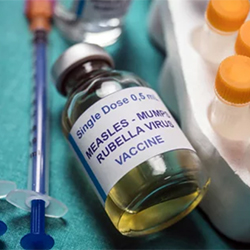
BCHC is calling for additional federal funding to create a Vaccines for Adults Program, said Chrissie Juliano, MPP, the executive director of BCHC, which includes the public health leaders of 35 of the nation’s largest cities containing 61 million people, or 1 in 5 Americans.
“We have holes in our vaccine programs, particularly as it relates to adults, who do not qualify for free or reduced-priced vaccines, which is an ongoing challenge in routine outbreaks like measles,” Ms. Juliano said.
Ms. Juliano said a Vaccines for Adults Program “is necessary to sustain a network of adult immunization providers, reduce vaccination coverage disparities, improve outbreak control of vaccine-preventable diseases, and enhance and maintain the infrastructure needed for responding to future emergencies.
“Even with recent legislative efforts to lower barriers to adult vaccines in Medicare Part D, Medicaid and CHIP [Children's Health Insurance Program], there are still significant gaps in coverage and infrastructure for adults that leave too many Americans vulnerable to vaccine-preventable diseases,” she said.
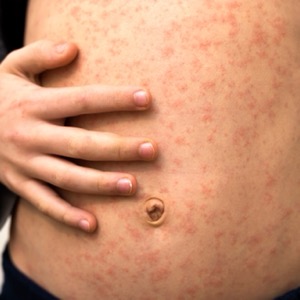
The CDC reported that as of May 10, there were 132 measles cases reported by 21 jurisdictions across the United States; of which 70 cases, or 53%, required hospitalization.
So far this year, the CDC said, there have been eight separate outbreaks containing 90 of the 131 cases, or 69%. The CDC defines an outbreak as three or more related cases. This represents an increase from four outbreaks last year, which had 28 outbreak-associated cases of the 58 total cases, or 48%, the CDC said.
The CDC reported that of the 131 cases so far this year, 57, or 44%, were in people younger than 5 years of age; 30, or 23%, were found in those 5 to 19 years of age; and 44, or 32%, occurred in those 20 and older. Of these 131 cases, the CDC said 81% were unvaccinated or their status was unknown.
Ms. Juliano said BCHC has also been advocating for more flexible funding. “We remain supportive of funding that isn’t disease specific, so that when both routine and emergent health challenges occur, health departments have flexibility of funding to be able to respond quickly and effectively,” she said.
The need for flexible funding is underscored by the measles outbreaks occurring in jurisdictions throughout the country. Massimo Pacilli, MS, MPH, the former deputy commissioner of the Disease Control Bureau, Chicago Department of Public Health, said the city received funding from the county and state to provide vaccinations during a recent outbreak because federal funding is specifically dedicated.
Ms. Juliano said flexible funding is needed for local health officials to respond effectively to outbreaks. Without flexible funding that can be applied to emergent situations, “small outbreaks that are manageable can become much more challenging very quickly.”