By Meaghan Lee Callaghan
Cities, counties and states have lost at least $12 billion in federal public health funding in the first few months of 2025 due to budget cuts by the Trump administration, experts noted during a press briefing by the Big Cities Health Coalition.
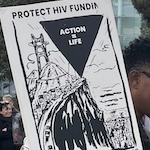
The lost funding means local municipalities are reducing or eliminating programs and laying off their own employees. Although the administration said it made the cuts to help balance the federal budget, public health officials from across the country say the haphazard and extreme nature of the reductions has left them without resources and unable to plan for the future. The resulting shortfall comes at a time when a measles outbreak is growing in North America and highly pathogenic avian influenza (H5N1) is infecting some humans due to occupational exposure as farm workers.
“These rescissions are shortsighted, and they’re dangerous and damaging,” said Chrissie Juliano, the executive director of Big Cities Health Coalition, an organization that brings together public health officials from large cities throughout the United States to exchange ideas, during the press briefing. “Our members have had to lay off staff, cancel vaccine clinics in the midst of measles outbreaks and stop urgently needed lab upgrades. [Fewer] staff also make it harder for health departments to provide critical information to their residents, whether it’s sharing options for education, health insurance coverage or teaching families how to use naloxone in response to a drug overdose.”
When the Money Runs Dry
Restructuring of staff and municipal grants means that local public health departments have lost their ability to continue some programs. For instance, “we had to slow down how frequently we’re actually testing wastewater samples,” Mike Totoraitis, PhD, the commissioner of health for the city of Milwaukee, told Infectious Disease Special Edition. “We are looking for a long-term funding strategy for that project.” Epidemiology and Laboratory Capacity money, which funded wastewater surveillance and other programs across the country, are “really beneficial to active monitoring for disease surveillance,” Dr. Totoraitis continued, “and now I don’t have those funds.”
Another affected program, Dr. Totoraitis said, involved using COVID-19 relief money to upgrade air quality in city shelters for people with housing insecurity. “During the pandemic, those shelters became a hotbed of disease transmission, [so] improving the air handling and air exchange rates of those buildings is a really great way to reduce the risk of spreading outbreaks of respiratory illnesses,” he said. After the slash in federal public health funding, “we had to stop all of that work.”
More restructuring and cuts may be coming. During the press briefing, experts said diversity and equity programs may be cut next, along with HIV prevention funds and emergency preparedness grants. “We’re very anxious about what we’re hearing and what we’ve seen in the draft [Health and Human Services restructuring] proposal—specifically, the public health emergency preparedness funding,” said David Margolius, MD, the director of public health for the city of Cleveland.
Such concerns are not limited to HHS. The public health officials said the Trump administration may be planning future cuts to Medicaid, the Department of Housing and Urban Development (e.g., an agency that funds housing opportunities for people with HIV), and other federal agencies.
Where Have All the Experts Gone?
At least 20,000 HHS employees have been laid off in 2025. This can translate to lost expertise, meaning smaller health departments in smaller cities won’t have federal officials to rely on during a crisis.
Another question is how immigration policies will affect healthcare. The officials said they are already hearing anecdotal reporting that they’re seeing fewer encounters with health department clinics and programs, but it may be the doctors themselves who could be adversely affected by the policy. For instance, nearly half of all healthcare workers in New York City are immigrants, according to Michelle Morse, MD, MPH, the acting commissioner of the New York City Department of Health and Mental Hygiene. “There are significant concerns about immigration status and … about what is going to happen to staff that don’t have either citizenship or permanent residency,” Dr. Morse said. It’s only a concern for now, she continued, but staff members she has spoken with believe their immigration status will make them a target.
“It is just an incredibly challenging time in public health,” she said.
Mixed Messages and Expertise
In addition to the effects of the funding cuts and layoffs, messaging from HHS, particularly from its director, Robert F. Kennedy Jr., has caused new challenges for health departments. Dr. Morse cited, as an example, confusing information about the safety and efficacy of measles and other vaccinations. That has translated to “a lot of confusion from families and parents” about the safety of vaccines, and whether they actually prevent certain illnesses, she noted. “In our Nurse-Family Partnership, which handles home visits for new moms, nurses are increasingly reporting resistance from mothers, often based on information they’re getting from other sources, including HHS,” Dr. Morse said. “Over time, this has significantly eroded public confidence in vaccines.”
As a result of the combination of such misleading information and layoffs at federal agencies, Dr. Totoraitis said he now relies on colleagues in other health departments instead of the federal government. In the past, federal workers were his go-to sources because they have the credentials, training and experience “that really put them at the best position to support local health departments.” But this new normal of municipalities relying on each other doesn’t always work, he said. “We [try] to support as best we can, but at the end of the day, our responsibility is to the city of Milwaukee, and we have to prioritize that over any other challenges.”
Money Rescinded
The rescinding of the money, which was already awarded to municipalities, has uneven effects. For instance, Cleveland had only $5,000 left to spend in its federal grant money, according to Dr. Margolius. In comparison, Milwaukee lost $5 million. New York City had $100 million rescinded that was budgeted to be used through 2027. “We considered those contracts to be promises and agreements between the CDC and the city of New York and its residents,” Dr. Morse said. “It was very disconcerting, of course, to see that suddenly this was rescinded, almost retroactively.” Currently, federal funding makes up 20%, or $600 million, of the New York City Department of Health’s budget. “So we’re extremely concerned about what these cuts could mean and also what the layoffs of staff at CDC and other agencies could mean in terms of our ability to keep going with the work that’s funded by the federal government,” he said.
Lawsuits have ensued. “We are awaiting the result, the decision from the judge on the preliminary injunction for these funds,” Dr. Morse said. “So we were lucky enough to be included in that lawsuit, and up until now we were able to spend those funds. But again, we are unable to plan around those funds since we don’t have a decision yet.”
Not every city is as lucky. For Milwaukee, it’s not just future planning. “We’ve had the pause on our termination of the grant, but we are closing the grant out because we cannot incur … additional hundreds of thousands of dollars of expenses and then have to go through the courts and then suddenly [we would] be holding a bill that we cannot pay,” Dr. Totoraitis said. They are hopeful that the court will rule in their favor, but cannot risk whether it does not. “Essentially we’ve moved on with our work and … done everything that we could to preserve as much what we can.”
The federal government said the funds were canceled for “cause” because they were marked for the pandemic, and the pandemic has ended. However, the lawsuit argues the intention of the funding was to continue to payback and rebuild our health system for pandemic responses.
“These are dollars that were passed by Congress in emergency COVID bills, [and] the intention of the dollars were to support the public health system in response and recovery and to also backfill dollars that didn’t come at the height of the pandemic,” Ms. Juliano explained. “All of these health departments were operating within how to grant agreement and were operating within an allowable set of activities in an allowable time frame.”
A New Reality
There has been little to no detailed communications to health departments that public health needs affected by these changes, and cuts will be met through redistribution of resources. “There’s a lot unknown in both the reorganization and funding of the department, but nothing that I have seen reallocates people or dollars to the new AHA [Administration for a Healthy America] section of HHS or reinstates it at CDC or elsewhere,” Dr. Totoraitis said, specifically in relation to the closing of the Childhood Lead Poisoning Prevention Program.
Although experts said they believed lawsuits and congressional action may change the landscape, they view the current situation as dire. “Children are getting hurt [and] life expectancy is declining,” Dr. Margolius said. “We’re handcuffed and without the ability to help our own residents because the federal government had been helping us for decades with all these fights and currently is unresponsive to our needs.”