By Marie Rosenthal, MS
The current monkeypox outbreak represented a public health emergency of international concern, announced Tedros Adhanon Ghebreyesus, MD, the director-general of the World Health Organization.
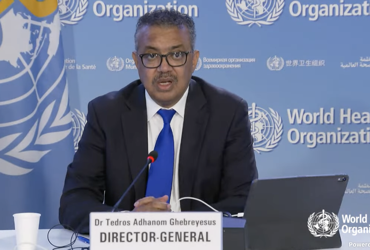
Dr. Tedros said he made the recommendation even though the WHO emergency committee could not reach a consensus recommendation. A month ago, when he first approached the committee, there were 3,040 cases of monkeypox reported from 47 countries. Since then, more than 16,000 cases have been reported from 75 countries and territories, and there have been five deaths, he explained at a briefing held on July 22.
He explained that the committee served as advisors, but ultimately, the decision to declare the emergency rests with the director-general. He decided that the outbreak met all the required elements to be declared a health emergency, including how rapidly it has spread to other countries, including countries that had not experienced cases previously, the new mode of transmission (sexual activity) and the many unknowns that exist in this particular outbreak. He called the transmission risk to most of the world, except Europe, “moderate.” He added the risk in Europe was high.
“In short, we have an outbreak that has spread around the word rapidly through a new mode of transmission, about which we understand too little, and which meets the criteria in the international health regulations. For all of these reasons, I have decided that the global monkeypox outbreak represents a public health emergency of international concern,” Dr. Tedros said. He made specific recommendations for countries depending on how they are experiencing the outbreak.
For those with recently imported cases of monkeypox, which are experiencing human-to-human transmission, the recommendations include ways to implement a coordinated response, to stop transmission and protect vulnerable groups, to engage and protect affected communities, to intensify surveillance and public health measures, to strengthen clinical management and infection prevention and control in hospitals and clinics, to accelerate research into the use of vaccines therapeutics and other tools, and recommendations on international travel. Read the full report here.
“Although I’m declaring a public health emergency of international concern, for the moment, this is an outbreak that’s concentrated among men who have sex with men, especially those with multiple sexual partners,” Dr. Tedros said. “That means that this is an outbreak that can be stopped with the right strategies in the right groups. It is, therefore, essential that all countries work closely with communities of men who have sex with men to design and deliver effective information and services, and to adapt measures that protect the health, human rights and dignity of affected communities,” Dr. Tedros insisted.
“Stigma and discrimination can be as dangerous as any virus. In addition to our recommendations to countries, I’m also calling on civil society organizations, including those with experience in working with people living with HIV, to work with us on fighting stigma and discrimination, but with the tools we have right now, we can stop transmission and bring this outbreak under control.”
Michael J. Ryan, MD, the executive director of the WHO Health Emergencies Programme, said this declaration will help intensify the world’s efforts early enough to control this outbreak. “We can act together in science, together in solidarity, in support of those affected,” Dr. Ryan said.
He said it was a call to action. “This is an intensification of his calls to the world that we must act now, and we must act together as we’ve been acting up to now, but like every effort in human science and human health, there are times when you must accelerate that effort. And I think today’s call is for an acceleration of our collective efforts to bring this disease under control.”
Even though 98% of current cases are among men who have sex with men, there is the chance that the disease could be transmitted to other groups. Women and children have been infected.
“We have to be exceptionally careful, but as he said as well, it is exceptionally important that the existence of a public health emergency of international concern and the intensification of surveillance and control efforts are not used as a means for coercion or for the imposition of measures that would impede the dignity in human rights of the people affected. It’s very important that we get this balance right. Public health is important. It is very important. We extend the same support to communities that are having to comply with measures, and at the same time that we avoid coercive and excessive measures that are not aimed at containing or controlling the disease, but are aimed at isolating or discriminating against a certain section of our population,” Dr. Ryan said.
Rosamund Lewis, MD, the technical lead for monkeypox, WHO Health Emergencies Program, said stigma is still attached to being part of the LGBTQ+ community, and that stigma and resistance must be considered when dealing with this new mode of transmission.
“So, still after three months, 98% of cases are still manifesting in men, and in men who have sex with men, whether they identify themselves as gay, bisexual or otherwise are men having sex with men. So, this is very difficult to communicate, especially for communities who are concerned about stigma, concerned about discrimination, concerned about backlash from other parts of the community or even from their government.
“And the director-general has been very clear today to communicate that stigma and discrimination are not OK. This is important if we want to help every country and every community control this infectious disease; a stigma will not help. It will drive people away from seeking diagnostics testing, access to care, vaccine treatments,” Dr. Lewis said.
The fact that right now, the outbreak is primarily occurring among one group represents an opportunity to stop it, she reiterated. “It presents an opportunity for us collectively to work with that group, to allow them to bring forward their own ideas, demonstrate their own leadership, of course, which they have been demonstrating for many, many years since the beginning of the HIV/AIDS pandemic.
“And to show us the way, to show us what is the best way to help you to help countries and to help affected people reduce risk, reduce exposure, reduce transmission and stop this outbreak,” he said.
Raj Panjabi, MD, the director of the White House Pandemic Preparedness Office, also called the WHO declaration a call to action to stop the spread of the virus. “A coordinated, international response is essential to stop the spread of monkeypox, protect communities at greatest risk of contracting the disease and combat the current outbreak,” Dr. Panjabi said, adding that everyone must step up their efforts to contain this outbreak.