By Marie Rosenthal, MS
The Advisory Committee on Immunization Practices (ACIP) updated its recommendations for immunizing certain adults with respiratory syncytial virus (RSV) vaccines.
The first change was a move away from shared clinical decision making to a recommendation that all adults ages 75 years and older should receive a single dose of RSV vaccine, and adults from 60 to 74 with certain chronic medical conditions or other factors that increase their risk for severe disease should receive a single dose of RSV vaccine. This group includes people with pulmonary or cardiovascular disease; those with moderate or severe immunocompromise, diabetes mellitus with end-organ damage, severe obesity, neurologic or neuromuscular conditions, and advanced chronic kidney disease; and those with liver or hematologic disorders. In addition, people who live in long-term care facilities also should be vaccinated.
There are other people with chronic medical conditions that a healthcare provider determines increases the risk for severe RSV, who may receive the vaccine, according to the new recommendation.
These changes mean that adults 60 to 74 years of age without risk factors for severe RSV disease are no longer recommended to receive the RSV vaccine.
Both recommendations were unanimous.
The committee did not state a preference for one vaccine over the other.
Theoretically, shared clinical decision making seems like a good idea. Patients decide to receive a vaccination based on a discussion with their healthcare providers. According to the ACIP, “shared clinical decision-making recommendations are individually based and informed by a decision process between the healthcare provider and the patient or parent/guardian.”
The reality is much different, according to Camille Nelson Kotton, MD, FIDSA, FAST, the chair of the Adult RSV Work Group at ACIP, and the clinical director of Transplant and Immunocompromised Host Infectious Diseases, Infectious Diseases Division at Massachusetts General Hospital, in Boston.
The shared-decision recommendation was made in June 2023, for adults 60 years of age and older, explained Dr. Kotton, who is also an associate professor of medicine at Harvard Medical School, in Boston.
“Since making this recommendation over the past year, we have learned from feedback from healthcare providers [that] having shared clinical decision-making conversations is not simple in practice-unlike a universal recommendation where there's a clear call to vaccinate. With the shared clinical decision making, the call to action is to discuss [vaccination] with the healthcare provider, [which is] a less clear message. So, we thought that a risk-based recommendation for adults 60 to 74 and a universal recommendation for those 75 and over would potentially highlight more clearly for providers and other public health officials which adults are most likely to benefit from an RSV vaccine and provide a clearer recommendation for patients,” she explained.
“In addition to the benefits of vaccination, the shared clinical decision-making discussion as intended by ACIP was also meant to include discussion of the potential risk for vaccine-associated adverse events associated with the RSV vaccine, specifically Guillain-Barré syndrome [GBS],” Dr. Kotton said.
According to a preliminary analysis done by the University of Michigan and presented by David W. Hutton, PhD, MS, an associate professor of health management and policy, as well as public health at the School of Public Health, University of Michigan, in Ann Arbor, the risk for GBS from the Pfizer vaccine Abrysvo was 16 cases (95% CI, 3-29) per 1 million doses administered, and for the GSK vaccine Arexvy was three cases (95% CI, 0-10) per 1 million doses administered to Medicare beneficiaries ages 65 years or older who had received either vaccine between May 2023 and Oct. 8, 2023.
“These risk estimates are in excess of background rates of GBS,” Dr. Hutton explained. In other words, they represent excess GBS cases beyond what would be expected to occur in this population if there was no RSV vaccine.
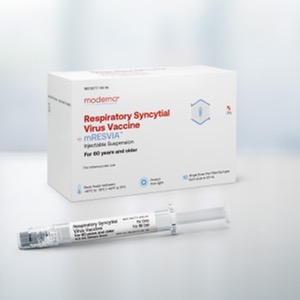
The analysis did not include the Moderna vaccine mRESVIA because it had not yet been approved by the FDA.
Reports of GBS after vaccination were apparent during the clinical trials, according to Patricia Lloyd, SCM, PhD, a health statistician in the Office of Biostatistics and Pharmacovigilance, Center for Biologics Evaluation and Research at the FDA.
But two different analyses of the potential GBS risk after RSV vaccination were mixed and highly uncertain. “These analyses do not provide clear, conclusive evidence of an elevated risk for GBS [from vaccination], and an elevated risk cannot be ruled out at this time,” she said.
“The FDA maintains that the benefits of RSV vaccination in preventing RSV hospitalizations outweigh the potential risks associated with vaccines,” Dr. Lloyd said.
Data presented at the meeting showed that both Arexvy and Abrysvo were about 78% effective in preventing severe RSV disease over a second season, and mRESVIA was about 50% effective after 18 months.
CDC Director Mandy Cohen, MD, MPH, accepted the ACIP’s recommendations.
This recommendation is for adults who did not receive an RSV vaccine last year, according to the CDC. The RSV vaccine is not currently an annual vaccine. Eligible adults can get an RSV vaccine at any time, but the best time for vaccination is late summer and early fall, before the start of the RSV season.
The updated recommendation is based on analyses of RSV disease burden among people 60 years and older, as well as RSV vaccine effectiveness and cost-effectiveness studies, according to the CDC.
“The CDC has updated its RSV vaccination recommendation for older adults to prioritize those at highest risk for serious illness from RSV,” Dr. Cohen said in a statement. “People 75 or older, or between 60 to 74 with certain chronic health conditions or living in a nursing home, should get one dose of the RSV vaccine to provide an extra layer of protection.”