By Meaghan Lee Callaghan
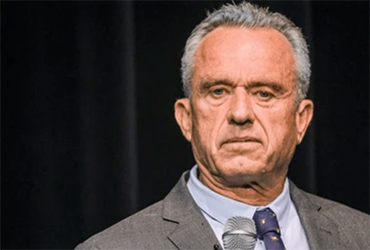
The American Society for Microbiology, the Infectious Diseases Society of America and 39 other organizations have penned a letter to Health and Human Services Secretary Robert F. Kennedy Jr. requesting that HHS reschedule the canceled Presidential Advisory Council on Combating Antibiotic-Resistant Bacteria (PACCARB) meeting.
The meeting, which was originally to take place Jan. 28-29, 2025, is a place where experts—both from public and private entities, including public health clinicians, epidemiologists, pediatricians and veterinarians—come together to discuss and make recommendations on fighting antimicrobial resistance (AMR) in an updated U.S. National Action Plan (NAP) for Combating Antibiotic-Resistant Bacteria. “The collaboration of public and private entities is essential when dealing with an issue as intractable as AMR, and PACCARB was the main venue for that,” Amalia Corby, MS, the director of federal affairs at the American Society for Microbiology, told Infectious Disease Special Edition. “The January meeting was particularly important because we need to begin drafting the next iteration of the NAP, which is set to expire at the end of 2025.”
Created in 2014, PACCARB acts to bring together experts to create resources and recommendations to guide HHS and government programs with the most up-to-date AMR data and strategies. The resources also are used by a variety of private entities—from healthcare systems to farms and factories—to address AMR in their businesses. Skipping the meeting and the resulting updates to resources are concerning to the societies writing the letter to Mr. Kennedy. “Stakeholder organizations are deeply concerned that the meeting has not yet been rescheduled, slowing the pace of our national response to AMR,” they wrote. “We urge HHS to convene a PACCARB meeting as soon as possible.”
No Meeting, No Employees
In addition to canceling the January meeting, PACCARB also lost the manpower behind the scenes. The Office of the Assistant Secretary for Health, specifically the internal divisions of the Office of Infectious Disease and HIV/AIDS Policy, have had their employees cut in the mass reductions in government workforce earlier this year. The current atmosphere is “nonfunctional,” Ms. Corby said. “What we saw over the [last] few months was the cancellation and dissolving of committees and meetings across public health and science, in addition to the gutting of federal agency staff. We have heard that the division that staffed PACCARB and other key ID priorities went from 60 staff [members] to two. Two staff are not enough to manage the rising threat of MRSA [methicillin-resistant Staphylococcus aureus], drug-resistant TB [tuberculosis] and other microbial threats.”
Reconvening?
However dire, Ms. Corby said she believes there is still hope that PACCARB will meet. There has been an overwhelming amount of support from societies when drafting the letter, she said, and she thinks that support continues outside the academies and professional organizations. “I am confident that there are individuals in the current administration that understand the threat of infectious disease and AMR,” she said. “We hope this letter reaches them and we look forward to supporting the reconvening of PACCARB and other essential committees at HHS.”