By Marie Rosenthal, MS
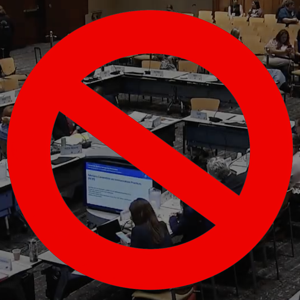
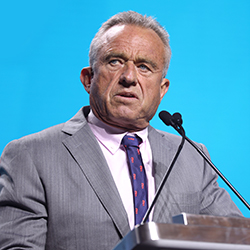
HHS Secretary Robert F. Kennedy Jr. “retired” 17 people from the Advisory Committee on Immunization Practices (ACIP) on June 9, and appointed eight people several days later without going through the usual vetting process, which can take months.
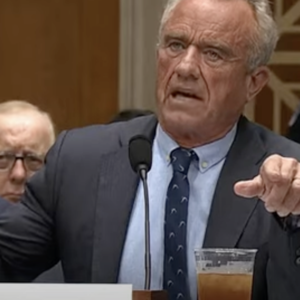
The secretary of the Department of Health and Human Services said he disbanded the ACIP to restore the public’s trust in governmental advisory bodies and agencies.
“The public must know that unbiased science—evaluated through a transparent process and insulated from conflicts of interest—guides the recommendations of our health agencies,” he wrote in the Wall Street Journal.
“A clean sweep is needed to re-establish public confidence in vaccine science. ACIP’s new members will prioritize public health and evidence-based medicine. The committee will no longer function as a rubber stamp for industry profit-taking agendas,” he wrote.
And in his announcement about appointing a new slate of ACIP members on the social medial platform X, he reiterated that message saying his appointments were “a major step towards restoring public trust in vaccines by reconstituting the [committee].”
However, infectious disease and vaccine experts said his appointments lack the rigorous process that has been used to vet new members before they are appointed. In addition, recent decisions about vaccination recommendations, such as who can and cannot received a COVID-19 vaccination, were not made after discussion in a public forum but instead without the input of experts such as the ACIP, so they lack the transparency that Mr. Kennedy has said is needed before making decisions, the experts warned. ACIP’s deliberations occur during public meetings that people can watch in real time virtually, and afterward, they live on the CDC’s ACIP webpages and can be watched at any time. In addition, the agendas and slides are available, too.
The vetting process for appointing a committee member is rigorous. “You submit your information, and then you are thoroughly vetted for a few months to make sure that you have no connection to industry and no connection to the federal government. So we can give independent advice,” explained Paul Offit, MD, the director of the Vaccine Education Center and an attending physician in the Division of Infectious Diseases at Children’s Hospital of Philadelphia. Dr. Offit has been a member of the ACIP, and currently sits on the FDA’s Vaccines and Related Biological Products Advisory Committee.
In instances of a past relationship with any company—for example, say the person was on a vaccine data safety monitoring board for a vaccine created by GlaxoSmithKline—that person would have to declare that relationship and, therefore, be unable to vote on any GSK product, not just that product but any vaccine made by the company.
“That’s the way it works. So they’re very careful about that. And if you watch those meetings, you would know that that pharmaceutical industry pretty much has no influence over those external independent advisors,” Dr. Offit said.
After Mr. Kennedy retired the sitting ACIP members, there was an outcry by many medical and public health societies as well as physicians—all of whom said the recommendations by the ACIP could be and were trusted.
“As a pediatric infectious diseases physician, I know vaccines are essential. They have revolutionized healthcare,” said Jason Newland, MD, during a media briefing held by the Infectious Diseases Society of America. “They have made modern medicine [possible] and made children so much healthier.
“The allegations toward these outstanding scientists, epidemiologists, public health experts and front-line healthcare providers are unfounded, and [their replacements] will not engender the trust that is so needed with vaccines. Disassembling this group of experts who carefully examine the vaccine data, the safety data, and discuss and debate these important recommendations will hurt all of us, all Americans, and in particular our children,” Dr. Newland said.
Mr. Kennedy said his new ACIP appointments are all “highly credentialed scientists, leading public-health experts, and some of America’s most accomplished physicians.” The new members are: Joseph R. Hibbeln, MD, a psychiatrist and neuroscientist; Martin Kulldorff, MD, PhD, a biostatistician and an epidemiologist formerly at Harvard Medical School, in Boston; Retsef Levi, PhD, a professor of operations management at the MIT Sloan School of Management, Cambridge, Mass.; Robert W. Malone, MD, a physician-scientist and biochemist; Cody Meissner, MD, a professor of pediatrics at the Geisel School of Medicine at Dartmouth, Hanover, N.H.; James Pagano, MD, a board-certified emergency medicine physician; Vicky Pebsworth, OP, PhD, RN, the Pacific Region Director of the National Association of Catholic Nurses; and Michael A. Ross, MD, a clinical professor of obstetrics and gynecology at the George Washington University, Washington, D.C., and Virginia Commonwealth University, Richmond. Many people on the panel have expressed anti-vaccine sentiments, especially about the COVID-19 vaccines.
“The CDC is our leading governmental public health institution,” said William Schaffner, MD, a professor of preventive medicine and infectious diseases at Vanderbilt University Medical Center, in Nashville, Tenn. “And vaccinations have been thought of as an individual clinical issue, but also a public health issue. And in the 61 years of functioning, the ACIP has always had representatives of the public health community. None of these eight people are professional public health people that work in a local or city or state public health department,” he said, and only Dr. Meissner is an infectious disease expert and a pediatrician, as well as a former member of the ACIP. “Perhaps, he’ll provide a measure of balance and community continuity and perhaps be able to speak to tradition and how the ACIP has functioned.”
Loss of Institutional Memory
That lack of collective memory worries Dr. Offit. Typically, the ACIP discusses a particular vaccine that they will vote on, whether it is an update or a new vaccine to the schedule, months before the vote, frequently sitting through several presentations about the vaccine’s efficacy, safety and cost. They also are updated regularly about the diseases that vaccines prevent. For instance, they had an update about the ongoing measles outbreak, which has been reported in more than half the country affecting 1,168 people, who were mostly unvaccinated, and killing three, including an unvaccinated child.
“People usually rotate on and off the committee in a staggered manner. They don’t all leave at once,” Dr. Offit said. “So, we lost all this institutional memory. They are all gone.
“Normally one may rotate off or two may rotate off while others rotate in, but you always at least know you have people who know where you’ve been.”
It is going to be difficult for the incoming members to catch up, he said.
Dr. Schaffner agreed: “As most committees in most organizations work, you have a rotation, and that means new people come in refreshing the committee. But you have other committee members who’ve been on board for a while so they can bring the new members up to date.”
In addition to the panel, Mr. Kennedy removed Melinda Wharton, MD, the associate director for vaccine policy, and her team at the CDC’s National Center for Immunization and Respiratory Diseases. Dr. Wharton was the executive secretary of the ACIP.
“The secretariat of the CDC that runs the ACIP has just also been dismissed. And so where’s the structure at the CDC that manages this meeting and the committee?” Dr. Schaffner asked. Just some of the questions that remain unanswered are: Will it be broadcast to the public? Will they take minutes? Who will assure that the ACIP follows the rules of order? Who will coordinate the June 25-26 meeting?
It is still unclear what will happen to the other people, the non-voting, liaison ACIP members, who provided a wealth of information during the discussions about various segments of the populations from children to the military.
“The liaison representatives are consultants from a variety of professional groups. They were brought in to participate fully in the discussions, but of course, they didn’t vote,” Dr. Schaffner said. “They are important for two reasons. One is they bring those various points of view and expertise into the discussions. Representatives, for example, from the American Academy of Pediatrics, the American Academy of Family Physicians, the American College of Obstetricians and Gynecologists, and the like. So, you have the benefit of that expertise.”
Moreover, other organizations will not have different recommendations, he said. “The ACIP with the benefit of that input is assured that the recommendations for vaccine use are going to be harmonized, so that we don't have the pediatricians and the family doctors saying this and that, and the ACIP saying something else.”
Dr. Offitt reiterated the risks posed by losing ACIP members with deep institutional knowledge of vaccine science. At least some of the fired committee members “routinely counsel patients, have seen vaccine preventable diseases, and have been involved in vaccines in terms of evaluating them for safety or efficacy. So [they had] just the expertise you would need.”
The Downside of ACIP on the Sidelines
Not having the input of established ACIP members has already led to vaccine confusion and potentially adverse health effects. For example, after the announcement on June 3 that the COVID-19 vaccine would no longer be recommended during pregnancy, a pregnant healthcare worker talked with her hospital’s ID physician for advice about what to do. Since pregnancy is a risk factor for more severe disease and since vaccinating the mother can protect the infant in that first six months of life, the physician told her that the American College of Obstetricians and Gynecologists recommends she get the vaccine. However, two pharmacies refused to vaccinate her because of the new mandate—a recommendation that was made without input from the ACIP.
And this is the greatest fear of Drs. Offit, Newland and Schaffner that it will become harder and more costly to get a vaccine in this country, and more people will come down with diseases, such as measles, which are entirely preventable.
“Experts in infectious diseases believe that an Advisory Committee on Immunization Practices that operates with transparency and independence and makes decisions based upon comprehensive reviews of high-quality, scientific evidence is critically important to maintaining the health of the public,” said Tina Tan, MD, the president of the Infectious Diseases Society of America. “Effective vaccine recommendations should be made by objective experts in vaccines, infectious diseases and public health.”
“Safe and effective vaccines have saved millions of lives for decades and are essential to protecting the health of people of all ages,” said Dr. Tan, who is a professor of pediatrics at Northwestern University Feinberg School of Medicine, in Chicago.