

Updated on July 23, 2025
By Meaghan Lee Callaghan
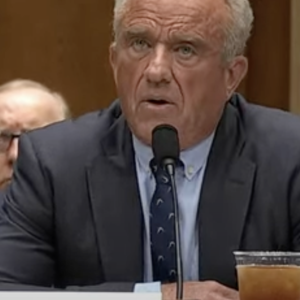
U.S. Health and Human Services Secretary Robert F. Kennedy, Jr. signed the CDC’s Advisory Committee on Immunization Practices (ACIP) recommendations to remove the mercury-based preservative thimerosal from all influenza vaccines distributed in the United States.
"The effort to remove mercury from childhood vaccines began in 1999 when the U.S. Public Health Service, the American Academy of Pediatrics (AAP) and vaccine manufacturers jointly agreed that any potential risk from mercury warranted its removal as soon as possible. This marks the final step to remove mercury from all vaccines given to Americans," Mr. Kennedy said in a statement. Because the CDC director is not yet appointed, Mr. Kennedy adopted this, as well as other recommendations made during the April 2025 meeting.
The new members of the revamped ACIP, in a vote of 5-1-1, recommended removing the preservative thimerosal from the few remaining influenza vaccine formulations that still include it. It will come into effect for the 2025-2026 flu season.

The recommendation came as three separate votes focused on three groups—children, pregnant people and adults—which together encompass the entire U.S. population.
The vote, cast on June 26, was 5 to 1, with one abstention. Board members Joseph R. Hibbelen, MD, ABNP, CAPT USPHS (Ret); Retsef Levi, PhD; Robert Malone, MD, MS; James Pagano, MD, FACEP; and Chair Martin Kulldorff, PhD, voted yes. Vicky Pebsworth, PhD, RN, abstained from the vote on procedural grounds, saying a vote to remove thimerosal in this manner (a notion she said she agreed with) would also condone that universal seasonal flu shots should be recommended.
Cody Meissner, MD, a professor of pediatrics at the Dartmouth Geisel School of Medicine, in Hanover, N.H., was the only no vote. Dr. Meissner explained his rationale after the voting, saying he was afraid that a yes vote would harm the supply of flu shots for this coming season. “My concern is that by insisting the multi-dose vials [should not] contain thimerosal, that might limit the availability of the influenza vaccine for some people. I would like to have that question answered, but it's probably a difficult one to answer. My point is the risk from influenza is so much greater than the nonexistent, as far as we know, risk from thimerosal. So I would hate for a person not to receive the influenza vaccine because the only available preparation contains thimerosal. I find that very hard to justify.”
In a separate vote, the members approved a resolution to recommend seasonal flu vaccination for the upcoming flu season for all people 6 months of age and older. Dr. Pebsworth also abstained from this vote.
Mr. Kennedy also approved the following recommendations, which were made by the former ACIP panel and passed by majority votes at its April 15-16, 2025, meeting:
Meningococcal Vaccines
ACIP recommends GSK's MenABCWY vaccine may be used when both MenACWY and MenB are indicated at the same visit for healthy people ages 16 to 23 when shared clinical decision-making favors administration of MenB and in people 10 years old and younger who are at risk for for meningococcal disease because of certain immunocompromising conditions.
Adult RSV Vaccines
ACIP recommends adults 50–59 years of age who are at increased risk of severe RSV diseasea receive a single dose of RSV vaccine. The CDC said it will publish Clinical Considerations that describe chronic medical conditions and other risk factors for severe RSV disease for use in this risk-based recommendation. Any RSV vaccine can be used to fulfill this recommendation.
Chikungunya Vaccines (these recommendations were adopted in May)
ACIP recommends the virus-like particle chikungunya vaccine for people who are at least 12 years traveling to a country or territory where there is a chikungunya outbreak. In addition, the virus-like particle chikungunya vaccine may be considered for people who are at least 12 years old traveling or taking up residence in a country or territory without an outbreak but with elevated risk for U.S. travelers if planning travel for an extended period of time, e.g., 6 months or more.
ACIP recommends the virus-like particle chikungunya vaccine for laboratory workers with potential for exposure to chikungunya virus.
ACIP recommends the live-attenuated chikungunya vaccine for people at least 18 years traveling to a country or territory where there is a chikungunya outbreak. In addition, the live-attenuated chikungunya vaccine may be considered for adults traveling or taking up residence in a country or territory without an outbreak but with elevated risk for U.S. travelers if planning travel for an extended period of time, e.g., 6 months or more.
Other recommendations from the committee’s June meeting are currently under review.
This is a breaking news story. Check back in the coming days for more in-depth reporting on influenza vaccines, the June ACIP meeting and more from Infectious Disease Special Edition.
Additional reporting by Marie Rosenthal, MS.