





Artificial intelligence may be the hot, new, sexy term, but the subset of AI that has the most potential for improving the discovery of new antimicrobials, outbreak surveillance, diagnostic testing and other facets of managing infectious diseases is machine learning—teaching computers how to learn from and interpret large data sets.
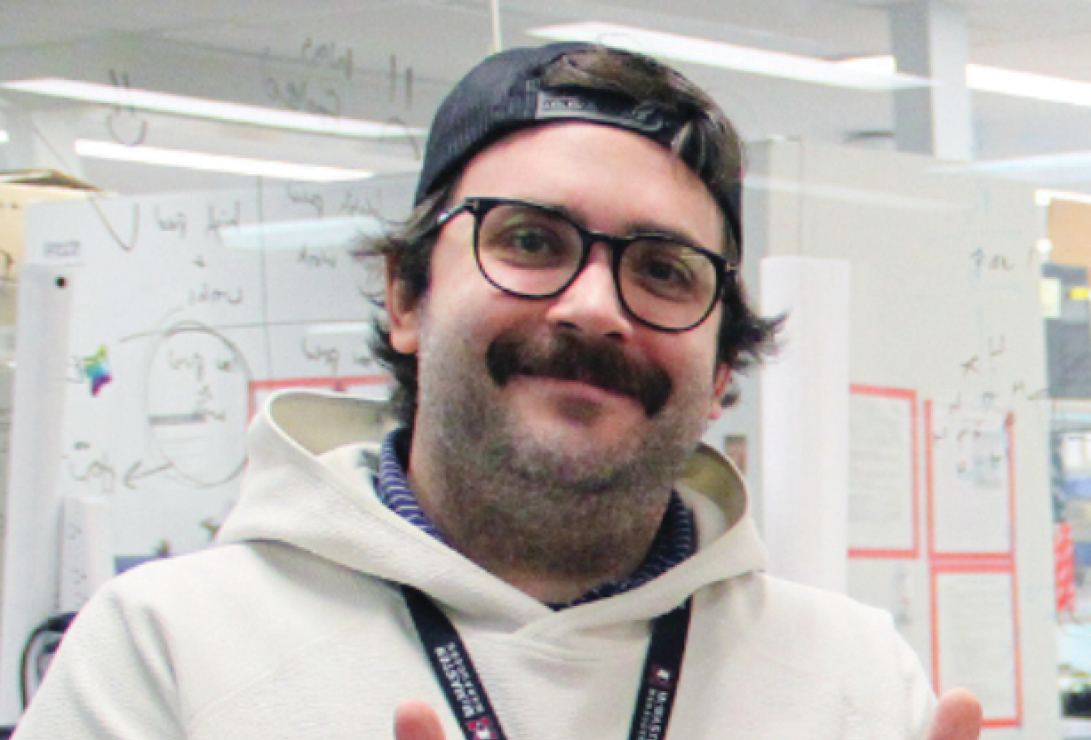
AI is “the ability of computers to perform tasks that normally require humans,” explained Jonathan Stokes, PhD, a microbiologist and an assistant professor of biochemistry and biomedical sciences at McMaster University, in Hamilton, Ontario.
With machine learning (ML), the computer system “learns” from experience so it can undertake tasks without explicit instructions. Dr. Stokes, who is using ML to discover potential new antibiotics, said these software programs can improve surveillance and spot outbreaks earlier, help a microbiologist identify an unusual parasite, or help in the fight against antimicrobial resistance (AMR).
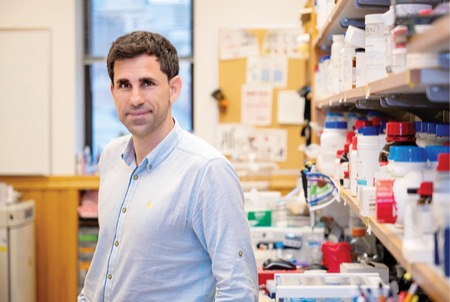
“Artificial intelligence broadly refers to methods that achieve human-level performance,” added César de la Fuente, PhD, the presidential associate professor at the University of Pennsylvania, in Philadelphia, where he directs the Machine Biology Group. An early pioneer in the field, Dr. de la Fuente has been using ML to identify preclinical antibiotic candidates for more than a decade. “We use machine learning models to accelerate antibiotic discovery—AI is the umbrella term; machine learning describes the specific data-driven methods.”
At ESCMID Global Vienna 2025, microbiologist Jennifer Dien Bard, PhD, D(ABMM), FAAM, broke AI into two categories: nonadaptive AI, which is more of a rule-based expert classification, and adaptive AI or ML. Nonadaptive AI means the machine cannot adapt outside its programming, where adaptive is “where machine learning database algorithms, including image data or analysis, can adjust and learn from data independent of what has been programmed,” explained Dr. Dien Bard, who is the director of the clinical microbiology and virology laboratory at Children’s Hospital Los Angeles, and a professor of pathology (clinical scholar) at Keck School of Medicine of USC.
One might compare ML to toddlers taking in and learning about the world around them and then extrapolating how they can use that new information, Dr. Stokes explained. “I have a 2-year-old. If I say don’t do that when she goes to put her finger in a wall socket, and then she sees a different socket on another wall, she understands [that] ‘I shouldn’t stick my finger there either because it’s the same type of thing on a different wall,’” he said. ML works similarly. It combs through many data points faster than a human brain could to make connections that would be incredibly difficult for a person to spot.
Accelerating Antibiotic Discovery
Drs. Stokes and de la Fuente are involved in important work in the field of infectious diseases—finding new antibiotics to address the critical international problem of AMR, and ML is becoming an important tool in that search, they said. The CDC and WHO call AMR an urgent global health threat, resulting in the deaths of almost 5 million people annually. It is so important, the U.N. General Assembly released a declaration in 2024 to reduce AMR by 2030. Finding new antimicrobials could help achieve this goal.
The work of Drs. Stokes and de la Fuente is a good example of how ML speeds up the discovery of potential drug targets against organisms. “The traditional paradigm for identifying compounds prospecting in nature—digging through soil and water and purifying hits from complex mixtures—it’s painstaking and often yields few preclinical candidates,” Dr. de la Fuente said. “Finding even one or two interesting molecules can take six or seven years, more than the time it takes to finish a PhD program.”
With ML, the process can be done faster in a laboratory. Dr. Stokes cited a hypothetical example based on his own work: Let’s say the researchers are looking for a new antibiotic against resistant Staphylococcus, and they have a chemical collection of 20,000 different molecules in a freezer. The researchers would test them in the laboratory to see which kill staph and which do not and input that data into an ML model. The data would include the structure of each molecule and whether or not it was effective at killing Staphylococcus.
“We are teaching the model what good antibiotics look like,” Dr. Stokes explained. “We now have this data set of 20,000 chemicals, and each one has a label of whether it was active or not, and we have say 1,000 chemicals that are active and 19,000 that are not.
“That will serve as our training data. The model is going to learn the structural features of chemicals that are associated with antibiotic activity against staph. And once the model is trained, it ‘understands’ the chemical features associated with antibacterial activity. So we can start showing the model brand-new pictures of chemicals that it has never seen before, and it will classify them as either antibacterial or not based on the structure of the molecule,” Dr. Stokes said. This puts them steps ahead in in vitro testing.
ML has “accelerated the rate of discovery,” added Dr. de la Fuente. “If you think of biology as a bunch of code, and that is what biology is—DNA is a four-letter nucleotide code, and proteins are a 20-letter amino-acid code—then you can develop algorithms to mine that code and identify molecules that are encoded, hidden or otherwise capture in it.”
Related Content


His laboratory is mining biological information like genomes and proteomes at a scale never before possible to identify potential antibiotic candidates. ML enables researchers to discover hundreds of thousands of potential candidates within a few hours rather than in a few years.
The field has entered a digital era of discovery. Once there is a list of molecules that could be effective, Dr. de la Fuente’s team has robots that can make the molecules and do the in vitro studies to experimentally validate them.
“We grow bacteria, we see whether the molecules discovered by the machine can kill bacteria, and if that works, we can do toxicity studies to make sure we don’t see any off-target effects against human cells and red blood cells,” Dr. de la Fuente explained. They also can do the early mouse data before pitching the molecules to a larger facility or company that could develop them into potential medications.
“We are excited, because at the end of the day, the people in my lab can watch a molecule go from a digital prediction to efficacy in a mouse,” Dr. de la Fuente said. “You see the transition between something at the digital level all the way to something real in an experiment.
“I think this is one of the success areas of AI in infectious diseases, specifically our ability to speed up antibiotic discovery,” he said.
Other Uses, Successes
AI and ML are being used throughout the field of infectious diseases, not just in the development of new antimicrobials. At the 2024 Critical Care Congress, experts released the Phoenix pediatric sepsis criteria to enable clinicians, regardless of where they practice, to determine which sick child is likely to have a poor prognosis (JAMA 2024;331[8]:665-674).
Every year, sepsis claims the lives of more than 3.3 million of the world’s children, many of whom live in resource-poor areas. Previous pediatric sepsis guidelines did not hit their mark for many reasons, including relying on adult sepsis scoring systems. Developing the new criteria took more than four years, 35 experts from 12 countries on six continents, an international survey, grant funding, a large international database, a meta-analysis of the literature and the use of ML.
“We used a machine learning approach to narrow down elements that were most effective in identifying children at high risk of dying from organ dysfunction in the setting of an infection. The criteria we developed rely on four systems: cardiovascular, respiratory, neurological and coagulation. These criteria are better than the old ones at identifying children with infections at higher risk of poor outcomes and are globally applicable, including in low-resource settings,” L. Nelson Sanchez-Pinto, MD, MBI, a critical care physician at Lurie Children’s Hospital of Chicago, explained at the time.
There are many places in the microbiology laboratory where ML is valuable from ordering the test to helping the clinician interpret the test report, according to Oliver Nolte, PhD, who spoke with Dr. Dien Bard at Vienna 2025.
“Diagnosis starts at the bedside and ends at the beside with the decision or action, which the physician takes from the report we are sending,” explained Dr. Nolte, the head of diagnostics in the Institute of Medical Microbiology at the University of Zurich. AI could help clinicians decide which tests to order, speed up the laboratory results, analyze images such as parasite slides or patient radiographs, and improve susceptibility testing, as well as provide a standardized report and help the clinician interpret that report, according to Dr. Nolte.
Tracking H5N1
In a study presented at ASM Microbe 2025, held in Los Angeles, researchers at the University of North Carolina at Charlotte (UNCC) used AI tools to analyze thousands of proteins of the H5N1 avian flu virus and found the virus has evolved to evade human defenses and increase its pandemic potential. As a result, candidate vaccines developed 10 years ago may not be effective against contemporary strains of H5N1, according to UNCC computational biologist Colby T. Ford, PhD, who led the study.

The researchers first collected data about more than 1,800 H5N1 proteins. They used AlphaFold 3, an AI protein folding system, to predict the complicated structures of the viral proteins. Then, using physics-based modeling systems, they tested how well 11 immune antibodies—collected from both people and mice—attached to the proteins. Over the years, the binding has been weakening, lowering their protective effects. “Antibody performance is waning as we get to the newer isolates that we’re seeing,” Dr. Ford said.
The group has also been using large data sets focused on H5N1 to link viral clades to specific transmission channels, and connected the recent death of an H5N1 patient in Louisiana to a clade that can pass directly from bird to human.
They are hoping that AI and computational modeling can track the evolution of the virus and, potentially, design more effective antibodies. “Can we start to generate novel therapeutics based off those strains? The answer is yes, and we can do it fairly quickly with the AI pipeline we’ve built,” Dr. Ford said.
Addressing ID Inequities
Of course, it is no surprise that AI is being used in resource-rich Western countries, but it is also being used in resource-poor nations, helping to address some of the inequities facing many people around the world, according to presentations at IAS 2025, held in Kigali, Rwanda, where it is proving to be quite the “physician’s assistant.”
In one instance, Obioha C. Udunze, MPH, of the Damien Foundation Belgium Nigeria project, in Lagos, Nigeria, discussed the use of digital radiography, called CAD4TB, from Delft Imaging, which uses AI to provide a tuberculosis probability score that proved particularly useful for people with HIV. They deployed three vans into a Lagos community in 2024, and CAD4TB quickly determined who should be treated for TB, even if they were asymptomatic. Pleased with the results, the Lagos government procured a van with CAD4TB to continue screening after the study had ended, Mr. Udunze said.
Rouella Mendonca, MS, a computer engineer and the AI product director at Audere, in Seattle, discussed an AI companion, named Aimee, she helped develop, which is being used across South Africa to overcome care gaps among young females. Aimee has been modified based on its interactions to enable it to detect sentiment and to be patient, but probing when encouraging the user to ask questions. Ms. Mendonca said many users take at least three encounters before they discuss what is bothering them, which she believes is how long it takes the patient to develop trust of the AI agent.
Aimee today is an active listener that can reflect what is being said and ask questions based on what it’s told and has smart navigation protocols for reacting to test results or other information it is given by the user, explained Ms. Mendonca, who refers to Aimee as “she.” But Aimee wasn’t always this smart. The human programmers monitoring Aimee when she first went out into the world continued to adapt its programming to make Aimee an active listener.
Today, if a user discusses domestic violence, rape, suicide ideation or other serious issues that require immediate help, Aimee punts those discussions to a person who can intervene, according to Ms. Mendonca.
In less than four months, Aimee has more than 30,000 user messages. Many of the conversations are short, maybe three messages, but some are deep discussions with more than 41 messages.
“Aimee is an AI companion built specifically for girls and young women in South Africa seeking access to sexual health or lifestyle information,” Ms. Mendonca said. “We designed Aimee with the behavioral foundation with the intention of not just increasing engagement but also shaping what engagement would look like. Our goal with Aimee is not to replace a clinician. Instead, it is to have easy conversations and make referrals where required and to get out of the way, and maybe even act as a triage agent for an already restrained health workforce,” Ms. Mendonca said.
That human oversight that Aimee has is crucial, and just about everyone interviewed for this article explained that AI is a tool that can improve and enhance medical care, but it is not meant to be a replacement for medical care provided by a person.
“A human in the loop will still be essential in medicine,” Dr. Stokes said. “But I think human capabilities can be amplified by appropriately trained machine learning models.”
The collaboration between “machine intelligence and human ingenuity is already happening,” said Dr. de la Fuente. “Every critical decision we make accounts for recommendations made by humans and by machines.”
This is particularly important when using an AI agent like Aimee, according to Dr. Stokes. “In preclinical research, I’m allowed to be wrong all the time. I’m not killing anybody. I have that luxury.
“I’m fine with an AI agent supporting and guiding the decision-making by clinicians, but ultimately, you want a human making the decisions. ML models are suggestion-generation boxes; humans are the decision-makers,” he said.
What can be the biggest advantage or problem with any AI agent or model is where it is getting its information. No clinician wants to see a patient come in with a paper they printed after consulting “Dr. Google.” ChatGPT and other AI agents can cause a similar dilemma. Think of a symptom like shortness of breath that could be anything from a simple respiratory infection to cancer. It will take a history, physical examination with a listen to the chest, probing questions and diagnostic testing, and maybe imaging before a doctor will make a diagnosis, but ChatGPT like Google will just list all the possibilities, and often it is human nature to jump to the worst option.
Right now in ML, programmers are trying to one-up themselves in making more sophisticated model architecture that is often just a smidgen better than previous models, rather than focusing on the data the model receives, explained Dr. Stokes. “My goal is to invent antibiotics. I’m happy using a less sophisticated learning model and spending my time gathering the best, most biologically relevant data that I can to train the model because the ability of your model to do what you want it to do is 100% dependent on the quality, quantity and relevance of the data it is being trained on,” Dr. Stokes said.
And that is what makes ML so important to infectious diseases, the experts said; it can also be its downfall. ML must start with good data to find solutions. Thomas Malone, the founding director of the MIT Center for Collective Intelligence, in Cambridge, Mass., may have said it best: “A good model will not just memorize the data that you showed it. A good model will understand the fundamental relationships among that data.”
Not only is it important to ensure the data the program is sifting through are accurate, but that the results are verified, according to Dr. de la Fuente. “I don’t fully trust what the ML model says until we do the experiments to validate the predictions made by the machine, and I think that is a crucial part of working with AI,” he said.
“Every molecule that is generated, we take those molecules, synthesize them, test them in the lab and see how good this model is doing,” Dr. Stokes noted. If the model is performing much better or much worse than it should, “that is a red flag and we’ve got to go in and fix it.”
The human–machine interface will always be important, Dr. Stokes said. “In the end, these are just tools. They are fancy tools, and they are potentially powerful and transformative tools, but they still rely on humans to make sure that they are making the correct decisions.”
‘We Have to Adapt’
Athanase Rukundo, MD, MSc, the head of the Department of Clinical and Public Health Services in the Ministry of Health, in Rwanda, who also spoke at IAS 2025, said his country is investing in several areas of AI integration from AI-automated report generation, enhanced telemedicine to improving clinical workflows.
Key enablers of AI, according to Dr. Rukundo, will include data quality, governance, security and interoperability, as well working at scale. But there will be many challenges including planning for the healthcare workforce of the future, which means rethinking education and skills, changing culture and capabilities, and investing in new talent; funding, which requires the commitment of executives and governments; inclusivity to engage patients and staff from all walks of life; aligning incentives and shared accountability; and creating ethical frameworks for AI use in healthcare.
After COVID-19, Dr. Rukundo said, AI will result in one of the biggest shifts in the way many people practice medicine.
“We have to adapt. If we don’t adapt, then we know we are going to stay behind,” Dr. Rukundo said.
Dr. Dien Bard has reported relationships with Abbott Molecular, Applied BioCode, BD, bioMérieux, Cepheid, ChromaCode, Diasorin, Genetic Signature, Hologic, Luminex, Qiagen, Thermo Fisher and Vela Diagnostics. Dr. Fuente is a co-founder of, and scientific advisor, to Peptaris Inc., and also reported relationships with ePhective Therapeutics, European Biotech Venture Builder, Nowture S.L., the Peptide Drug Hunting Consortium and Phare Bio. Dr. Stokes is the co-founder of Stoked Bio.
This article is from the August 2025 print issue.