

By Fran Kritz
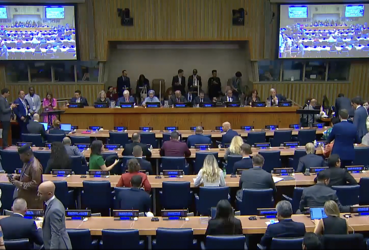
World leaders approved a political declaration during the U.N. General Assembly (UNGA) High-Level Meeting on Antimicrobial Resistance (AMR). The declaration includes several targets and actions aimed at combating AMR, including reducing the estimated 4.95 million human deaths associated with resistance annually by 10% by 2030.
“In the century since Alexander Fleming stumbled across penicillin in a laboratory in London, antibiotics have become a mainstay of medicine, transforming once-deadly infections into treatable and curable conditions,” said Tedros Adhanom Ghebreyesus, PhD, MS, the WHO director-general. “Antimicrobial resistance threatens to unwind that progress, making it without question one of the most pressing health challenges of our time.”
In 1945, Dr. Fleming warned the public that resistance was inevitable: “It is not difficult to make microbes resistant to penicillin in the laboratory by exposing them to concentrations not sufficient to kill them.”
And Dr. Tedros added, “If he were here today, he would probably say, ‘I told you so.’
“AMR could reverse decades of medical progress, making common infections, routine surgeries, cancer treatment and organ transplants far riskier and even life-threatening. This is not a hypothetical risk for the future. It’s here and now,” he told the U.N. multistakeholder panel at the high-level meeting.
According to the U.N. Environment Programme, among the actions the declaration calls for are sustainable national financing and $100 million in funding, to achieve a target of at least 60% of countries having funded national action plans for AMR by 2030. Ways to reach that goal, according to the declaration, include diversifying funding sources and securing more contributors to the Antimicrobial Resistance Multi-Partner Trust Fund.
Other global targets of the declaration include:
- at least 70% of antibiotics used for human health globally should belong to the WHO Access group of antibiotics with relatively minimal side effects and lower potential to cause AMR;
- 100% of countries having basic water, sanitation, hygiene and waste management services in all healthcare facilities by 2030;
- 90% of countries meeting WHO’s minimum requirements for infection prevention and control programs by 2030;
- meaningfully reducing the quantity of antimicrobials used globally in the agri-food systems by prioritizing and funding the implementation of measures to prevent and control infections and ensuring prudent, responsible and evidence-based use of antimicrobials in animal health by 2030; and
- preventing and addressing the discharge of antimicrobials into the environment as well as other action to address key sources of antimicrobial pollution.
Sufficient funding is key, according to experts. “Sustainable, consistent and diversified financing is essential to support the clear priorities and measurable targets for decisive action,” said U.N. Food and Agriculture Organization Director General Qu Dongyu, PhD.
The declaration requires the participants to provide an update to the UNGA by 2026.
Luka Srot, MPharm, the associate director, Health Security, of the International Federation of Pharmaceutical Manufacturers and Associations (IFPMA), also spoke about financing when discussing the political declaration. “If we are going to build a robust pipeline of new antibiotics, we need to see innovative financing and procurement models that can support the investment required to discover and develop new antibiotics and sustain manufacturing capacity, while ensuring that such antibiotics are used sparingly, for treating AMR infections.”
Mr. Srot added the analysis published by IFPMA “demonstrates that if we get this right, we can boost a declining research pipeline, which is expected to contain just 26 treatments in 10 years’ time, to one which contains over 70.”
Focus must now turn to national governments to delineate the practical steps needed to make this a reality, Mr. Srot said.
According to IFPMA, there have been only 10 new antibiotics or combinations approved by regulatory authorities between 2017 and 2023, only two of which are defined as innovative by the WHO. None are considered to constitute a new class of antibiotics.
Only one antibiotic candidate is in phase 3 clinical trials across the four bacterial pathogens defined as a critical priority by the WHO.
Research published by IFPMA earlier this year demonstrated that the pipeline of antibiotics is expected to continue to gradually decline, and in 10 years’ time, the pipeline is expected to contain just 26 treatments, of which only six are in late stages of development.
Médecins Sans Frontières/Doctors Without Borders (MSF) issued a statement calling on governments to take swift action to translate the political declaration into meaningful progress against drug resistance.
“Headway against AMR since the first declaration nearly a decade ago has been inadequate and inequitable, with low- and middle-income countries … least equipped to respond despite bearing the highest burdens of drug-resistant infection,” said Christos Christou, PhD, MS, the international president of MSF. “The declaration must now go beyond words on paper: Governments must not only enact and be accountable to the commitments they’ve made, but they must also build on and refine them to ensure low-resource and humanitarian settings are no longer left behind.”