





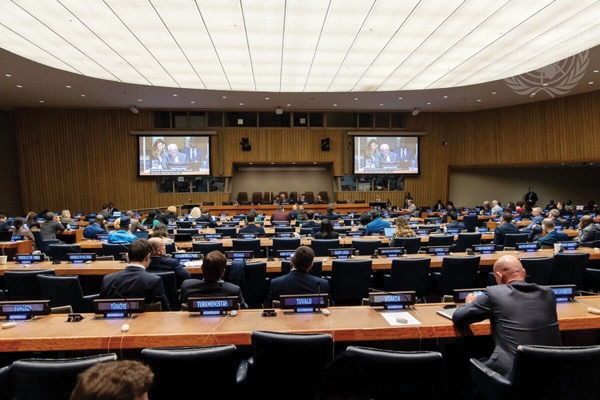
World leaders approved a political declaration during the U.N. General Assembly High-Level Meeting on Antimicrobial Resistance (AMR). The declaration includes several targets and actions aimed at combating AMR by 2030, including reducing the estimated 4.95 million human deaths associated with resistance annually by 10% (bit.ly/4g9ivfQ-IDSE; bit.ly/4icYHds-IDSE).
“AMR could reverse decades of medical progress, making common infections, routine surgeries, cancer treatment and organ transplants far riskier and even life-threatening. This is not a hypothetical risk for the future. It’s here and now,” Tedros Adhanom Ghebreyesus, PhD, MS, the WHO director-general, told the U.N. multistakeholder panel at the high-level meeting.
Among the actions the declaration calls for are sustainable national financing and $100 million in funding, to achieve a target of at least 60% of countries having funded national action plans for AMR by 2030. Ways to reach that goal, according to the declaration, include diversifying funding sources and securing more contributors to the Antimicrobial Resistance Multi-Partner Trust Fund. Other global targets by 2030 include:
- at least 70% of antibiotics used for human health should belong to the WHO Access group of antibiotics with relatively minimal side effects and lower potential to cause AMR;
- 100% of countries having basic water, sanitation, hygiene and waste management services in all healthcare facilities;
- 90% of countries meeting the WHO’s minimum requirements for infection prevention and control programs;
- meaningfully reducing the quantity of antimicrobials used in the agri-food systems; and
- addressing the discharge of antimicrobials into the environment.
Sufficient funding is key, according to experts. “Sustainable, consistent and diversified financing is essential to support the clear priorities and measurable targets for decisive action,” said U.N. Food and Agriculture Organization Director General Qu Dongyu, PhD.
Luka Srot, MPharm, the associate director of Health Security at the International Federation of Pharmaceutical Manufacturers and Associations (IFPMA), also spoke about financing. “If we are going to build a robust pipeline of new antibiotics, we need to see innovative financing and procurement models that can support the investment required to discover and develop new antibiotics and sustain manufacturing capacity, while ensuring that such antibiotics are used sparingly, for treating AMR infections.”
Mr. Srot added the analysis published by IFPMA “demonstrates that if we get this right, we can boost a declining research pipeline, which is expected to contain just 26 treatments in 10 years’ time, to one which contains over 70.”
Regulatory authorities have only approved 10 new antibiotics or combinations between 2017 and 2023, only two of which are defined as innovative by the WHO. None are considered to constitute a new class of antibiotics. Only one antibiotic candidate is in phase 3 clinical trials across the four bacterial pathogens defined as a critical priority by the WHO.
Research published by IFPMA earlier this year demonstrated that the pipeline of antibiotics is expected to continue to gradually decline, and in 10 years’ time, the pipeline is expected to contain just 26 treatments, of which only six are in late stages of development (bit.ly/4eTXZij-IDSE).

This article is from the December 2024 print issue.