





Using new technology like the Collaboration to Harmonize Antimicrobial Registry Measures (CHARM) program, healthcare providers may better quantify and assess local antimicrobial prescribing practices in outpatient settings.
The CHARM Offensive
Developed at Ferris State University, in Michigan, CHARM uses existing data from partner institutions’ electronic health records (EHRs) to inform providers about current prescribing practices. The program provides data about roughly 3 million antibiotic visits in more than 20 health systems in seven states.
“We have expanded into collecting data from dental clinics and are looking at including veterinary hospitals and clinics as well. We have been asked to provide data to partners on their progress toward meeting HEDIS [Healthcare Effectiveness Data and Information Set] measures, which is directly linked to their reimbursement," Michael Klepser, PharmD, FCCP, FIDP, a professor at Ferris College of Pharmacy, and the senior director of CHARM, told Infectious Disease Special Edition.
By informing clinicians and healthcare providers about their antibiotic prescribing trends, more stewardship opportunities can be identified and the impact of initiatives measured.
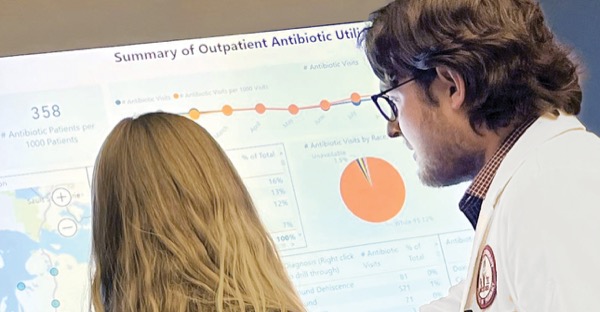
One driver of discordant prescribing is lack of familiarity with new and updated practice and clinical guidelines, which can be difficult to monitor for internists, family practitioners and pediatricians who see patients with a variety of conditions, such as cardiovascular disease and diabetes.
“Sixty percent to 80% of all antibiotics used in humans are used in the outpatient setting; 30% of those are not needed,” Dr. Klepser said. “When you add in discordant dosing, and so forth, that goes up to probably about 60% to 80% for all outpatient antibiotic usage that is not concordant with guidelines.”
A popular belief is that patients expect an antibiotic when they visit a physician, but that is not always the case. “Most of us just want to have our symptoms validated, with a strategy to feel better,” he said.
CHARM is a clinician’s dashboard, with panels of different information that include antibiotic visits by age groups, race and sex. The tool shows up-to-date prescribing patterns for specific infections, and institutions can evaluate their prescribing practices and adherence to guidelines. EHR data are transferred securely.
“We house the data behind the university’s firewall, and all the data are de-identified and masked, and then it’s a link that’s only shared with the institution,” Dr. Klepser said.
Participation in the CHARM program fulfills tracking requirements for The Joint Commission’s Antimicrobial Stewardship in Ambulatory Health Care, he said.
“If you have an interest in working with CHARM, and having us generate some dashboards etc., contact me and we’re happy to get people out and do this. We’ve talked to the CDC; they like what we’re doing, and I’d like to see it grow as well.”
Jacinda Abdul-Mutakabbir, PharmD, MPH, called it an effective tool. “Any tool designed to provide a better and centrally available collection of patient antimicrobial treatments is a home run,” said Dr. Abdul-Mutakabbir, an assistant professor of clinical pharmacy at the University of San Diego Skaggs School of Pharmacy and Pharmaceutical Sciences.
“Ultimately, if we have a tool that addresses limitations to care in minoritized communities, it can be a pivotal change for antimicrobial stewardship, globally,” she added.
Most of its funding comes from the Michigan State Health Department; however, CHARM expects to sign contracts soon with two additional state health departments to provide services to all the institutions in their states.
Dr. Abdul-Mutakabbir reported relationships with AbbVie, CSL Seqirus, Entasis Therapeutics, Innoviva Specialty Therapeutics and Shionogi. Dr. Klepser reported relationships with BD Biosciences, Genentech, Janssen Pharmaceuticals, LabSimple, Quidel and Qorvo.
This article is from the August 2024 print issue.