





“You don’t have to have million-dollar grants, and you don’t even have to have the ability to travel to have an impact in antibiotic stewardship internationally,” said Debra Goff, PharmD, a professor of clinical pharmacy practice and science at The Ohio State University (OSU) College of Pharmacy, in Columbus.
For nearly two decades, Dr. Goff has traveled extensively, advocating for stewardship and collaborative care between pharmacists and physicians in 38 countries on six continents, so far. In 2012, for example, she launched a two-week train-the-trainer program at OSU Wexner Medical Center and Nationwide Children’s Hospital (NCH), which empowers pharmacists from low- to middle-income countries to become partners in their patients’ care and build antimicrobial stewardship programs in their own countries.
“It is like speed-dialing stewardship,” Dr. Goff said. During these training sessions, Julie Mangino, MD, a professor emeritus of internal medicine at OSU, assumes the ID physician role. The ID pharmacists go through one-on-one role playing with Dr. Mangino on how to talk to a physician to make an intervention. “She’ll say, ‘No, no, no, you need to be stronger. More confident!’”
NCH physicians Pablo Sanchez, MD, a pediatric ID neonatologist, and Ben Nwomeh, MD, a pediatric surgeon, are also involved in the train-the-trainer program. “We have them ask us anything,” Dr. Goff said. “Our ID pharmacists never had physicians take that individual time with them to teach them how to make appropriate interventions.”
In 2018, Dr. Goff collaborated with two dozen other global stewardship experts to help low- to middle-income countries develop their own antimicrobial stewardship policies. The WHO tool kit—a 50-page, step-by-step guide that outlines different roles for every healthcare provider—is available online at bit.ly/3Aa2ZAU-IDSE.
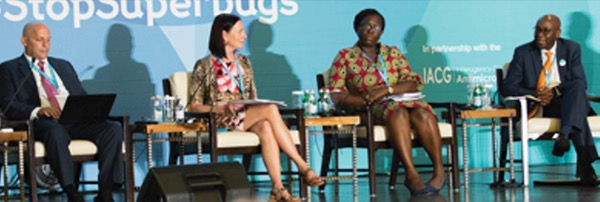
Dr. Goff shared some barriers to antibiotic stewardship in resource-limited settings. “In Lebanon, for example, I’ve worked in adult and neonatal stewardship. How do you do stewardship in a country that’s going through an economic collapse? The healthcare workers are not being paid. They’re medical heroes coming into work unpaid, in a setting of total political instability,” she said. “And then the largest explosion in the history of Beirut happened. It occurred on a Monday, and a colleague had a part of her paper due to me that Friday. I didn’t even know if our team was alive, but then I got an email: ‘Debbie, I had no power and couldn’t find any Wi-Fi, but I was finally able to connect.’ The local [medical] leaders in these countries move mountains.”
In Vietnam, Dr. Goff said, she encountered hospital wards with two patients per bed, side by side, who in the United States would typically be in isolation. “In the surgical post-op, patients were having their dressings changed while the dusty floor was being swept, with no screens on the windows,” she said. “You can only imagine why the rate of gram-negative resistance is so profoundly high in these countries.
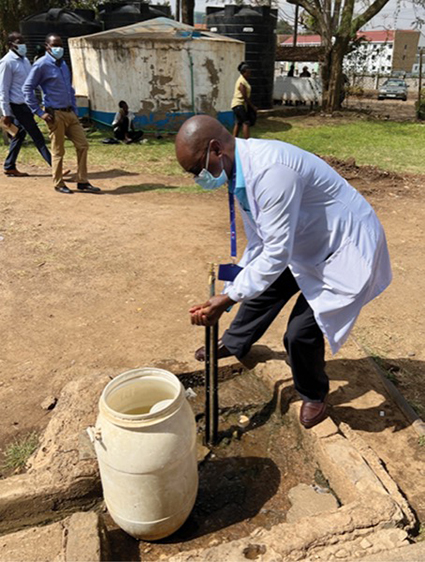
“We’ve also seen egregious breaches of infection control, corruption, bribes, horrible things, but we have to stay laser-focused on our mission,” Dr. Goff said. “We are there to find antibiotic steward leaders—diamonds in the rough. We have to think outside the U.S. model of infectious disease–trained pharmacists and physicians. In the entire country of South Africa, there are 20 infectious disease–trained physicians. In these countries, there are no infectious disease–trained pharmacists.”
Dr. Goff told Infectious Disease Special Edition that her next goal is to establish a pharmacist mentoring network to allow U.S. pharmacists who would like to help, but who may not be able to travel and work directly overseas, to provide online mentoring.
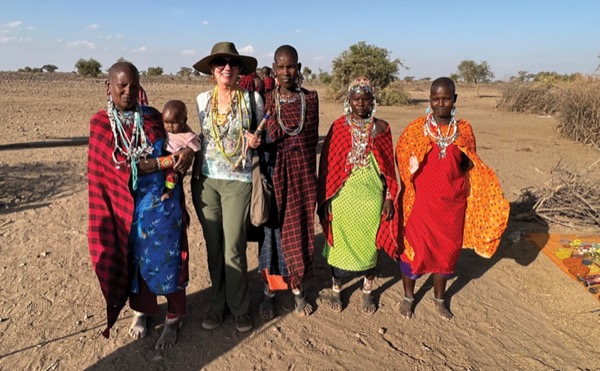
“We would connect a pharmacist from another part of the world to that [U.S.-based] pharmacist,” she said. “Maybe they would meet online even just for an hour once a month, to help advance their knowledge. The U.S. pharmacist could send key articles ahead of time, and that hour could be spent talking about interpreting and applying the knowledge from those studies.”
In the United States, she added, “we are provided with free access to medical journals at our academic medical centers, but in these other countries, they are not. They’re often lucky if they can even get Wi-Fi without having to pay for it themselves.”
Building Trust Abroad
The role of many pharmacists in low- to middle-income countries is still to dispense medication. “They do not yet have roles in stewardship like we have in the United States, but we need them to do that,” she said. “When I travel to these countries, my first question is, ‘Where’s your pharmacist?’ The response is usually, ‘They’re not trained like you, Debbie; why would we invite them?’ Infectious disease physicians in these settings often don’t know the pharmacists. There’s no trust. But while their knowledge level is not the same as pharmacists in the United States, and their training programs are not the same, I explain that the physicians are not possibly going to review all antibiotics orders when they are not consulted and paid to do it. They can mentor the dispensing pharmacist to have a very valuable role in stewardship.”
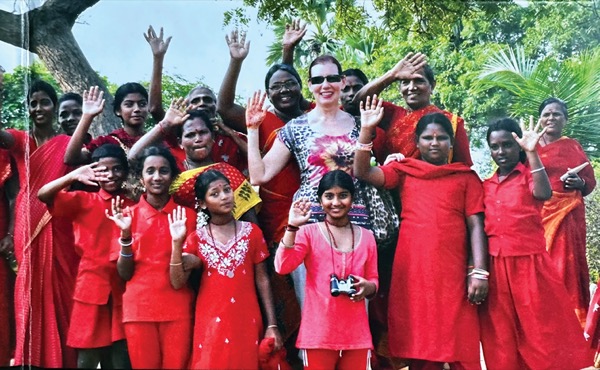
Dr. Goff said she always starts with what she calls a “hang time” project, asking that a pharmacist who has a primary dispensing role find one hour per day to start stewardship. “That hour doesn’t have to be consecutive,” she said. “For example, when they’re making their dispensing rounds and an antibiotic has arrived for a septic patient, they can establish communication with the nurse, helping them to reconstitute the vial and get it infused. Just before IDWeek [2023], I visited one of our project sites in South America, and an ICU physician who didn’t even know a pharmacist now has a desk for that pharmacist in the ICU, because he realizes the incredible value that a pharmacist brings, even if they are not ID-trained.”
It doesn’t take a senior-level ID pharmacist with advanced training to mentor pharmacists in these countries. “Our PGY-2s in the United States are trained at a higher skill level than most pharmacists in lower-income countries. We need to capitalize on that,” she said. “Any pharmacist can help them begin in these roles by starting with literature evaluation and review. You could pick a simple topic, like evaluating a patient’s chart for staph bacteremia. It’s endless what you could do.”
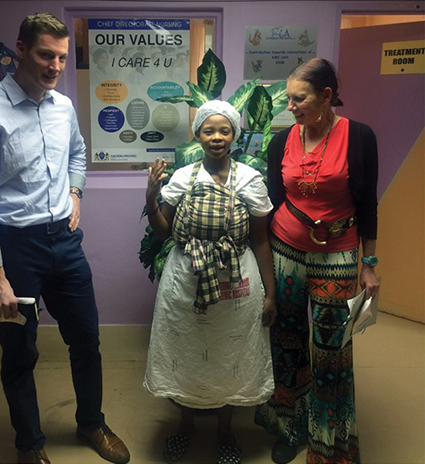
International outreach is important, agreed Elizabeth Dodds-Ashley, PharmD, a past president of Society of Infectious Diseases Pharmacists. “Global collaboration on stewardship is key. Maybe one of the positive things that came out of the COVID-19 pandemic is that we have learned how much of this work we can do without traveling. It’s taught us to be creative about how we extend resources and get expertise to the places where it’s needed without travel costs and delays," Dr. Dodds-Ashley said.
“We need these more creative approaches, and there are a lot of novel ways to do this,” added Dr. Dodds-Ashley, a professor of medicine and infectious diseases at Duke University School of Medicine, in Durham, N.C. “I agree with Dr. Goff that we cannot take the U.S. model and just apply it somewhere else, but there are many ways we can work together.”
The sources reported no relevant financial disclosures.
This article is from the August 2024 print issue.