

Updated April 8.
By Marie Rosenthal, MS
The CDC reported that a U.S. resident recently tested positive for highly pathogenic avian influenza (HPAI) A(H5N1) virus. Although the CDC said the risk to people is low, the agency issued a health alert on April 5.
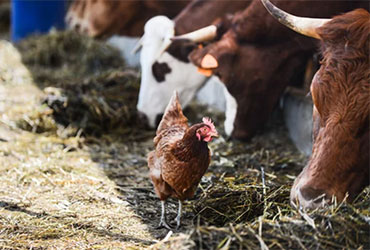
The person was exposed to dairy cattle in Texas presumed to be infected with HPAI A(H5N1) virus. The patient reported conjunctivitis as their only symptom and is recovering. The patient was told to isolate and is being treated with an antiviral.
Although worrying, this case does not change the H5N1 bird flu human health risk assessment for most people in the United States, which the CDC considers to be low. The virus has not yet mutated to enable person-to-person transmission.
However, people with close or prolonged, unprotected exposures to infected birds or other animals, or to environments contaminated by infected birds or other animals, are at greater risk for infection.
There is a bright spot for the United States: how quickly it was discovered. “The rapid detection of this H5N1 bird flu virus in a person is an example of excellent collaboration of alert clinicians and public health responders,” said William Schaffner, MD, a professor of preventive medicine, Department of Health Policy, and a professor of medicine in the Division of Infectious Diseases at Vanderbilt University Medical Center, in Nashville, Tenn.
“The mild illness was detected and diagnosed quickly; the patient and his close contacts were treated promptly.”
Dr. Schaffner added public health officials are looking harder for HPAI and, therefore, are finding more. “Surveillance for influenza variants now is both more intense and more sophisticated than it was even 10 years ago, so these unusual infections are better detected,” he said.
The CDC has interim recommendations for prevention, monitoring and public health investigations of HPAI A(H5N1) virus and is working with state health departments to continue to monitor workers who may have been in contact with infected or potentially infected animals and to test those who develop symptoms.
This is the second person to test positive for HPAI in the United States. A previous human case occurred in 2022 in Colorado. Human infections with avian influenza A viruses are uncommon but have occurred sporadically worldwide.
HPAI in dairy cows was first reported in Texas and Kansas by the Department of Agriculture on March 25. Unpasteurized milk from sick cattle collected from two dairy farms in Kansas and one in Texas, as well as a throat swab from a cow in another dairy in Texas, tested positive for HPAI A(H5) viruses of the genetic clade 2.3.4.4b, which is the same clade that is widespread among birds globally. On March 29, the USDA’s National Veterinary Services Laboratories confirmed HPAI in a Michigan dairy herd that had received cows from Texas.
The CDC is working closely with state and federal agencies, including the USDA, the FDA and local health authorities to further investigate and closely monitor this situation.
According to CDC’s interim recommendations, people should avoid unprotected exposure to sick or dead animals including wild birds, poultry, other domesticated birds, and other wild or domesticated animals, as well as with animal carcasses, raw milk, feces, litter or materials contaminated by birds or other animals with confirmed or suspected HPAI A(H5N1) virus infections. People should not prepare or eat uncooked or undercooked food or related uncooked food products, such as unpasteurized milk or products from animals with confirmed or suspected HPAI A(H5N1) virus infections.
According to the FDA and USDA, there are no concerns with the safety of the commercial milk supply.
“There is no current evidence that there is spread to other persons, but surveillance is ongoing. The risk level remains very low. An important note: The milk we drink is safe. Pasteurization kills germs, including the influenza virus,” Dr. Schaffner said.