





New data have reaffirmed that the two-dose modified vaccinia Ankara (MVA) vaccine is effective as pre-exposure prophylaxis (PrEP) against monkeypox virus (MPXV) transmission, according to a recent study presented at IAS 2025, in Kigali, Rwanda.
However, the study in primates (abstract P6484) did not find the MVA vaccine useful as post-exposure prophylaxis (PEP). Currently, the use of the MVA vaccine as PEP is recommended by leading health authorities, including the CDC.
Understanding Mpox to Prevent Spread
The study aimed to address two key questions, according to lead author Cécile Hérate, PhD, a senior project manager in preclinical studies at CEA, in Fontenay-aux-Roses, France.
The first was whether rectal exposure to MPXV resulted in mpox disease. The second question focused on whether the MVA vaccine was effective in protecting against mpox infection when administered as either PrEP or PEP.
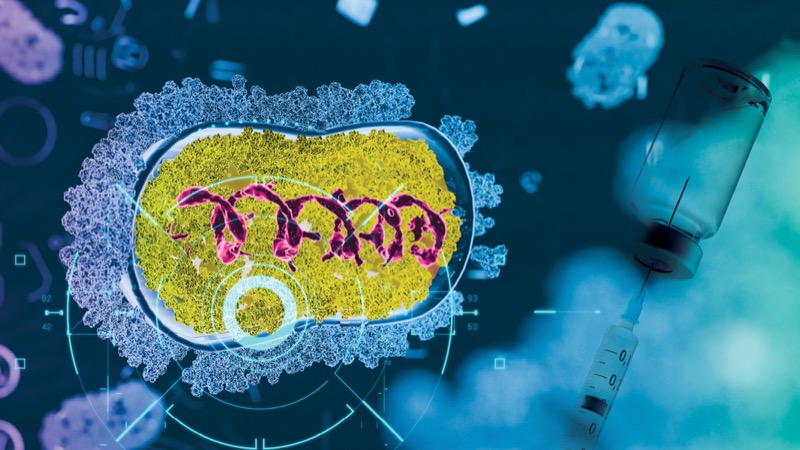
The researchers developed a rectal mucosal transmission model in cynomolgus macaques (n=4) using MPXV clade IIb. The infected animals developed moderate disease marked by genital skin lesions, localized proctitis, fever and lymphadenopathy—clinical features consistent with human cases during recent outbreaks.
Related Content
“We observed that cynomolgus macaques challenged by rectal route develop mild symptoms of mpox similarly to those observed in patients during the recent epidemics,” Dr. Hérate said.
MVA as PrEP
After establishing the mucosal transmission model of MPXV clade IIb via the rectal route in macaques, the team studied the use of the MVA vaccine as both PrEP and PEP; they conducted a longitudinal follow-up of the animals, monitoring viral replication as well as antibody and T-cell responses induced by natural immunity in convalescent animals previously exposed to MPXV.
In the PrEP arm, macaques received two doses of MVA prior to viral challenge. This regimen elicited robust B- and T-cell responses and induced cross-neutralizing antibodies against both MPXV clade I and clade II. Of note, the vaccinated animals exhibited markedly reduced viral loads across multiple compartments, including the rectal mucosa and genital tract, and were largely protected from clinical disease following rectal challenge.
“The MVA vaccine is effective in protecting against mpox when administered in two doses in a PrEP design, [and] MVA vaccination induces protection involving both humoral and cellular immunity,” Dr. Hérate said.
In contrast, the animals who received PEP—which consisted of a single MVA dose administered four days post-exposure—failed to confer meaningful protection. The animals in this group developed typical mpox disease with viral replication detectable in both rectal and seminal fluids.
“PEP of MVA does not prevent naive animals from becoming infected with MPXV after rectal exposure,” Dr. HÉrate said. “These data raise concerns about the emergency protocol for mpox epidemics.”
Both Vaccine and Infection Prevent Mpox
In addition, macaques that had cleared MPXV infection displayed sterilizing immunity upon rechallenge, demonstrating that natural infection induces durable and protective immune responses. In contrast, naive animals exposed via the atraumatic rectal route developed productive localized infections followed by systemic dissemination, reinforcing the need for effective vaccination strategies.
“Data continues to show that vaccination is an important tool to prevent mpox transmission in all settings,” said Faisal Minhaj, PharmD, MPH, DABAT, an epidemiologist and the acting poxvirus epidemiology team co-lead at the CDC. “This study adds to the body of evidence about Jynneos [MVA-BN, Bavarian Nordic] efficacy for both clades of mpox. Its conclusions are in line with CDC’s recommendation to get both doses of mpox vaccine for the best protection against mpox.”
Dr. Minhaj noted the fact that the study took place in animals highlights the need to continue evaluating real-world vaccine effectiveness data during outbreaks to fully inform PEP vaccination strategies. Currently, studies are aiming to address this question, many taking place in African countries where mpox is endemic, he said.
He hopes other studies will address data gaps in areas including mpox vaccine effectiveness in immunocompromised individuals, he added.
“Additionally, the longevity of the immune response following MVA-BN vaccination is still to be determined,” Dr. Minhaj said. “One study CDC conducted with public health partners in the Democratic Republic of the Congo indicated that a booster dose five years after receiving the MVA-BN primary series leads to a rapid and robust antibody response [medRxiv 2025 Jun 6. doi:10.1101/2025.06.06.25329130], but more data are needed from diverse populations.”
Drs. Hérate and Minhaj reported no relevant financial disclosures.
This article is from the October 2025 print issue.