





By Ethan Covey
The homeless, particularly those staying in encampments, may have undetected mpox infections, according to a CDC report.
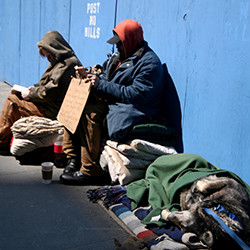
The report highlighted the need for dedicated outreach to people experiencing unstable housing during public health emergencies, as well as the need for tailored outreach strategies that ensure interventions, such as prevention messaging and vaccination, reach individuals experiencing homelessness, the investigators stated (MMWR Morb Mortal Wkly Rep 2023;72[9]:227-231).
A field team from the CDC used an orthopoxvirus seroprevalence survey to gather data from people using homeless services or staying in encampments, shelters or permanent supportive housing in San Francisco that had noted at least one case of mpox and at-risk populations. They conducted the survey starting Oct. 25 through Nov. 3, 2022.
Data from 207 people were included in the serological analysis. Among these, 40% reported being vaccinated against smallpox, mpox or both. Sixty percent of the participants reported neither smallpox nor mpox vaccination.
Among those who were unvaccinated for smallpox and mpox, two had detectable anti-orthopoxvirus immunoglobulin G and one had detectable antibodies, signaling a possible, previously undetected mpox infection. Two of the participants were over 50 years of age.
None of the three people reported sexual contact during the month before being surveyed, and none of them reported being gay, bisexual, transgender or having a rash at the time of the survey. However, two of the three reported sharing unwashed utensils and smoking devices, in addition to spending time with and touching someone with a rash.
“From this project, we know that people staying in encampments or accessing homeless services may have had mpox infection that was not recognized or diagnosed,” Grace E. Marx, MD, a medical epidemiologist with the CDC and an infectious disease specialist in Denver, told Infectious Disease Special Edition. “This implies that people experiencing homelessness may have been at risk for mpox.”
Previous findings revealed people experiencing homelessness have been disproportionately affected by severe mpox (MMWR Morb Mortal Wkly Rep 2022;71[44]:1412-1417). However, the prevalence and routes of transmission of mpox in this vulnerable population remain largely unknown. There has not been a specific recommendation made to receive the mpox vaccine in this population.
Dr. Marx said additional studies are needed to understand mpox transmission pathways among people experiencing homelessness to effectively help people prevent infection.
“We still don’t know if the physical and social context of homelessness increases mpox risk of infection,” she said.
Due to these findings, Dr. Marx said, “specific outreach efforts are needed to ensure that people who are experiencing homelessness have access to effective disease prevention tools, including vaccines.”
Dr. Marx reported no relevant financial disclosures.