






The findings of studies assessing drug interactions in transgender men and women taking hormone therapy and HIV pre-exposure prophylaxis may help assuage concerns that prevent PrEP use.
A recent systematic review examining facilitators of and barriers to PrEP use in trans people found that despite relatively high awareness of PrEP, uptake was low, partly because of beliefs that there were interactions between the prophylactic regimen and hormone therapy (AIDS Patient Care STDS 2022;36[6]:236-248).
Tam Phan, PharmD, the clinical pharmacy program coordinator at the Los Angeles LGBT Center, has seen these concerns firsthand, telling Infectious Disease Special Edition, “Individuals who would like to start on hormone affirmation therapy or have already started may express concerns … that PrEP might interfere with the effectiveness of hormone therapy, or vice versa.”
Generating Concern
These concerns may have stemmed from a 2015 study (Lancet HIV 2015;2[12]:e512-e519), “which indicated no efficacy in preventing HIV infection among trans women and showed low concentrations of PrEP among trans women,” said Akarin Hiransuthikul, MD, MSc, a lecturer in the Department of Preventive and Social Medicine at Chulalongkorn University in Bangkok. He was quick to stress that “some limitations needed to be considered in interpreting the findings, in particular the small number of trans women in the study” and suggestions of poor adherence to PrEP among the study participants.

Despite these limitations, patient concerns have persisted and are “compounded by a [scarcity] of trans-specific research to address these potential interactions,” according to Dr. Phan.
To shed more light on the issue, Dr. Hiransuthikul and his research team assessed whether there are interactions between hormone therapy and PrEP regimens in trans people. The team presented its findings from two studies at CROI 2024, held in Denver.
PrEP and FHT in Trans Women
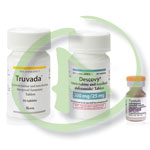
In the first, called iFACT3 (poster 1144), the investigators focused on feminizing hormone therapy (FHT) and PrEP using emtricitabine plus tenofovir alafenamide (FTC/TAF) among trans women. The study participants received oral FHT from baseline to week 9 and oral FTC/TAF from weeks 3 to 12.
The investigators measured intracellular rectal tissue concentrations of the PrEP regimens at week 9, while FHT was also being administered, and at week 12, after FHT administration ended, in 10 participants. They found that the median rectal tissue concentration of each PrEP regimen at week 9 was comparable to its concentration at week 12 (tenofovir-diphosphate [TFV-DP]: 37.6 vs. 27.4 fmol/mg; P=0.72; FTC-triphosphate [TP]: 14.5 vs. 11.6 fmol/mg; P=0.20).
These results aligned with and built on previous iFACT3 analyses in plasma (CROI 2023; poster 996) and peripheral blood mononuclear cells (PBMCs) (IAS 2023 program OAC0404) that found no significant interaction between FHT and FTC/TAF.
PrEP and MHT in Trans Men
The second study, iMACT, largely paralleled the protocol and aims of iFACT3 but in trans men. The researchers examined both oral FTC/tenofovir disoproxil fumarate (TDF) (poster 1145) and FTC/TAF (poster 1146) concentrations in plasma, PBMCs, cervical tissue and rectal tissue.
Participants received intramuscular masculinizing hormone therapy (MHT) every other week from enrollment through week 12 and oral daily PrEP from weeks 6 through 16. Nineteen trans men who received FTC/TDF and 20 trans men who received FTC/TAF were included in the analyses.
The investigators measured plasma, PBMCs, and cervical and rectal tissue concentrations of the PrEP regimens at week 12, while MHT was also being administered, and at week 16, after MHT administration ended. Pharmacokinetic analysis of plasma concentration found that each regimen’s week 12 area under the concentration-time curve (AUC0-24) was comparable with its week 16 AUC0-24. The same was true for each regimen’s week 12 and 16 maximum concentration. In addition, for each PrEP regimen, the drug concentration in PBMCs and rectal tissue, was comparable when administered without MHT at week 16 to what it was when administered with MHT (week 12).
However, for the participants taking FTC/TAF, cervical tissue concentrations of TFV-DP (12.9 vs. 20.63 fmol/mg; P=0.04) and FTC-TP (67.05 vs. 120.43 fmol/mg; P=0.02) were significantly lower at week 12, when PrEP was coadministered with MHT, than at week 16, when the patients were no longer receiving MHT. This difference was not seen in those taking FTC/TDF, in whom the cervical tissue concentrations were comparable at weeks 12 and 16.
To Dr. Phan, who was not involved in this research, the fact that “cervical tissue levels trended significantly lower” than the “plasma, intracellular and rectal tissue levels of TAF, TFV, and FTC” in those receiving FTC/TAF “may have potential implications for patients having receptive vaginal sex.” He added that this finding “re-emphasizes that clinicians should still take a careful sexual history and explain the different effective PrEP options to patients.”
Putting Findings Into Practice
“These studies support the safety and efficacy of using PrEP for individuals who are also prescribed hormone affirmation therapy—both of which can improve quality of life and prevent HIV acquisition,” Dr. Phan said.
“Looking ahead to potential future implementation,” Dr. Hiransuthikul noted, “we also provided a glimpse of information indicating that FTC/TAF could potentially be considered as an alternative option for PrEP among trans men using hormone therapy.”
This regimen, however, “is not currently approved for use in cisgender women and trans men for PrEP,” he added.
“It is crucial to integrate gender care and PrEP services to effectively increase PrEP uptake among the trans population,” Dr. Hiransuthikul said, adding he learned this lesson through his experience working with trans individuals on HIV prevention.
Dr. Phan added a few strategies he recommends that healthcare providers employ to increase PrEP uptake and combat patient hesitancy. First, focus “on education, emphasizing the safety and effectiveness of PrEP and addressing its compatibility with hormone therapy.” In addition, he advised taking “an individualized approach, considering the patient’s unique medical and personal needs” that will influence “uptake and adherence.” Lastly, he emphasized that “involving patients in decision making and tailoring the treatment plan to align with their individual health goals can significantly reduce hesitancy.”
Read a review written by Dr. Phan about addressing stigma in HIV care at bit.ly/4e8IGmN-IDSE.
Both studies were funded by a Gilead Sciences Investigator Sponsored Research grant. Dr. Phan reported relationships with Merck and ViiV Healthcare. Dr. Hiransuthikul reported no relevant financial disclosures.


This article is from the June 2024 print issue.