





Real-world data from HIV patients in the United States show strong efficacy and tolerability of dolutegravir-based two-drug regimens, supporting findings from clinical trials and European real-world data.
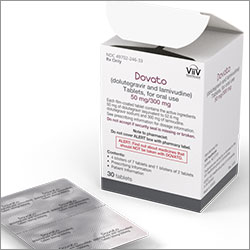
In TANDEM, a retrospective multicenter chart review of adults with HIV-1, the investigators analyzed the virologic outcomes and discontinuation among patients initiating or switching to single-tablet dolutegravir-lamivudine (DTG/3TC; Dovato, ViiV Healthcare) or dolutegravir-rilpivirine (DTG/RPV; Juluca, ViiV Healthcare). They also sought to characterize the patients on these regimens and reasons for the medication switch.
Commonsense Approach
“Three drugs seemed to be the magic number when protease inhibitors were developed in the mid-1990s,” Paul Benson, DO, an HIV specialist who was involved in the study, told Infectious Disease Special Edition. “We tried four-drug regimens and found there was really no benefit to efficacy,” but they did see worse toxicity than with three-drug regimens. Thus, what Dr. Benson considers a “commonsense approach” to minimize toxicity while maintaining efficacy led to investigations into two-drug regimens. And real-world evidence that builds on clinical trial data, like that generated in TANDEM, can give “confidence in the success of a drug in the real world, as compared with a controlled clinical trial,” Dr. Benson said.
Amit Achhra, MD, PhD, MPH, an infectious disease specialist and assistant professor of medicine at Yale School of Medicine, in New Haven, Conn., who was not involved in the study, echoed Dr. Benson’s sentiment about the value of real-world data, noting that despite the “promise” of “better long-term safety” of two-drug regimens, “many HIV providers are still concerned that two-drug regimens may not be enough and may cause more treatment failures in the real world.”

In addition, Dr. Achhra noted that “compared with an average person with HIV, trial participants are less likely to have comorbidities, have less complex treatment histories, [less] representation from minority communities and more likely to be adherent to their treatment and appointments. Real-world observational studies such as TANDEM are therefore important in evaluating how these regimens perform in the stress test of an average, busy HIV clinic.”
Patients in the TANDEM study receiving DTG/3TC either were previously antiretroviral therapy (ART)-naive (n=126) or switching from an ART regimen on which they were suppressed virologically (HIV-1 RNA <50 copies/mL) (n=192), while patients receiving DTG/RPV were switching from an ART regimen on which they were virologically suppressed (n=151).

The cohort of previously ART-naive patients were younger, on average, and more commonly male, Hispanic and enrolled in the AIDS Drug Assistance Program than those who were virologically suppressed. Those who were virologically suppressed and switched to DTG/3TC or DTG/RPV had been on ART regimens for an average of more than eight years.
The investigators examined patient virologic outcomes, finding that 94% of those in the ART-naive cohort achieved virologic suppression on DTG/3TC, and 83% of the cohort maintained suppression. Among the patients who switched to DTG/3TC and DTG/RPV, 96% and 93%, respectively, remained virologically suppressed, and an additional 2% and 3%, respectively, became detectable after switching but then resuppressed.
Dr. Achhra told Infectious Disease Special Edition that it was good to see real-world follow-up over a couple of years. “Both regimens performed as well as they did in randomized trials.”
However, he added, “the main limitation [of TANDEM] was the follow-up duration, which was less than three years for these lifelong regimens. Longer term data on virological outcomes as well as comorbidities will be critical in further understanding the optimal HIV treatment paradigm.”
Dr. Benson agreed and cautioned that two-drug regimens may not be “a good option for everybody right now,” explaining that concerns about resistance mean he would like “to see what happens in 10 to 15 years” after two-drug regimen initiation.
Discontinuation of both regimens was uncommon among the study participants. Only one of the 126 ART-naive cohort patients receiving DTG/3TC, three of the 192 virologically suppressed patients who switched to DTG/3TC and four of the 151 virologically suppressed patients who switched to DTG/RPV discontinued treatment. Reasons for discontinuation included viremia, intolerance, toxicity, treatment-related food requirements, patient preference and virologic failure, although the failure was suspected to be due to nonadherence.
To better understand treatment decision making, the investigators surveyed the healthcare providers (HCPs) who treated the study patients. When asked which factors are relevant when considering treatment options for patients in the ART-naive cohort, HCPs most commonly pointed to limited healthcare access and comorbidities. HCPs also pointed to comorbidities for the virologically suppressed patients, citing polypharmacy and health insurance changes as additional factors.
Regarding why patients were prescribed DTG/3TC or DTG/RPV specifically, physicians most commonly cited avoidance of long-term toxicities as the primary reason for both previously ART-naive and virologically suppressed patients. The second most cited reason was convenience for the ART-naive cohort and simplification or streamlining of treatment for the virologically suppressed patient cohorts.
The TANDEM study was funded by ViiV Healthcare. Dr. Benson reported a financial relationship with ViiV Healthcare. Dr. Achhra reported no relevant financial disclosures.


This article is from the June 2024 print issue.