By Ethan Covey
Progress continues toward understanding how the four-component meningococcal serogroup B vaccine, 4CMenB (Bexsero, GlaxoSmithKline), might also offer protection against gonococcus, the bacteria that causes gonorrhea.
A team of Italian researchers has identified a subset of antibodies that are able to cross-react against related epitopes on gonococcus, a finding that suggests the 4CMenB vaccine could be adapted to combat gonorrhea (Sci Transl Med 2025;17:eadv0969).
Gonorrhea is the second most common sexually transmitted infection, resulting in more than 80 million cases globally, including 710,000 infections annually in the United States. In recent years, gonococcus has developed resistance to many antibiotics, challenging efforts to treat the infection and raising concern that it may become untreatable.
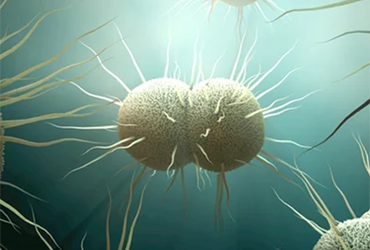
“Meningococcus (Neisseria meningitidis) and gonococcus (Neisseria gonorrhoeae) belong to the same genus (Neisseria) and share a high degree of homologous genes,” explained Rino Rappuoli, PhD, the scientific director of the Biotecnopolo di Siena Foundation, Italy. “In spite of this, they cause very different diseases (meningitis and sepsis for meningococcus and gonorrhea for gonococcus) and colonize different parts of the body (the upper respiratory tract for meningococcus and the genital tract for gonococcus).”
Given the high homology of the two genomes, some cross-protection would be expected. However, that cross-protection had never been demonstrated until recently, according to Dr. Rappuoli. “During the last few years, observational studies have shown in multiple occasions that the licensed 4CMenB vaccine against meningococcus is also able to induce a low level of protection against gonococcus.”
The researchers immunized three healthy volunteers with the 4CMenB vaccine, then collected their peripheral blood mononuclear cells, single-cell sorted the memory B cells and selected the B cells producing monoclonal antibodies (mAbs) recognizing the meningococcal outer membrane vesicles, which could kill gonococcus in vitro.
They identified 17 antibodies that were able to kill the gonorrhea bacteria in lab tests. These primarily targeted two bacterial components: porin B (PorB) and lipooligosaccharide (LOS).
In addition to strengthening the understanding of the broad protection that the 4CMenB vaccine may provide against gonorrhea, the findings indicated that the study of mAbs may be useful for identifying protective antigens.
“By showing that the same human monoclonal antibody kills both meningococcus and gonococcus, [this study] nails down the molecular mechanisms of protection, confirming that the data reported by the observational studies have a strong scientific basis and are credible, thus providing proof of concept that gonococcal vaccines are feasible,” Dr. Rappuoli said. “This is a strong message, because all attempts made from 1970s to now to develop gonococcal vaccines have been a failure.
“In addition, the study provides an explanation about why the licensed meningococcal vaccine is able to protect from meningococcal strains that do not have an antigen matching FHbp, NadA, NHBA and PorA, which are the main antigens of 4CMenB vaccine,” Dr. Rappuoli said.
Minor neglected antigens, such as PorB or LPS, are also important and appear to mediate such protection, according to Dr. Rappuoli.
“Finally, the study shows the power of deep profiling of the antibody immune response to vaccination and infection in humans to generate antibodies that on their own are already potential drugs for prevention and therapy of infectious diseases and identify antigens for vaccine development,” Dr. Rappuoli added.
Dr. Rappuoli reported he owns shares in the GlaxoSmithKline group of companies.