By IDSE News Staff
A case of polio—the first since 2013—was diagnosed in Rockland County, N.Y., in an unvaccinated man, according to the New York State Department of Health (NYSDOH) and the Rockland County Department of Health (RCDH).
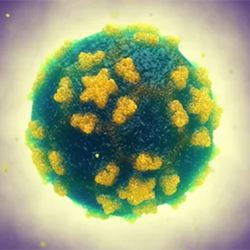
Sequencing performed by the Wadsworth Center—NYSDOH’s public health laboratory—and confirmed by the CDC showed revertant polio Sabin type 2 virus. This finding indicates a transmission chain from a person who received the oral polio vaccine (OPV), which is no longer authorized or administered in the United States, suggesting that the virus may have originated outside the United States where OPV is administered, since revertant strains cannot emerge from inactivated vaccines. Only the inactivated polio vaccine (IPV) is given in the United States, a practice that began in 2000.
Because polio vaccine continues to be given as part of a child’s standard immunization schedule, vaccinated people are considered to be at lower risk for polio, the health departments said in a joint statement.
However, unvaccinated people, including those who are pregnant, who have not completed their polio vaccine series previously, or community members who are concerned they might have been exposed, should be vaccinated. Rockland County will be hosting local vaccine clinics or partnering with health agencies and providers in the area. Individuals who are already vaccinated but at risk for exposure should receive a booster, they said.
“Based on what we know about this case, and polio in general, the Department of Health strongly recommends that unvaccinated individuals get vaccinated or boosted with the FDA-approved IPV polio vaccine as soon as possible,” said Mary T. Bassett, MD, the state health commissioner. “The polio vaccine is safe and effective, protecting against this potentially debilitating disease, and it has been part of the backbone of required, routine childhood immunizations recommended by health officials and public health agencies nationwide.”
A viral disease that can affect the nervous system and cause muscle weakness, the polio virus is transmitted by the fecal–oral route. Respiratory and oral-to-oral transmission through saliva also may occur.
Polio is very contagious, and asymptomatic people can spread the virus. Symptoms, which can be mild and flu-like (fatigue, fever, headache, stiffness, muscle pain, vomiting), can take up to 30 days to appear, during which time an infected individual can shed virus to others. Although rare, some polio cases can result in paralysis or death.
Due to the success of the vaccine, which was introduced in 1955, polio cases were cut dramatically in the late 1950s and early 1960s, with the last naturally occurring U.S. cases of polio reported in 1979. More recent polio cases were not wild strains. The last known U.S. case recorded by the CDC occurred in 2013.
The NYSDOH is coordinating with the RCDH and the New York City Department of Health and Mental Hygiene to investigate and respond to the outbreak.
“The Rockland County Department of Health is working with our local health care partners and community leaders to notify the public and make polio vaccination available. We are monitoring the situation closely and working with the New York State Department of Health and the Centers for Disease Control and Prevention to respond to this emergent public health issue to protect the health and wellbeing of county residents,” Rockland County Health Commissioner Patricia Schnabel Ruppert, DO, MPH, said.
Beginning on Friday, July 22, Rockland County will host a polio vaccination clinic at the Pomona Health Complex (Building A) at 50 Sanatorium Road, in Pomona, N.Y., from 10 a.m. to 12 p.m. A second clinic at the same location will be held on Monday, July 25 from 1 to 4 p.m. Anyone who is unvaccinated, including those who are pregnant, have not completed their polio vaccine series or are concerned they have might have been exposed, should get vaccinated at the clinics. Individuals who are already vaccinated but at risk for exposure should receive a booster, which will also be available at the clinics. For more information, click here.
New Yorkers can preregister for a free appointment here or call 845-238-1956 to schedule. Walk-ins will also be accepted. Vaccines are also available through local healthcare providers, including Federally Qualified Health Centers.