





By Ethan Covey
Blacklegged ticks, particularly Ixodes scapularis and I. pacificus, are unlikely to contribute to the transmission of Bartonella spp. in the United States, according to a recent report (Parasites Vectors 2024;17:345).
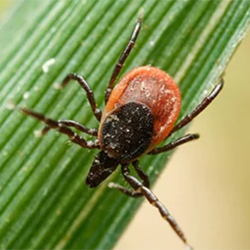
“Although these ticks frequently bite people, we did not find Bartonella in the ticks, suggesting a very low risk for people to get a Bartonella infection through bites from blacklegged ticks,” said Ying Bai, PhD, a microbiologist with the CDC’s Division of Vector-Borne Diseases.
The study focused on two types of blacklegged ticks that are known to commonly bite humans and are sources of vector-borne diseases, including Lyme disease. I. scapularis ticks (n = 1,641; 886 nymphs and 755 adults) were gathered from 23 states located in the eastern part of the country, and I. pacificus ticks (n=966; all nymphs) were collected from California.
All specimens were tested for Bartonella DNA by the use of a quadruplex polymerase chain reaction amplicon next-generation sequencing assay.
Bartonella DNA was not present in any of the 2,607 ticks tested.
Although the specimen sample sizes were low for many states, the testing covered a wide geographic area, and included a fairly large number of ticks. Therefore, the scientists concluded that I. scapularis and I. pacificus ticks are unlikely to contribute to the spread of Bartonella.
However, Dr. Bai noted that tick bites can expose people to other diseases.
“The best way to protect yourself from tickborne diseases is to reduce exposure to tick bites by using EPA-registered insect repellents and taking other prevention steps,” she said.
The study focused on unfed host-seeking ticks, Dr. Bai said. “Testing blood-fed ticks for the presence of Bartonella spp. could provide data to further clarify the role ticks play in Bartonella transmission, including whether these ticks are unable to acquire Bartonella or are unable to maintain the infection through their multiple life stages,” she said.
Dr. Bai reported no relevant financial disclosures.