

By Marie Rosenthal, MS
The CDC updated its recommendations for people who work with dairy cows or poultry to protect themselves from H5N1 infection.
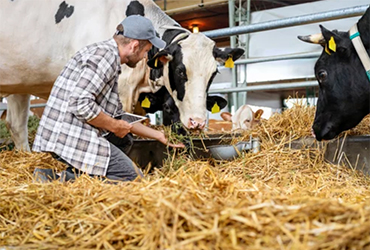
“There are two principal ways that people in the United States are being infected with H5N1 via exposure to infected poultry during culling events, and via exposure to infected dairy cows during the milking process,” explained CDC Principal Deputy Director Nirav Shah, MD, JD, an epidemiologist.
The CDC is expanding who among these workers should be tested for H5N1, making a new recommendation for the use of the antiviral Tamiflu (oseltamivir, Genentech) for exposed asymptomatic workers, and focusing guidance on personal protective equipment (PPE) for workers based on their risk for exposure, he explained.
“The purpose of these actions is to keep workers safe, to limit the transmission of H5N1 to humans and to reduce the possibility of the virus changing right now,” Dr. Shah said during a CDC media briefing on Nov. 7.
These expanded recommendations were needed because a recent serosurvey found workers who reported no symptoms but who had antibodies against H5N1, pointing to an unknown exposure and possible asymptomatic infection, explained Demetre C. Daskalakis, MD, the director of the National Center for Immunization and Respiratory Diseases, during the same briefing.
However, he said, it could also be that the workers had mild symptoms and did not remember them. Because they can’t be sure which was the case, the CDC is taking a cautious approach and expanding its recommendations.
“One important limitation to the survey data is that the interviews were conducted on an average 49 days after the first exposure to infected cows, with some workers interviewed up to 90 days after their first exposure,” Dr. Daskalakis explained. “That makes recall of minor symptoms potentially difficult.
“Nevertheless, these data help us better understand the potential for infection with mild or no symptoms, as well as highlighting interventions that may help workers reduce their risk of exposure and infection with H5N1.”
Update and Serostudy
To date, there have been 46 human cases of H5N1 in the United States, of which 25 were due to exposure to infected dairy cows and 20 to exposure to infected poultry. There was one case in Missouri with no known animal or animal product exposure, according to Dr. Daskalakis.
The CDC coordinated with the state health departments of Michigan and Colorado to conduct an anonymized serosurvey among dairy workers exposed to dairy cows infected with H5N1 influenza A to estimate the prevalence of antibodies against H5N1, as an indicator of possible exposure prevalence or immunity.
“The purpose of the serosurvey was to expand our understanding of the extent of infections among exposed dairy farm workers, how these infections related to symptoms experienced by participants, and what activities or actions were associated with infection,” Dr. Daskalakis said.
Public health officials collected blood samples from 115 people who worked on dairy farms in Michigan and Colorado with cows that were confirmed positive for H5 virus. The collection period was from June to August 2024. There were also 35 people—dairy farm workers from Michigan—included in this serosurvey who were tested earlier this summer, and all tested negative for H5N1 antibodies. Eighty additional people were recruited in Michigan and Colorado to increase the sample size of the serosurvey.
The samples were collected 15 to 90 days after H5N1 virus was identified in cows on the farm. In addition, the workers were interviewed about their job responsibilities, what protective measures they took, and whether they had been ill since the cows were diagnosed with H5N1 or quarantined.
All samples were tested for antibodies against the H5N1 virus isolated from the first human case, which was reported in Texas earlier this year. Eight samples (7%) were seropositive against highly pathogenic avian influenza—2.3.4.4b A clade, which is circulating among dairy cows—using two different antibody tests. Both results had to be positive to count as a positive.
“Another lab protocol was also performed to remove seasonal influenza antibodies and to rule out that the positive H5N1 tests were due to cross-reactivity related to these commonly circulated viruses,” Dr. Daskalakis explained.
Of the eight positives, only four remembered having symptoms, mostly conjunctivitis. All eight were Spanish speakers and reported milking cows or cleaning the milking parlor, none wore respiratory protection, and less than half wore eye protection.
Only one person reported working with infected cows, despite the fact that they were working with cows on farms with known infection. They need better tools to support worker protection, especially when performing high-risk activities having to do with milking, Dr. Daskalakis explained.
This study means “we in public health need to cast a wider net in terms of who is offered a test so that we can identify, treat and isolate those individuals,” Dr. Shah said.
Where public health had focused on exposed workers with symptoms, now the testing recommendation should include workers who were exposed and do not have symptoms, if they were not wearing PPE.
“Simply put, the less room we give this virus to run, the fewer chances it has to cause harm or to change. And the best way to limit the virus’s room to run is to test, identify, treat and isolate as many cases as possible in humans and as quickly as possible,” Dr. Shah said.
Exposed asymptomatic workers with a high-risk exposure should also be offered oseltamivir, regardless of whether they are showing symptoms.
“So, what’s a high-risk exposure? Well, that could include an unprotected splash in the face with raw cow milk or on the poultry setting, something that might have happened during a depopulation or culling event where the individual was not wearing appropriate PPE,” Dr. Shah said.
He explained that oseltamivir should protect workers, reducing the likelihood of symptoms developing.
Finally, the CDC would like to see more people using PPE. “CDC continues to focus on primary prevention strategies like PPE for workers with potential occupational exposures to animals or to animal products that are infected by H5 in light of the serology data.,” Dr. Shah said “CDC is updating our PPE recommendations for workers based on their risk of workplace exposure going forward. CDC PPE recommendations will prioritize what PPE a farm worker should wear based on our data, indicating which farm tasks present the highest risk for H5N1, exposure and infection, for example, culling operations or working in the milking parlor with sick or infected animals. Simply put, the higher risk activities will call for more PPE use,” Dr. Shah said.
Although people may be weary of trying to protect themselves, especially after COVID-19, taking precautions is important because there does not seem to be an end to H5N1 viruses in wild birds, a CDC spokesperson told Infectious Disease Special Edition.
“As long as H5N1 viruses continue to spread by wild birds, there may continue to be animal outbreaks and a risk of human infection to people who have job-related or recreational contact with those animals. CDC continues to assess the risk to the general population is low,” the CDC spokesperson said.
“Efforts to protect people with exposure to animals or animal products affected by H5 continues to be a key focus of our public health activities,” Dr. Daskalakis said.
In response to a question about whether the normal seasonal influenza vaccine would protect workers, the CDC spokesperson said that it would not. However, “they will reduce the risk of infection with seasonal flu and thus, the very rare risk of co-infection with both viruses. Coinfection can lead to more serious illness.”