





By IDSE News Staff
More than 3,500 new cases of Oropouche virus have been recorded globally in just shy of five months, according to a new report from the WHO.
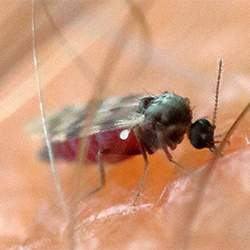
Although cases of local transmission are contained to the Caribbean and Central and South America, the WHO report released Dec. 5 stresses the importance of this increase, writing that governments should stay vigilant, especially as the endemic region of the vector-borne disease has been growing.
“As the arbovirus season is starting in the region, WHO urges countries at risk to strengthen epidemiological and entomological surveillance and to reinforce preventive measures in the population. This is crucial due to the geographical expansion of the virus and the possible new vectors and transmission routes, including vertical transmission, that could affect both the general population and vulnerable groups, such as pregnant women, their fetuses, and newborns.”
Related Content
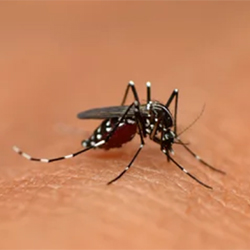

As local transmission has continued, travel-associated cases have also increased in the United States. As of Dec. 3, 94 cases of Oropouche virus have been reported in this country, up from 74 cases reported in mid-September, according to ArboNet.
The new data show that global Oropouche virus cases increased to 11,634 from the 8,078 cases reported mid-July. In comparison, 2023 saw a total of 832 cases (Lancet Microbe 2024;5[10]:100904).
Outbreaks of the disease, mainly centered in Brazil, have varied in size since its identification in the late 1950s. One outbreak in 1980-1981 is estimated to have affected more than 100,000 Brazilians. However, since then, sites of local transmission have spread across South America to include Ecuador and Bolivia in the 2000s and Peru in the 2010s (Microbes Infect 2018;20[3]:135-146).
This current outbreak in the Americas now counts seven countries and one territory with local transmission and three with imported cases: Bolivia (356 cases), Brazil (9,563 cases, including two deaths), Canada (two imported cases), Cayman Islands (one imported case), Colombia (74 cases), Cuba (603 cases), Ecuador (two cases), Guyana (two cases), Panama (one case), Peru (936 cases) and the United States (94 imported cases). In addition, 30 imported cases have been reported in Europe.