By Ethan Covey
Locally acquired dengue virus infection is a distinct possibility in California. Recent case reports of dengue in the state are looking more like the disease was not imported, according to a CDC report.
The first case was identified in October 2023 in a person from Pasadena, Calif. Evidence of a second infection—in an asymptomatic person with no history of travel—was uncovered during the investigation (MMWR Morb Mortal Wkly Rep 2024;73[42]:955-956). Since the fall of 2023, additional locally acquired dengue cases have been reported elsewhere in Southern California, including Los Angeles and San Diego Counties.
“Although we identified the first infections in California last year, there have been several subsequent locally acquired dengue cases in Southern California this year as well,” said Matt Feaster, MPH, PhD, the division manager of Epidemiology and Disease Control in the City of Pasadena Public Health Department (PPHD).
On Oct. 2, 2023, the PPHD alerted the San Gabriel Valley Mosquito and Vector Control District (SGVMVCD) that a person had a suspected case of arboviral disease. The patient who had no recent travel history first experienced symptoms of arboviral illness in mid-September 2023 and required hospitalization. On Oct. 18, the individual was confirmed to have dengue virus 1 (DENV-1) infection.
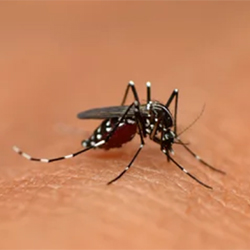
From Oct. 2-9, SGVMVCD conducted testing within an area near the individual’s home and determined that Aedes aegypti mosquito counts were eight times as high as in other routine surveillance areas in the San Gabriel Valley for the same period. On Dec. 5, testing conducted as part of the epidemiological investigation identified an additional person with DENV-1 infection. This individual reported no recent travel history, no symptoms consistent with dengue and no contact with recent travelers or symptomatic people.
“Increased globalization, including international travel, surging dengue infections worldwide and changing climate factors that foster the Aedes mosquito proliferation have all contributed to a hospitable environment for dengue transmission in California,” Dr. Feaster said.
“Our findings suggested that local transmission of dengue in California was more possible than previously suspected, which we hoped would drive local and regional action,” Dr. Feaster added. “These findings have been shared and used by our local health partners in other regional jurisdictions. Though we know local dengue transmission is possible, the question of how transmissible and to what extent in California has not been answered. We have been working with local health jurisdictions and other medical partners to try and answer this question.”
Dr. Feaster reported no relevant financial disclosures.