By Ethan Covey
A presumed outbreak of trichinellosis—a rare parasitic disease—occurred in North Carolina and was likely caused by the consumption of undercooked bear meat.
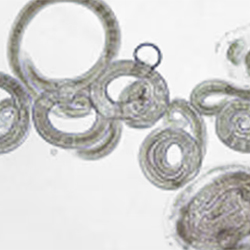
The outbreak highlights the importance of communication regarding how to safely prepare wild game meat, experts said (MMWR Morb Mortal Wkly Rep 2024;73[40]:906-907).
“Most trichinellosis cases in recent years are associated with undercooked or mishandling of wild game meat,” Camden D. Gowler, PhD, an epidemiologist with the CDC’s Epidemic Intelligence Service, told Infectious Disease Special Edition. “This report underscores those same risks and adds more understanding to the complications of testing and treatment.”
In late November 2023, the North Carolina Division of Public Health was alerted about a suspected case of trichinellosis in a person who was experiencing influenza-like signs and symptoms and facial swelling. An investigation linked the individual to a gathering that had taken place in early November, where undercooked bear meat had been served.
After surveying 34 people who had attended the gathering, 65% reported consuming the bear meat, and 45% experienced symptoms consistent with trichinellosis. Difficulties associated with testing for the disease, as well as the fact that no bear meat was available for testing, complicated diagnosis and resulted in the classification of cases as probable trichinellosis.
“It may be time for researchers to consider another seroprevalence study of wild bears in North Carolina to see what percent of bears have been infected with Trichinella species, the parasite that causes trichinellosis,” Dr. Gowler said. “The last study in North Carolina was in 1998 and found no evidence of infection in local black bears [J Parasitol 1998;84(5):1048-1050]. It’s possible that has changed in the last 26 years.”