By IDSE News Staff
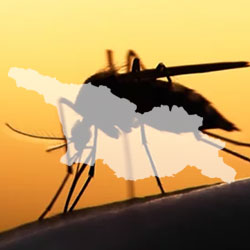
Following a nearly century-long effort, the country of Georgia has been certified malaria-free by the WHO, joining the ranks of 45 countries and one territory to reach this milestone (https://www.who.int/teams/global-malaria-programme/elimination/certification-process).
“This is a huge milestone worth marking; with Georgia’s achievement, the WHO European Region is another step closer to initiat[ing] certification as the first malaria-free region in the world,” said Hans Henri P. Kluge, MD, the rRegional director of WHO in Europe. “This doesn’t happen in a vacuum; this was made possible thanks to sustained investment, dedication of the health workforce and targeted efforts in prevention, early detection and effective treatment of all malaria cases.”
Certification of malaria elimination is granted by WHO when a country has proven, beyond reasonable doubt, that the chain of indigenous transmission has been interrupted nationwide for at least the previous three consecutive years. The Minister of Health, Mikheil Sarjveladze, noted that certifying Georgia as malaria-free is a recognition of the sustainability of its healthcare system. “This success means that Georgia can address important health challenges," he said.
Malaria has plagued Georgia since ancient times. Before the introduction of systematic control efforts in the early 1900s, at least three malaria parasite species—Plasmodium falciparum, P. malariae and P. vivax—were endemic in the country. In the 1920s, an estimated 30% of the population suffered from malaria caused by the P. vivax malaria species.
By 1940, large-scale mosquito control programs had helped reduce malaria cases significantly through improved access to diagnostic and treatment facilities. A few years later, however, World War II caused a surge again due to population movement and the strain on health facilities.
In the post war period, Georgia launched an intensive program aimed at eliminating malaria, using newer medicines, insecticide spraying and robust entomological surveillance. The campaign successfully interrupted the transmission of P. falciparum by 1953, P. malariae by 1960 and P. vivax by 1970.
Georgia remained malaria-free for 25 years, but by 2002, malaria had reemerged in the country with 474 cases reported.
In 2005, together with nine other countries in the WHO European Region, Georgia signed the Tashkent Declaration, reaffirming its pledge to eliminate malaria. The intensified interventions that followed significantly reduced malaria incidence in Georgia, with the last indigenous case recorded in 2009. By 2015, all 53 countries of the WHO European Region, including Georgia, reported zero indigenous cases of malaria.
To prevent further reestablishment of malaria transmission in the region, the original signatories of the Tashkent Declaration issued the Ashgabat Statement in 2017, committing to take all efforts to remain malaria-free. Türkiye is the only country in the WHO European Region that remains to be certified.
In related news, WHO prequalified the first diagnostic test for glucose-6-phosphate dehydrogenase (G6PD) deficiency, which can help to safely deliver WHO-recommended treatments to prevent relapse of P. vivax infection.
The prequalification of this G6PD diagnostic test marks a significant milestone in facilitating safe and effective P. vivax malaria treatment, reaffirming WHO’s dedication to ensuring equitable access to life-saving health solutions globally. Some 500,000 people die each year from malaria, most of them being children.
The prequalification of this test immediately followed the prequalification of two new tafenoquine products for anti-relapse treatment of P. vivax malaria, and these therapeutics were recommended in updated WHO malaria guidelines released in late November.
P. vivax malaria is endemic in all WHO regions except the European Region, with an estimated 9.2 million clinical cases occurring in 2023. P. vivax is the dominant malaria parasite in most countries outside of sub-Saharan Africa.
A genetic condition, G6PD deficiency affects more than 500 million people. While most people are unaware of their G6PD deficiency and go through life without suffering ill effects, certain drugs administered to prevent malaria relapse caused by P. vivax can result in acute hemolysis (destruction of red blood cells). Without accessible and reliable G6PD testing, it is a challenge to safely provide anti-relapse treatments, limiting the widespread use of this effective therapy.
“Wider availability of the test can help strengthen the global malaria response by reducing the number of P. vivax infections due to relapse and in turn reduce onward transmission,” said Daniel Ngamije Madandi, MD, MPH, the director of WHO’s Global Malaria Programme.
Testing devices that can accurately distinguish patients with G6PD activity levels above and below the normal levels provides critical information to clinicians in deciding, which of P. vivax anti-relapse treatment regimens is most appropriate, including low- and high-dose primaquine and single-dose tafenoquine.
The Standard G6PD System diagnostic tool manufactured by SD Biosensor Inc., is a semiquantitative, near-patient solution designed for the measurement of G6PD enzyme activity in capillary or venous whole blood. The device is intended for use in both laboratory and non-laboratory settings and operates with the Standard G6PD Analyzer, a handheld device, delivering results in a few minutes.