

By Ethan Covey
The CDC’s Health Alert Network issued an alert about the ongoing risk for dengue virus (DENV) infections and updated its testing recommendations in the United States.
The CDC said dengue activity remains high in some parts of the United States, particularly Puerto Rico and the U.S. Virgin Islands; local transmission of DENV also has been reported in California, Florida and Texas. Globally, many countries are reporting a higher-than-usual number of cases, which travelers should keep in mind, the agency said. In 2024, more than 13 million cases of DENV were reported in North, Central and South America as well as the Caribbean.
According to a recent report, a current outbreak is the first to hit Puerto Rico since 2013 (MMWR Morb Mortal Wkly Rep 2025;74[5]:54-60).
“Dengue is a public health threat in Puerto Rico, where multiple dengue virus serotypes circulate,” said Fhallon Ware-Gilmore, PhD, an officer with the CDC’s Epidemic Intelligence Service.
The MMWR report, which was available before the health alert was issued, explained the epidemiological trends of the 2024 DENV outbreak in Puerto Rico and the response activities that the Puerto Rico Department of Health and CDC have implemented.
“In March 2024, dengue cases in Puerto Rico surpassed the epidemic threshold, the point at which weekly dengue cases are greater than the levels historically associated with outbreaks,” Dr. Ware-Gilmore said. “Local health authorities have extended the outbreak declaration to the end of March 2025.”
According to the MMWR report, during 2024, 6,291 DENV cases were reported. Approximately half of patients (52.3%) were hospitalized, 264 (4%) had severe dengue and 11 (0.2%) died. The outbreak has been particularly devastating for younger people, with those between 10 and 19 years of age accounting for 28% of severe cases.
Of note, the outbreak also does not seem to be showing signs of slowing, and is exhibiting concerning trends. “Dengue cases remain high in Puerto Rico despite this being the off season, and we are concerned about the upcoming summer season,” Dr. Ware-Gilmore said. “The number of dengue cases so far in 2025 are already higher than last year for this period.”
While San Juan has reported the highest number of cases overall, other municipalities in the west and center of the island have experienced higher rates of infection.
“In 2024, dengue outbreaks in Puerto Rico seem to be different from what we’ve seen before,” Dr. Ware-Gilmore said. “This outbreak started during a time when cases are usually low and has continued into the high season, which is not typical based on past outbreaks.
“This is also the first significant outbreak in over 10 years,” she continued. “This long gap might be due to remaining immunity from the Zika virus outbreak and changes in travel patterns because of COVID-19. The virus that causes Zika infection provides temporary protection from dengue viruses. Reduced travel during COVID-19 slowed down the introduction of dengue serotypes to Puerto Rico.”
The primary type of DENV causing the infections also has shifted. “Most cases are now from DENV-3, which is known to cause more severe illness,” Dr. Wade-Gilmore said. “Because of this, we’re seeing higher hospitalization rates, especially among younger people, while older adults are experiencing more fatalities.
“These new trends raise important questions about how things like community immunity, variations in temperature and weather, and mosquito control efforts affect dengue transmission in Puerto Rico,” she added. “To tackle future outbreaks effectively and lessen their impact on public health, it will be essential to improve mosquito control measures, engage communities more actively and explore new strategies like innovative mosquito control methods.”
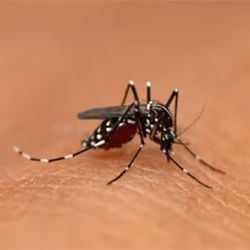
In the health alert, the CDC recommended that people can protect themselves and their families from DENV by preventing mosquito bites, particularly when traveling, and controlling mosquitoes in and around their homes. Healthcare providers, public health departments and the public are urged to continue to take steps to prevent, detect, diagnose and respond to DENV, as described in the updated health alert. Updates include the following:
Dengue virus transmission remains high in the Americas region, including in the U.S. territories of Puerto Rico and the Virgin Islands. Spring and summer travel coincide with the peak season for dengue in many countries, increasing the risk for both travel-associated and locally acquired cases in the United States.
Use the CDCDENV-1-4 real-time reverse transcription–polymerase chain reaction assay when DENV is the most likely diagnosis, according to the CDC.
New resources are available for public health professionals including a job aid for reviewing medical records and guidance for investigating and responding to DENV cases in non-endemic areas of the United States.
The sources reported no relevant financial disclosures.
—Marie Rosenthal, MS, contributed to this story.