

By IDSE News Staff
The European Centre for Disease Prevention and Control (ECDC) reported 19 imported cases of Oropouche virus in June and July in Spain (12), Italy (five) and Germany (two).
Eighteen of the cases had a travel history to Cuba and one to Brazil. Oropouche fever is a zoonotic disease caused by the Oropouche virus (OROV). To date, outbreaks of OROV disease have been reported in several countries across South America, Central America and the Caribbean: Brazil, Bolivia, Colombia, Peru and more recently Cuba. More than 8,000 cases have been reported in these areas since January.
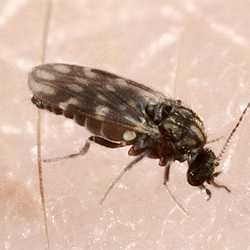
The disease is mainly transmitted to humans through bites by infected midges; however, some mosquitoes species also can spread the virus. The principal vector-Culicoides paraensis midge-is widely distributed across the Americas, but absent in Europe. European public health officials do not know whether European midges or mosquitoes can transmit OROV.
Oropouche virus disease can manifest as an acute febrile illness with headache, nausea, vomiting, muscle and joint pain, and occasionally more severe symptoms. The prognosis for recovery is good and fatal outcomes are rare. There are no vaccines to prevent the disease, or specific medication to treat it. Direct, horizontal, hu-man-to-human transmission of the virus has not been documented so far.
Recently, the Brazilian Ministry of Health reported six possible cases of OROV disease being passed from mother to child during pregnancy. Recent data indicate that OROV infection during pregnancy may lead to severe outcomes, including miscarriage, abortion, and developmental problems and deformities in the fetus. These findings are still under investigation and have not been confirmed. However, given the high potential impact of congenital OROV infection and that areas affected by OROV are also classified as regions with current or previous Zika virus transmission, it is advised that pregnant women follow travel advisories related to both OROV and Zika virus, due to the similar associated risks.
“The risk of OROV infection for citizens travelling to or residing in epidemic areas in South America, Central America and the Caribbean is currently assessed as moderate,” the ECDC said in a statement. However, the risk increases for people visiting highly affected areas, particularly in the northern states of Brazil or the Am-azon region, and/or those not taking adequate personal protective measures.
Increased awareness among health professionals of travelers returning from areas with active OROV transmission, combined with adequate laboratory diagnostic capability, are essential for the early detection of travel-associated cases. Since symptoms of OROV disease can be similar to other arboviral infections such as dengue, chikungunya or Zika, laboratory testing for OROV should be performed when other tests for diseases of common etiology are negative. The Emerging Viral Diseases−Expert Laboratory Network (EVD-LabNet) has provided support in building laboratory diagnostic capabilities for the detection of OROV infections to labor-atory network members in Europe.