

By Krishna Ramanujan
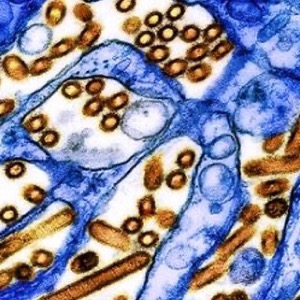
Researchers at Cornell University provide evidence that a spillover of avian influenza from birds to dairy cattle across several U.S. states has led to mammal-to-mammal transmission—between cows and from cows to cats and a raccoon (Nature 2024 Jul 25. doi:10.1038/s41586-024-07849-4).
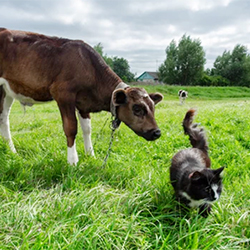
Using whole-genome sequencing of characterized viral strains, modeling and epidemiological information, the researchers’ determined cases of cow-to-cow transmission when infected cows from Texas were moved to a farm with healthy cows in Ohio. Sequencing also showed that the virus was transmitted to cats and a raccoon, which likely became infected by drinking raw milk from the infected cows.
“This is one of the first times that we are seeing evidence of efficient and sustained mammalian-to-mammalian transmission of highly pathogenic avian influenza H5N1,” said Diego Diel, DVM, MS, PhD, an associate professor of virology and the director of the Virology Laboratory in the Animal Health Diagnostic Center (AHDC) at Cornell University College of Veterinary Medicine, in Ithaca, N.Y.
Wild birds, likely infected from the cows, were found dead on affected farms. Although it isn’t known how the wild birds became infected, the researchers suspect it may have resulted from environmental contamination or aerosols kicked up during milking or cleaning of the milking parlors.
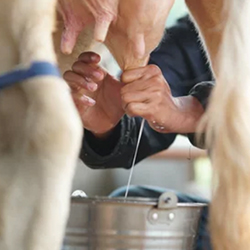
The study shows a high tropism of the virus for the mammary gland and high infectious viral loads shed in milk from the affected animals.
Whole-genome sequencing of the virus did not reveal any mutations that would lead to enhanced transmissibility of H5N1 in humans, although the data clearly show mammal-to-mammal transmission, which is concerning as the virus may adapt in mammals, according to Dr. Diel.
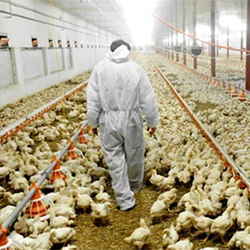
So far, 14 human cases have been reported in the United States, with the first dating back to April 2022, each with mild symptoms. All were linked to handling animals on cattle or poultry farms.
Although the virus has the ability to infect and replicate in people, the efficiency of those infections is low. “The concern is that potential mutations could arise that could lead adaptation to mammals, spillover into humans and potential efficient transmission in humans in the future,” Dr. Diel said.
It is therefore critical to continue to monitor the virus in affected animals and any potential infected people, Dr. Diel said. The Department of Agriculture has funded programs for H5N1 testing, at no cost to producers. Early testing, enhanced biosecurity and quarantines in the event of positive results would be necessary to contain any further spread of the virus, according to Dr. Diel.
Infections from H5N1 were first detected in January 2022, and have resulted in the deaths of more than 100 million domestic birds and thousands of wild birds in the United States. Cornell AHDC and Texas A&M Veterinary Medical Diagnostic Laboratory scientists were among the first to report detection of the virus to dairy cattle herds. The cows were likely infected by wild birds, leading to symptoms of reduced appetite, changes in fecal matter consistency, respiratory distress and abnormal milk with pronounced decrease in milk production.
The study was funded by the AHDC, the Ohio Animal Disease and Diagnostic Laboratory, the Texas A&M Veterinary Medical Diagnostic Laboratory, and the USDA.