By Ethan Covey
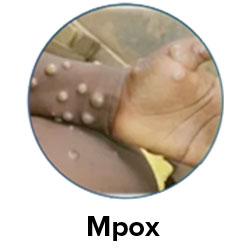
A case of mpox caused by the clade I monkeypox virus (MPXV) has been identified in California through electronic laboratory reporting. It is the first reported clade Ib MPXV infection in the Americas (MMWR Morb Mortal Wkly Rep 2025;74[4]:44-49).
The case was identified by officials with San Mateo County Health in November 2024 in a male traveler who had visited East Africa.
Since then, three additional clade Ib mpox cases have been reported in the United States, all in people who traveled recently.
“Due to the widespread outbreak of clade I MPXV and travel-associated cases that continue to occur around the world and now a few cases in the U.S., additional introductions are likely,” said Kayla Saadeh, MPH, a senior epidemiologist/Mpox Epidemiology Unit Lead at the California Department of Health.
“People who have recently traveled to areas of outbreak—Central and Eastern Africa—should notify providers of their travel if they develop symptoms,” Ms. Saadeh said. “Clinicians should obtain travel history from patients with suspected mpox, and their contacts, and notify public health departments immediately if they suspect someone may be infected with clade I MPVX.”
A total of 83 people who had contact with the California case patient were identified. Among these, all contacts were monitored for 21 days and five received the Jynneos vaccine (Bavarian Nordic) as post-exposure prophylaxis. No additional cases of mpox were identified.
“Actions taken by public health authorities, including developing tools to monitor incoming laboratory test results suggestive of clade I MPXV infection that require additional testing, as well as other public health interventions—such as case and when appropriate contacts isolating; thorough contact tracing; assessing risk, monitoring and offering post-exposure prophylaxis to high- and intermediate-risk contacts; infection and prevention control—were effective containment strategies,” Ms. Saadeh said.
Although no secondary cases were identified, Ms. Saadeh said the “case is also a good reminder that travelers to countries with an outbreak of clade I mpox may be at risk for infection and should follow recommendations to get vaccinated with two doses of Jynneos vaccine at least two weeks prior to travel if planning to engage in certain sexual activities.”
While additional cases of clade Ib mpox may occur in the United States in people who have traveled from affected areas that are experiencing widespread outbreaks, the risk for a widespread outbreak in the United States remains low.
“Clade Ib MPXV, the clade identified in this case, currently has been found to have a case-fatality rate of less than 1%, both inside and outside the African continent,” Ms. Saadeh said. “Isolated travel-related mpox infections in the U.S. are not cause for widespread concern, and this case report illustrates the ability of public health authorities to quickly identify, isolate, contact trace and treat sporadic travel-related mpox cases and the importance of these activities in minimizing the risk of spread.”
Future research will aim to address lingering questions regarding clade Ib mpox, including whether the route of transmission would be similar to clade II, or whether there will be other ways that the disease can be passed from person to person, Ms. Saadeh added.
Ms. Saadeh reported no relevant financial disclosures.