By IDSE News Staff
Outpatient parenteral antimicrobial therapy (OPAT) and partial oral antibiotic therapy regimens were as effective and less expensive than admitting patients with injection drug use–associated endocarditis for six weeks of IV antibiotics (JAMA Network Open 2022;5[2]:e220541).
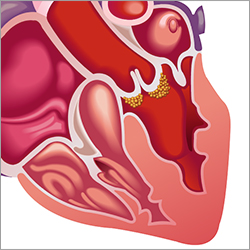
A new modeling study suggested that when patients who inject opioids continue an antibiotic treatment for infective endocarditis outside of the hospital, they experience better long-term health outcomes than those who receive the standard four to six weeks of inpatient IV antibiotic therapy. In addition to reducing infective endocarditis–related deaths and extending life expectancy, this analysis suggested that these outpatient strategies are more cost-effective than the standard approach.
To properly treat this condition, patients often require weeks of inpatient IV antibiotic therapy or, in some cases, heart surgery. Twenty percent of patients admitted with drug use–associated endocarditis leave the hospital before completing treatment. Fewer than 8% are subsequently connected with addiction care services that provide further healthcare and support upon discharge.
Researchers at the University of Colorado School of Medicine and Boston Medical Center sought to better understand the effects of different treatment strategies for drug use–associated endocarditis.
Led by Joshua Barocas, MD, an associate professor of medicine at the University of Colorado School of Medicine, Denver, researchers investigated the efficacy of outpatient treatment for infective endocarditis. They created a robust model that simulated the natural history of injection opioid use in 5 million individuals. The population for this model had a mean age of 42 years and 70% were male, reflecting the age and gender demographics for the U.S. population of people who inject opioids, informed by previous studies and the U.S. Census.
The researchers compared life expectancies, rates of treatment completion, endocarditis and overdose deaths, and average costs across four treatment strategies in these individuals. Two of these treatment strategies offered the standard four to six weeks of inpatient IV antibiotics, either with or without inpatient addiction care services. The other two strategies provided three weeks of inpatient IV antibiotics and addiction care services followed by either OPAT or oral antibiotics after discharge.
Of note, the scientists accounted for socioeconomic challenges such as homelessness by assuming that only half of the hospitalized patients could receive OPAT.
In individuals hypothesized to contract infective endocarditis according to the model, the researchers found a substantial increase in life expectancy and reduction in deaths caused by endocarditis or overdose for individuals who received OPAT, oral antibiotics or inpatient addiction care services in addition to standard treatment compared with the standard approach. Of all four strategies, the addition of oral antibiotics and OPAT led to the greatest cure rates (80.3% and 78.8%, respectively, compared with 77.6% for inpatient IV antibiotic therapy plus addiction care services and 77.6% for inpatient IV antibiotic therapy only).
The strategy that included OPAT also cost less than any of the other strategies. The researchers suggest that these strategies could save the healthcare system more than $6 billion per year in hospitalizations alone.
One in 10 hospitalizations for endocarditis is associated with injection drug use, and these numbers continue to rise. Many drugs can be taken via injection, including cocaine, methamphetamine, and opioids like heroin and fentanyl. Inadequate access to sterile injection equipment is common, and dramatically increases risk for infection in people who use drugs.
Research estimates that if current trends continue, more than 250,000 Americans will die of drug use–associated endocarditis from 2020 to 2030.
“Endocarditis is one of the numerous harms associated with injecting drugs,” said National Institute on Drug Abuse Director Nora. D. Volkow, MD. “Developing effective, patient-centered treatment for this potentially fatal condition is critical. It is also imperative to embrace and implement harm reduction strategies, such as syringe services programs, which we know can help prevent endocarditis in the first place.”
The results still need to be tested in randomized clinical trials that include people who inject drugs. They also emphasize the need for a national surveillance system for injection drug use–related endocarditis, based on existing sur-veillance strategies for HIV and hepatitis C. Expanding research in this area could strengthen evidence for patient-centered decision making when offering treatment strategies for endocarditis.
“Outpatient treatment approaches for endocarditis may not only save lives, but also save money that could then be allocated to evidence-based programs for the opioid crisis,” Dr. Barocas said. “These strategies include promoting safer injection and other harm reduction techniques, improving access to medications for opioid use disorder, and funding outpatient support systems. This would allow people who use drugs to not only heal from endocarditis but do so in a way that they can more easily return to work, to life and to family.”