

By Ethan Covey
A multistate outbreak of Salmonella Thompson originated at a seafood processing facility in Denver where suboptimal sanitization practices and other opportunities for cross-contamination were identified, according to the CDC.
The outbreak, which occurred during May through October 2021, resulted in at least 115 cases in 15 states. Salmonella Thompson is uncommon, and not typically associated with outbreaks in seafood (MMWR Morb Mortal Wkly Rep 2023;72[19]:513-516).
“This was a very large and resource-intensive outbreak investigation in Colorado,” Rachel H. Jervis, MPH, the Foodborne, Enteric, Waterborne, and Wastewater Diseases program manager at the Colorado Department of Public Health and Environment (CDPHE), in Denver, told Infectious Disease Special Edition. “Our success in solving this outbreak in 2021 relied on our ability to analyze large amounts of information as well as strong partnerships and collaboration with local partners, federal partners, the state public health lab and the state environmental health division.”
The CDPHE initially identified a cluster of five related Salmonella enterica serotype Thompson isolates during July 2021; a full investigation began on Aug. 5, 2021.
The isolates were highly related to those identified in a 2020 multistate investigation. During that investigation, traceback was conducted for sushi-grade tuna and salmon, yet a common supplier was unable to be identified.
In the 2021 investigation, 81% of patients were Colorado residents and 19% lived in 14 additional states. All but eight of the patients reported travel to Colorado during the exposure period. Among those with exposure information, 84% reported they had eaten seafood and 41% raw fish or sushi.
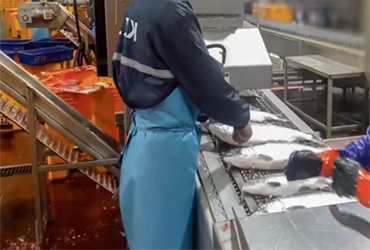
Restaurant records identified a common seafood distributor and processing plant, which was inspected during September 2021. The inspection had identified the outbreak strain in 9.8% of 132 environmental samples taken from the facility’s floor and floor drains.
Numerous cross-contamination opportunities were identified: the use of high-pressure hoses that produced backsplash onto fresh product, insufficient sanitizer concentration, condensation dripping onto product contact surfaces and the use of gloved hands to remove water from floor drains without changing gloves after contact with the drains.
“This outbreak highlighted the importance of appropriate cleaning practices at processing facilities in order to prevent opportunities for cross-contamination,” Ms. Jervis said. “It also highlighted the challenges of solving an outbreak with multiple products with different preparations that are causing illness.”
Brian Spencer, the deputy communications director of the Division of Disease Control and Public Health Response at the CDPHE, noted that while the investigation was not able to determine the original source of contamination in the seafood processing plant, additional research may clarify these details.
“We hypothesize that it was a seafood product that they processed,” he told Infectious Disease Special Edition. “Were this outbreak strain to reemerge, we would be interested in further traceback and testing activities in conjunction with our partners.”
Ms. Jervis and Mr. Spencer reported no relevant financial disclosures.