By Anna Tsioulias
Meningococcal meningitis can strike healthy individuals unexpectedly and result in the death of one in 10 infected people, sometimes causing long-term health problems including brain damage and loss of limbs. Although rare, meningitis disproportionately affects college students.
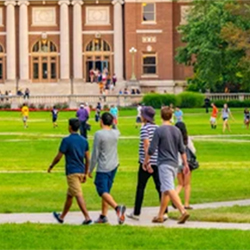
Because meningitis serogroup B (MenB) has caused all meningococcal meningitis outbreaks on U.S. college campuses since 2011, according to the CDC, undergraduate researchers at Quinnipiac University conducted a survey to examine MenB knowledge among their peers, to encourage vaccination. Their findings, presented by Katrina Etts, BS, at ASM Microbe 2024 in Atlanta, indicate a significant lack of awareness about the risk for MenB.
Of 69 student responses, 51% were unaware of the 15% mortality rate from MenB infections, and 61% did not know that undergraduates have an increased risk of contracting meningitis. Additionally, 54 students were not vaccinated against MenB, halfof whom were not aware they needed the vaccine or were not adequately informed about it.
As the institutional review board−approved 10-question survey included basic MenB statistics and information about infection risk, 70% of students reported an increased likelihood to get vaccinated against MenB after being informed of the possible consequences of infection. This study raises the question of how better to address hesitancy about receiving MenB vaccine, as well as other vaccines for preventable diseases in college students.
Of the 5,300 U.S. colleges, only 47 require and 214 recommend the MenB vaccine. The study authors suggest that more education-whether through videos, surveys or flyers-for university students could increase immunization and help prevent MenB on campuses.
To encourage the vaccination of college students and young adults against MenB and other infections, Paul Cook, MD, the chief of the Division of Infectious Diseases at East Carolina University, in Greenville, N.C., said primary care providers should be more heavily involved in educating young people about vaccinations. Dr. Cook is also a member of the Infectious Disease Special Edition editorial advisory board.
“The discussion about vaccination should come from the primary care provider, not an infectious diseases doctor,” Dr. Cook, who was not involved with the study, wrote to IDSE in an email. “Most pediatricians are very good about recommending vaccinations. Internal medicine doctors are not so good at this.”
Because of the inaccurate information that circulated during the COVID-19 pandemic, in addition to the fact that vaccination deniers have been present since the inception of vaccines, Dr. Cook expects vaccine hesitancy to continue being an issue.
“The COVID epidemic has made a lot of people, including parents of adolescents going to college, wary of vaccinations,” Dr. Cook said. “A lot of this fear has been perpetuated by misinformation on social media. Unfortunately, I think that it will take a while for vaccination hysteria to decrease. It will likely never go away completely.”