





By Marie Rosenthal, MS
The COVID-19 pandemic made clear that public health in the United States has been woefully underfunded for decades. So, why won’t Congress release the funds needed to continue the fight against COVID-19, as well as monkeypox virus (MPV), the newest U.S. health threat?
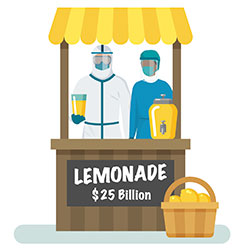
Fighting pandemics and emerging diseases, as well as other health issues such as immunization, sexually transmitted infections, obesity, diabetes and cardiovascular disease, is expensive—$22.4 billion was requested just to continue combating COVID-19, and another $4.5 billion is needed for the MPV outbreak.
In response, Senate Minority Whip John Thune (R-S.D.) said there was “zero interest” in continuing to fund either infectious disease in the stopgap bill, and as of this writing, these requests are not being funded.
David C. Harvey, the executive director of the National Coalition of STD Directors, responded in a statement: “We have been sounding the alarm, calling on the Biden Administration to take action and allocate critical funding to the STI field, which has been battling a triple threat of public health emergencies: a global Covid-19 pandemic, an out-of-control STI epidemic and ongoing MPV outbreak.”
If Congress won’t pay for public health, we need to find another way. Here are my ideas:
- Start a GoFundMe campaign, which will send you a tool kit with a lemonade stand banner, a checklist and more!
- A bake sale—celebrity pastry chefs Buddy Valastro and Duff Goldman could create masterpiece organisms out of cake and Rice Krispies treats to be sold at auction.
- Put collection cans with sad children's faces on them in convenience stores throughout the country. Every penny counts!
You also could contact your legislators today and urge them to fund public health, and to continue funding it long after these problems are controlled.
We all know how much they need more people, better surveillance, and funding to develop programs and make sure people know they are available.
“Firefighters are not expected to fight fire without water, nor are members of the military expected to fight wars without weapons. Yet, for the past three months, we have been on the front lines pleading with officials for the support our network so desperately needs to respond to the worst outbreak of MPV our country has ever seen,” Mr. Harvey said.
The analogy to the military is an important one. When will legislators realize that healthcare is a national security issue as crucial to our country as the military—that a healthy population is one that can work and contribute to society, and cost less in the long run?
The views expressed here belong to the author and do not necessarily reflect those of the publisher.



This article is from the October 2022 print issue.